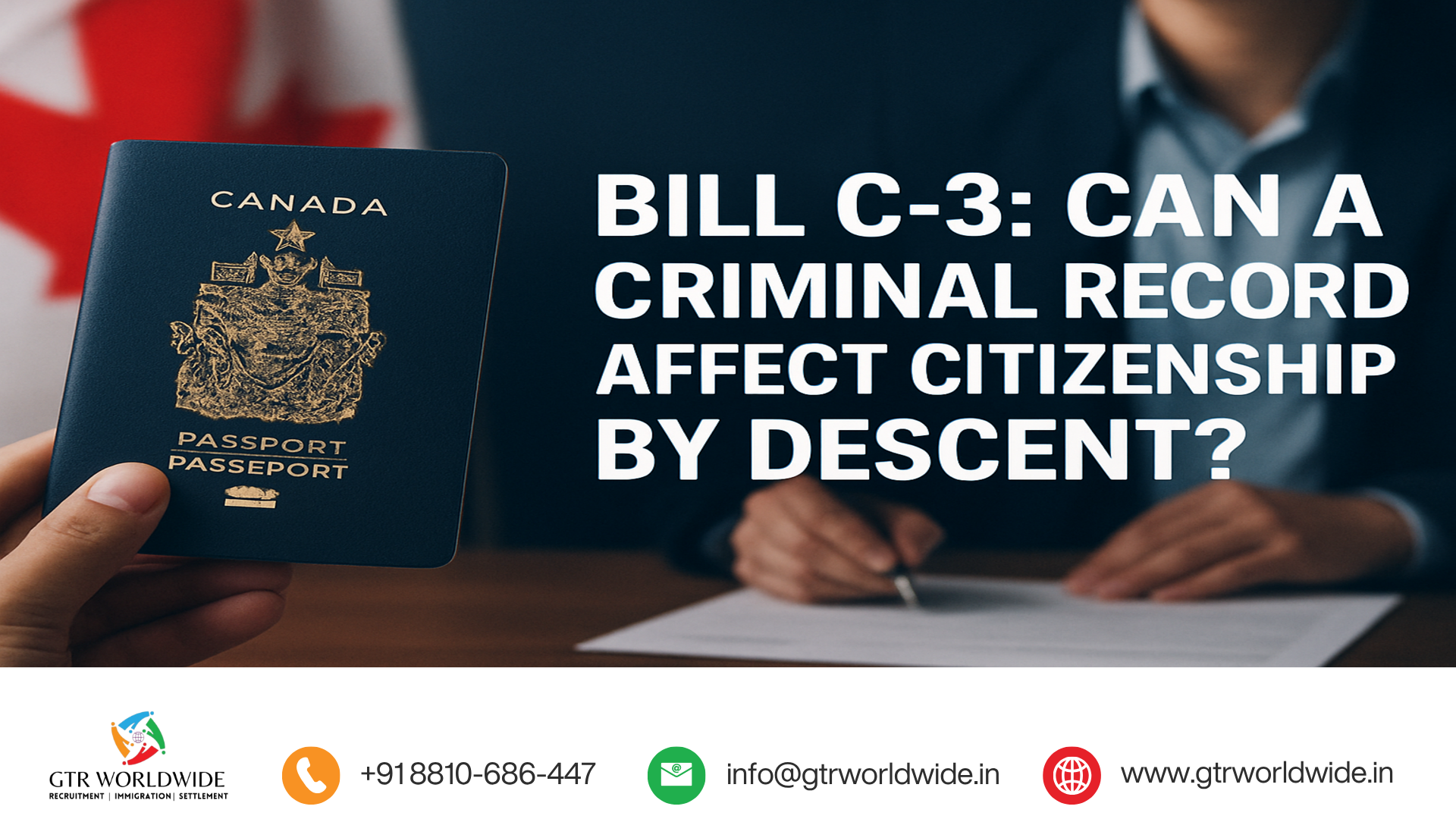
Canadian citizenship by descent and criminal records after Bill C-3: what Americans should know
Since Bill C-3 took effect on December 15, 2025, more than ten thousand Americans with Canadian ancestry have been applying each month for Canadian citizenship certificates. The law removed the “first-generation limit,” so many people born abroad before that date to a Canadian parent are now citizens by descent. A common question: can a past criminal record block that claim? In most cases, no — but practical issues can arise when you need proof of status or travel documents.
How the law works now
– For people born abroad before December 15, 2025: many are now Canadian citizens by descent if born to a Canadian parent (including where that parent became a citizen through the 2025 changes).
– For children born abroad on or after December 15, 2025: the Canadian parent (if also born abroad) must have spent at least 1,095 days in Canada before the child’s birth or adoption to pass citizenship by descent.
– A citizenship certificate confirms a status you already have; it does not create citizenship.
Criminal records and citizenship status
Citizenship by descent is based on law and lineage, not on past conduct. A criminal record generally does not remove or prevent citizenship by descent.
Where criminal records can matter
– Proof of citizenship: If you are already a citizen by descent but do not yet have a citizenship certificate, a border officer could treat you as a US visitor until you prove your status.
– Canadian passports: Passport decisions follow the Canadian Passport Order (administered by IRCC’s Passport Program). Passports can be refused or restricted for criminal-related reasons such as:
– Active charges (e.g., charged in Canada with an indictable offence or charged abroad with an offence that would be indictable in Canada).
– Conviction for a passport offence under section 57 of the Criminal Code (or an equivalent abroad).
– Being in custody, or being subject to court conditions that prevent travel or bar possession of a passport.
Most grounds for refusal involve open charges, current sentences, or ongoing court conditions. Historic convictions that are not passport offences generally do not appear on the Passport Order grounds described above.
Border entry and inadmissibility
– Canadian citizens (including citizens by descent) have the right to enter and remain in Canada once a border officer is satisfied of their status.
– Non-citizen Americans remain foreign nationals under Canadian law. Even a US misdemeanor like a DUI can result in being found criminally inadmissible and refused entry. Remedies include rehabilitation or a temporary resident permit.
Naturalization is different
A grant of citizenship (naturalization) for permanent residents does consider criminal history. It bars applicants who are in prison, on parole or probation, or charged with an indictable offence, and blocks applicants convicted of an indictable offence in the four years before applying.
Practical steps
– Check if you are already a Canadian citizen by descent under Bill C-3.
– Apply for a citizenship certificate from IRCC to get documentary proof.
– Gather original records linking you to your Canadian ancestor (vital statistics offices or provincial archives are the usual sources).
– Prepare the application form, photos to government specifications, identity documents, and the fee.
– If you have active charges, a current sentence, or court-imposed travel limits, speak to a lawyer before applying for a passport.
– If you do not qualify for citizenship by descent and have a criminal record, address admissibility before travelling.
– If a passport or other decision is refused, applicants can seek judicial review in Federal Court.
Final reminder
Bill C-3 created new opportunities for many Americans with Canadian ancestry, but it also introduced practical considerations around proving status and travel. A past criminal record usually won’t remove citizenship by descent, but open charges, active sentences, passport-specific offences, and court-imposed travel restrictions can affect passports and border outcomes. Get documentation in order and seek legal advice where needed.
For personalized support with your Canadian immigration pathway, contact GTR Immigration. Call us: +91-8810-686-447
#BillC3 #CanadianCitizenship #CitizenshipByDescent #CanadianPassport #ImmigrationLaw #CrossBorderTravel #IRCC
Leave a Reply