Canadian citizenship by descent after Bill C-3: what descendants of Irish migrants need to know
In December 2025, Bill C-3 removed the strict one-generation limit on Canadian citizenship by descent in many situations. That means people born abroad to a parent who was a Canadian citizen before December 15, 2025 may already be Canadian — even if their parent only became a citizen because of the same rule changes. For many with Irish roots, this legal shift can turn old parish records and family stories into a viable claim.
Why the Irish-Canada connection matters
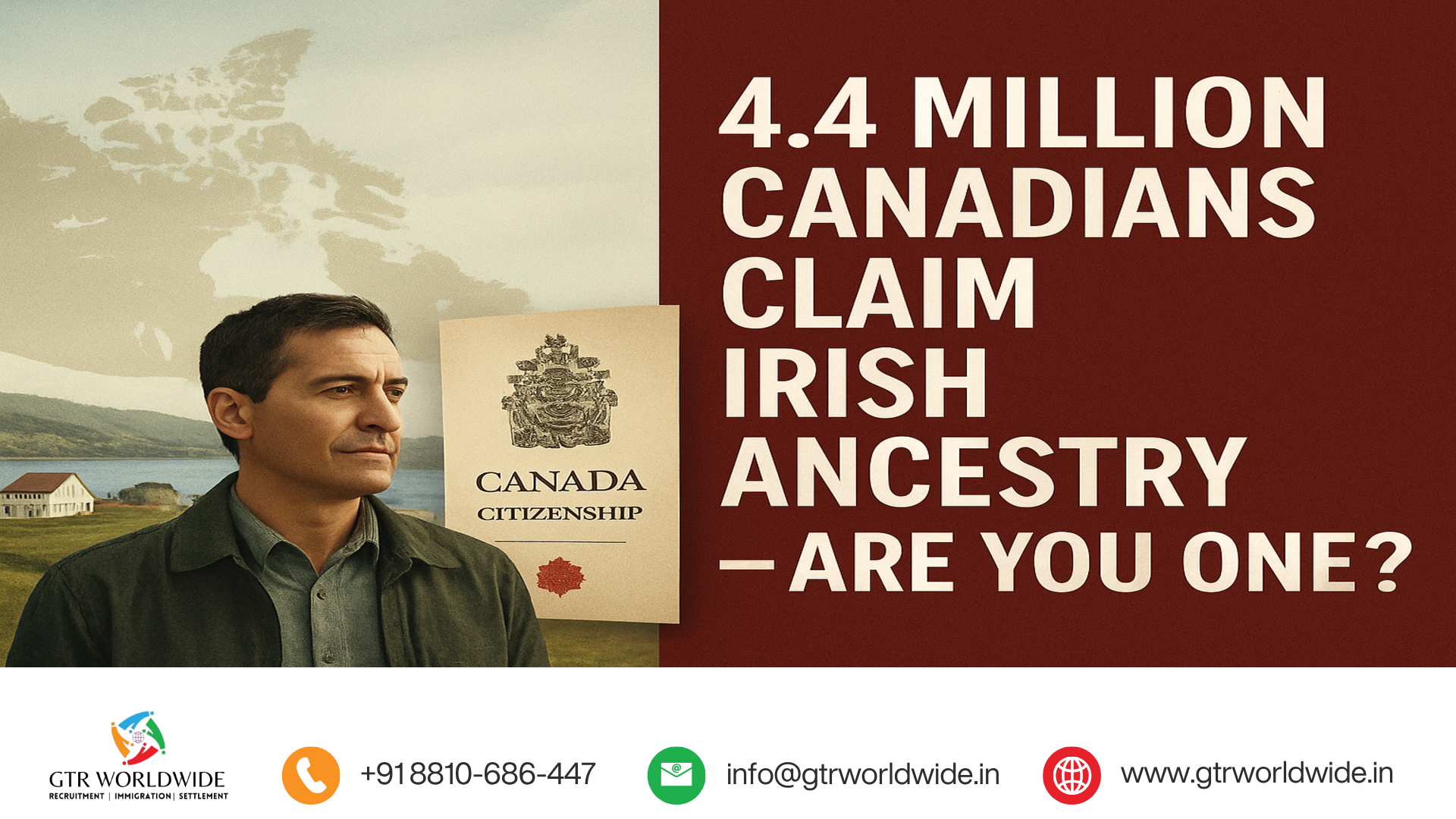
About 4.4 million people in Canada report Irish ancestry; Irish is the country’s third-largest ancestry group. Large flows of Irish migrants reached British North America long before and during the Great Famine. In 1847 alone roughly 100,000 emigrants sailed for ports such as Quebec City, Saint John, and Halifax. Quarantine registers from Grosse Île list more than 33,000 names. Irish arrivals settled across Ontario, Quebec, New Brunswick, Nova Scotia and Newfoundland, and by 1871 they were the largest ethnic group in most Canadian towns outside Montreal and Quebec City.
Earlier and later waves also left records: Irish settlers appeared in New France and on the Newfoundland coast in the 1600s; assisted migration in the 1820s (linked to Peter Robinson) placed families in Peterborough, Lanark and Carleton counties; Irish labourers helped build the Rideau and Welland canals and populated the Ottawa Valley. Those arrivals often registered births, marriages and baptisms in Canadian records — the documents that can now matter for citizenship claims.
What the law change actually does
Before December 2025, citizenship by descent was generally limited to one generation born abroad. Bill C-3 removed that first-generation cap in many cases. If you were born outside Canada before December 15, 2025 to a parent who was a Canadian citizen, you may already be a Canadian by operation of law. The administrative step is to obtain a citizenship certificate as proof — you are not applying to become a citizen. The certification process does not include a language test, residency requirement, exam, or oath.
Which family histories are most likely affected
– Lines with a Canadian-born ancestor who later emigrated. If that ancestor’s child was born abroad and later generations were also born abroad, the chain may now be continuous.
– Families with records tied to Peter Robinson’s settlements (Peterborough, Lanark, Carleton) or other known Irish-settled areas.
– Descendants of Famine-era arrivals processed at ports and quarantine stations (Grosse Île, Quebec City, Saint John, Halifax).
– Families from Newfoundland and other maritime fishing communities with local baptismal and marriage records.
– Households where Canadian birth certificates, parish registers, or other paperwork were retained after migration.
Why documents — not cultural identity — determine eligibility
Cultural ties or family memory do not create citizenship. The legal test is documentary: can you show an unbroken chain of parentage and birth registrations from a Canadian-born or naturalized parent to the claimant? If the chain was never legally broken, citizenship can flow down the line.
Practical steps if you think this applies to you
– Identify a pivot ancestor born or naturalized in Canada.
– Gather forward-moving vital records (births, baptisms, marriages, civil registrations) for each generation to you.
– Search passenger, port, and quarantine records where relevant (for example, Grosse Île and Quebec City lists).
– Use parish and local archives for 19th-century records that predate civil registration.
– Apply for a citizenship certificate once you can document an unbroken line — this provides official proof for a passport application.
– Coordinate with relatives: the same documentation can often support siblings’, cousins’ and their children’s claims.
Common documentation challenges
Records may be missing, incomplete, or inconsistent in spelling or names. Secondary sources (grave markers, church books, local histories, passenger lists) can help reconstruct a chain, but each piece must support legal continuity. In many Irish-descended families, surviving Grosse Île registers and clustered local records increase the odds of finding what you need, but success still depends on the available documentation.
What this change means for families
Bill C-3 reopens a legal path that was previously closed for many descendants of historic Irish migration to Canada. It transforms archival research into a potential route to an existing citizenship status for people and families spread across countries. It does not change people’s cultural identities or immigration rules for those without a documented Canadian ancestor — it clarifies when citizenship passed down a family line.
What to pay attention to next
– Date sensitivity: the key cutoff referenced is December 15, 2025; seek precise legal or administrative guidance for cases near that date.
– Document quality and continuity: focus on locating clear civil or church records that form an unbroken chain.
– Regional records: check archives tied to ports and settled areas (Quebec City, Saint John, Halifax, Peterborough, Lanark, Carleton, Ottawa/Bytown, Kingston, Newfoundland communities).
– Family coordination: one successful documentation effort can help multiple relatives.
– Realistic expectations: compiling historic records can take time; the law removes a legal barrier in many cases, but approval depends on surviving evidence and correct presentation.
For personalized support with your Canadian immigration pathway, contact GTR Immigration. Call us: +91-8810-686-447
#CitizenshipByDescent #BillC3 #CanadianCitizenship #IrishCanadianRoots #GrosseIle #CanadianImmigration #AncestryAndLaw
Leave a Reply