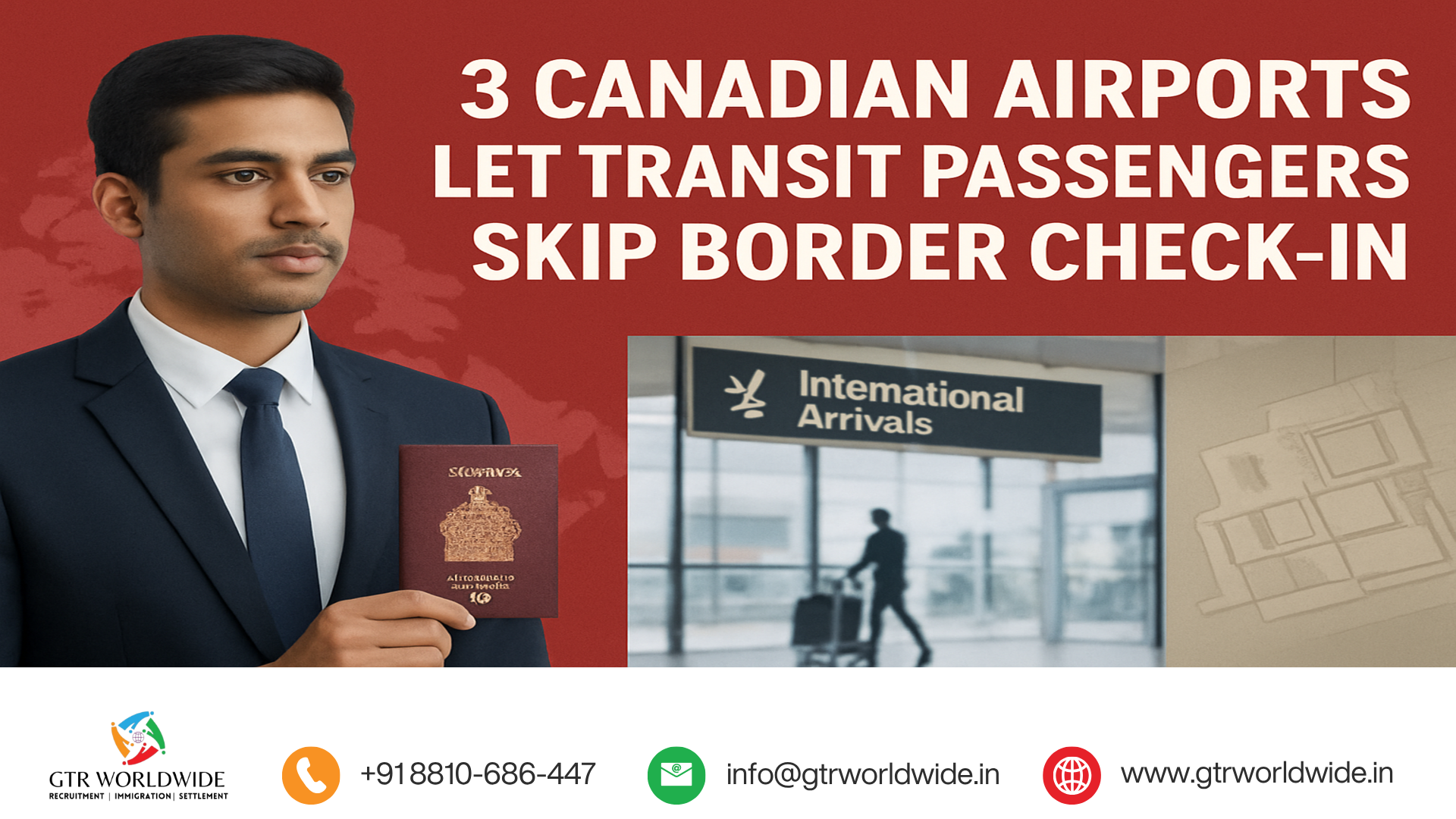
CBSA Free Flow International-to-International Transit: What Travellers Need to Know
On June 26, 2026, the Canada Border Services Agency (CBSA) announced the Free Flow International-to-International Transit process. Qualifying international travellers transiting through Toronto Pearson (Terminal 1), Vancouver International Airport, or Montréal Pierre Elliott‑Trudeau International Airport may now proceed directly to international departures without an in-person CBSA officer or kiosk check—if they meet the conditions below.
How this evolved
This change finalizes a move that began with the CBSA’s 2018 International to International (ITI) pilot. Airlines will now send passenger flight data directly to CBSA so eligible passengers can go straight to their gate. The regulatory changes were proposed in the Canada Gazette in late November 2025, the public consultation closed December 29, 2025, and the process was announced as finalized on June 26, 2026. Other airports may apply to adopt the process in future.
Key eligibility rules
– Applies only at Toronto Pearson (Terminal 1), Vancouver, and Montréal Pierre Elliott‑Trudeau.
– You must have a confirmed international ticket departing Canada within 24 hours of arrival.
– You must remain inside the airport’s designated international departure area until boarding.
– You must carry any required travel documents for your final destination (including Transit Visa or eTA where applicable).
– If your checked baggage is automatically transferred to your onward flight, same‑day connecting travellers automatically qualify and will be directed to international departures.
When Free Flow does NOT apply
– Baggage is not transferred automatically (you must collect baggage and complete CBSA processing).
– The onward flight is not scheduled for the same day.
– Your flight is cancelled or delayed so the layover exceeds 24 hours.
– You leave the airport’s designated international departure area.
U.S. connections
Travellers transiting to the United States should go to the airport’s U.S. connection area, where they and their baggage will be re‑screened and processed by U.S. Customs and Border Protection.
Practical tips for travellers
– Confirm your onward flight departs within 24 hours and is on a participating airport.
– Ask your airline whether your baggage will be checked through to the final destination and whether they will transmit your details to CBSA.
– Carry all necessary visas/eTA for your final destination.
– Stay inside the international departure area until boarding.
– Have a contingency plan: if your layover becomes longer than 24 hours or your itinerary changes, you must report to CBSA.
What this means operationally
Free Flow shifts more responsibility to airlines and airports to share accurate passenger data and manage flows. When it works as intended, it can speed transfers for eligible, low‑risk travellers while allowing CBSA to focus resources on higher‑risk work. Technical or operational errors could still require passengers to complete standard processing, so confirm eligibility with your carrier and follow airport instructions.
For personalized support with your Canadian immigration pathway, contact GTR Immigration. Call us: +91-8810-686-447
#CanadaTransit #CBSA #FreeFlow #InternationalTransit #TorontoPearson #VancouverAirport #MontrealAirport #TravelAdvice
Leave a Reply