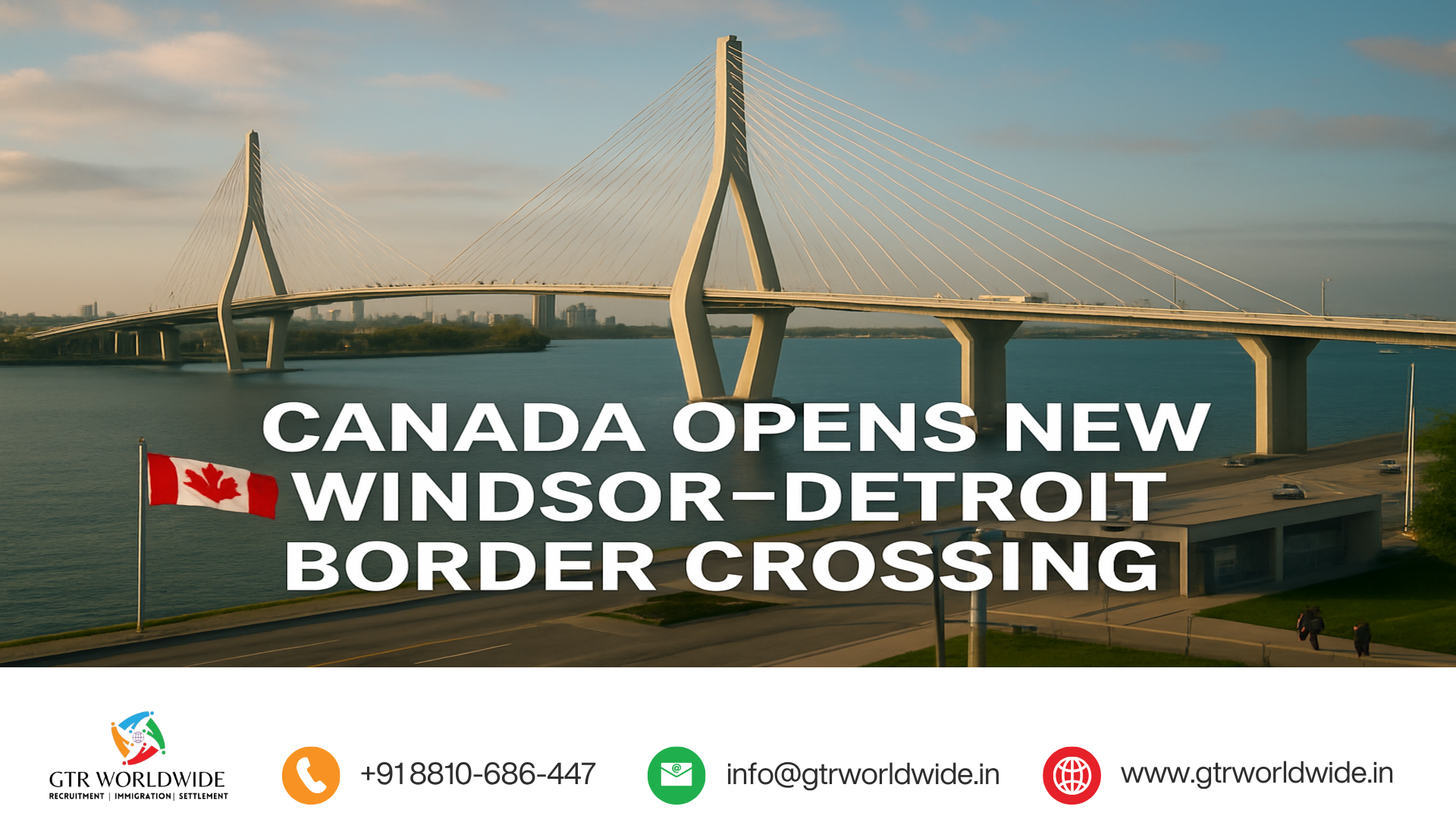
Gordie Howe International Bridge opening: what the new Windsor–Detroit crossing means for travellers and cross‑border movement
Quick summary and why it matters
The Gordie Howe International Bridge opened to traffic on July 27, 2026, the Windsor‑Detroit Bridge Authority said on July 24, 2026. Spanning the Detroit River, it adds a third fixed link between Windsor, Ontario and Detroit, Michigan, joining the Ambassador Bridge and the Windsor‑Detroit Tunnel. The port of entry will operate 24/7 and includes express lanes for Trusted Traveller members (NEXUS) and qualifying commercial carriers (FAST). A separated, toll‑free multi‑use path for pedestrians and cyclists opens August 5, 2026. This new crossing changes local routing options, processing patterns and practical planning for visitors, commuters, carriers and people with immigration business in Canada.
Background and context
The bridge has been in development for more than two decades as a joint initiative between the Canadian federal government and the State of Michigan. Its planned June 12, 2026 opening was delayed by disputes over toll revenue. A ceremonial event on July 24 took place without U.S. officials in attendance; full traffic began July 27. Canadian authorities describe the port as Canada’s largest and most technologically advanced land border crossing. The new crossing sits beside two already busy links in one of North America’s busiest land corridors.
What the crossing provides
– 24/7 operation: open day and night, every day of the week.
– Vehicle types: automobiles, motorcycles, recreational vehicles and semi‑trucks may use the crossing.
– Express lanes: dedicated lanes for NEXUS and FAST users.
– Multi‑use path: separated, toll‑free route for pedestrians and cyclists starting August 5, 2026 — the first Windsor‑Detroit crossing to permit non‑motorized traffic.
– Tolls: $8 CAD ($5.75 USD) for standard passenger vehicles; $12 CAD ($8.75 USD) for large commercial trucks, oversized vehicles and larger passenger vehicles.
– Real‑time info: travellers can check CBSA’s port of entry webpage for current border wait times.
– Documentation: everyone entering Canada at this port must have appropriate travel documents as required by CBSA.
Why this matters beyond another bridge
– Congestion management: the new crossing aims to redistribute traffic and reduce multi‑hour waits that can occur at the Ambassador Bridge during peak periods.
– Distinct user channels: NEXUS and FAST lanes should speed processing for pre‑cleared travellers and eligible carriers.
– Multimodal access: the toll‑free pedestrian and cycling path creates new commuting and recreational options.
– Technology and scale: CBSA’s description indicates significant investment in infrastructure to streamline processing and logistics.
Who will be affected
– Cross‑border commuters and visitors: an alternate route that may reduce wait times at certain times.
– NEXUS and FAST members: potential time savings using express lanes.
– Commercial carriers and logistics operators: option to route trucks through the new crossing with known tolls.
– Pedestrians and cyclists: a new, toll‑free crossing option from August 5, 2026.
– People with immigration business in Canada: the bridge is an additional port of entry where eligible travellers may present themselves, provided they have required travel documentation.
– Local communities and businesses: new routing and reliability may affect shopping, labour mobility and logistics.
Practical planning points
– Check documentation: have valid passports, visas or electronic authorizations as required by CBSA.
– Use official wait‑time tools: consult the CBSA port of entry webpage before travelling.
– Account for tolls: $8 CAD for passenger vehicles; $12 CAD for large commercial/oversized vehicles. The multi‑use path is toll‑free.
– NEXUS and FAST users: express lanes offer an advantage; enrolment remains a separate process for those not enrolled.
– Travel timing: the bridge is open 24/7, but wait times will vary by time of day and traffic conditions.
– For immigration applicants: the crossing is an additional logistical option but does not change documentary or program requirements.
Operational caveats and things to watch
– Revenue dispute history: the opening was delayed by disagreements over toll revenue treatment, showing that financial or jurisdictional issues can affect operations.
– Ceremonial absence of U.S. officials: the July 24 ceremony lacked U.S. officials, an example of diplomatic tensions that could affect coordination.
– Early operational adjustments: large projects can experience initial teething issues; travellers should monitor CBSA updates and posted signage.
Key dates, numbers and fees
– Official opening to traffic: July 27, 2026.
– Multi‑use path opens: August 5, 2026.
– Passenger vehicle toll: $8 CAD ($5.75 USD).
– Toll for large commercial/oversized vehicles: $12 CAD ($8.75 USD).
– Hours: 24 hours a day, seven days a week.
– Canada’s total land border ports of entry after this opening: 118.
What to watch next (especially for those with immigration interests)
– Verify documentation well before travel.
– Check CBSA wait times prior to departure.
– Factor tolls into travel and shipping budgets.
– NEXUS and FAST members should plan to use express lanes.
– Pedestrians and cyclists: note the August 5, 2026 start date for the toll‑free path.
– Monitor official communications from CBSA, the Windsor‑Detroit Bridge Authority and other officials for any operational updates.
For personalized support with your Canadian immigration pathway, contact GTR Immigration. Call us: +91-8810-686-447
#GordieHoweBridge #CanadaUSBorder #CBSA #NEXUS #FAST #CrossBorderTravel #Immigration #WindsorDetroit
Leave a Reply