Category: Uncategorized

  • CEC Express Entry Draws – The Most Common Profiles Receiving ITAs in 2025

    CEC Express Entry Draws – The Most Common Profiles Receiving ITAs in 2025

    The Canadian Experience Class (CEC) continues to play a central role in Canada’s immigration strategy, with Immigration, Refugees and Citizenship Canada (IRCC) holding a series of competitive and increasingly frequent draws throughout 2025. Recent data from multiple trusted sources shows clear patterns in the CRS cut-off scores, candidate characteristics, and draw frequency, revealing exactly what types of applicants are being selected for permanent residency.

    Overview of Recent CEC Draws (Mid–Late 2025)

    Between June and November 2025, IRCC held several major CEC draws, with cut-off scores mostly in the 533–534 CRS range, indicating high competitiveness. Here is a summarized look:

    DateITAs IssuedCRS Cut-offKey Notes
    Nov 12, 20251,000533Tie-breaker: Oct 17, 2025. Second CEC draw within two weeks.
    Oct 28, 20251,000533Profile creation before Mar 21, 2025 required.
    Oct 1, 20251,000534Continued trend of 1,000-invite CEC draws.
    Sep 3, 20251,000534Stable competitiveness early fall.
    Aug 7, 20251,000534One of the highest CEC cut-offs of the year.
    Jul 8, 20253,000518A rare large draw with significantly lower cut-off.
    Jun 26, 20253,000521High-volume draw lowered the CRS threshold.
    Jun 12, 20253,000529Beginning of mid-year draw expansions.
    May 13, 2025500547Smallest and most selective draw of the year.

    These draw results show that while the CEC pathway remains one of the most reliable ways for temporary residents to obtain PR, the competition is sharper than ever.

    What Types of Candidates Are Being Invited?

    Based on the cut-off ranges, draw frequencies, and pool analysis, here are the candidate profiles most likely to receive an ITA (Invitation to Apply):

    1. Candidates With High CRS Scores (530+)

    Most CEC draws in late 2025 require CRS scores in the 533–534 range. This score level typically reflects:

    • Strong English or French language test results
    • Completion of Canadian post-secondary education
    • 1+ years of skilled Canadian work experience
    • Younger age brackets (20–32)
    • Additional CRS points from arranged employment, Canadian studies, or spouses

    2. Strong English/French Proficiency

    CLB 9–10 test scores remain a major differentiating factor among CEC candidates, elevating profiles into the 530+ range.

    3. Early Profile Creators

    The tie-breaker rule shows IRCC often selects candidates based on profile submission date when scores are identical.
    Example: The Nov 12 draw only invited candidates who created their profile before Oct 17, 2025.

    4. In-Canada Skilled Workers

    CEC is designed for candidates who already have:

    • One year of full-time skilled work experience in Canada
    • Temporary status (Post-Graduation Work Permit holders, skilled workers on LMIA-based or LMIA-exempt permits)

    IRCC continues to rely heavily on CEC draws to convert temporary residents into permanent residents.

    5. Candidates in High-Demand Sectors

    Although CEC is not occupation-based, many invited candidates typically work in:

    • Technology
    • Business and finance
    • Healthcare
    • Education
    • Skilled trades
    • Hospitality and service roles

    These sectors contribute significantly to Canada’s labor market, making candidates with Canadian experience highly attractive.

    Why Are CRS Cut-Offs So High?

    Several factors contributed to a competitive pool in 2025:

    • A growing number of international graduates and skilled workers in Canada
    • Reduced CEC draw sizes in late 2025 (1,000 ITAs vs. 3,000 earlier in the year)
    • More candidates in the 500+ CRS range compared with previous years
    • IRCC balancing CEC draws with category-based and PNP draws

    When IRCC reduced draw sizes, the CRS cut-offs rose accordingly.

    What This Means for Future Applicants

    If you are planning to apply through the Canadian Experience Class, you may benefit from:

    • Improving language test results (IELTS/CELPIP/TEF/TCF)
    • Completing a Canadian education program
    • Adding spousal CRS points
    • Obtaining Canadian work experience in skilled occupations
    • Submitting your profile early to benefit from future tie-breaker rules

    CEC remains one of the fastest and most consistent pathways to Canadian PR, but preparation and timing are now more important than ever.

  • Alberta Immigration Draws October 2025: 202 Candidates Invited Under Five AAIP Streams

    Alberta Immigration Draws October 2025: 202 Candidates Invited Under Five AAIP Streams

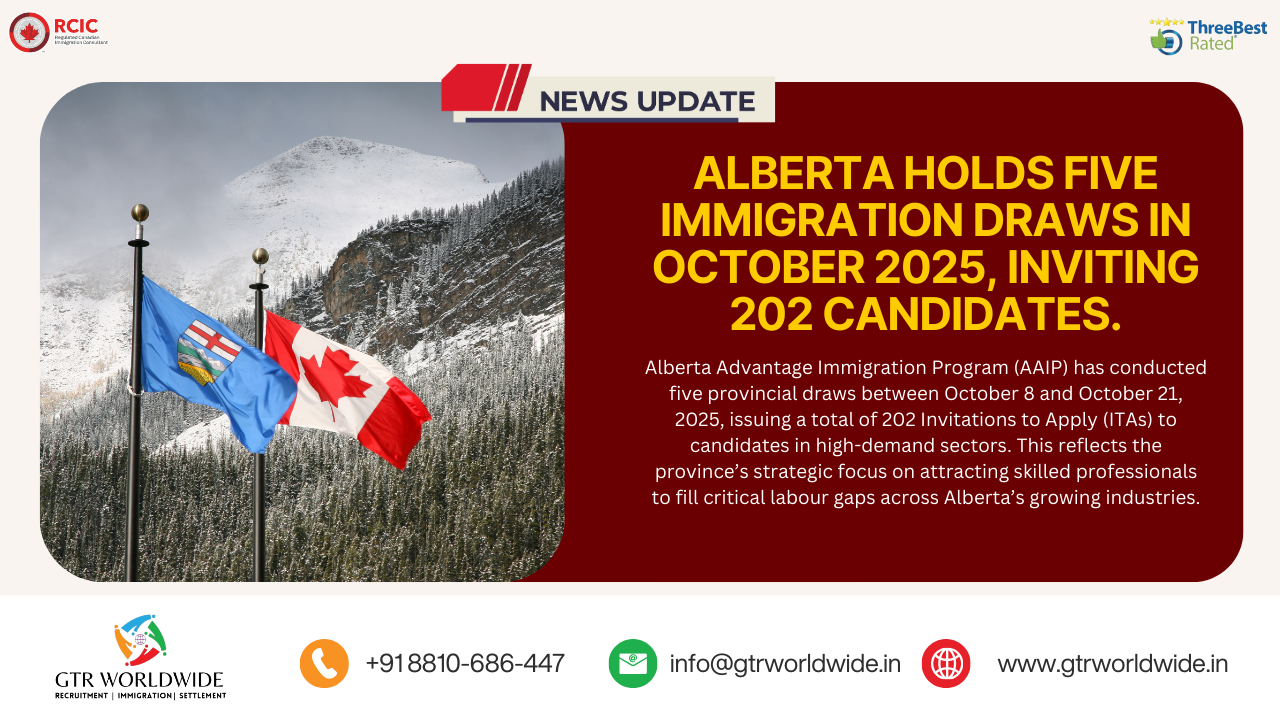
    The Alberta Advantage Immigration Program (AAIP) has conducted five provincial draws between October 8 and October 21, 2025, issuing a total of 202 Invitations to Apply (ITAs) to candidates in high-demand sectors. This reflects the province’s strategic focus on attracting skilled professionals to fill critical labour gaps across Alberta’s growing industries.

    Summary of Recent Alberta Draws

    DateStreamITAs IssuedMinimum Score
    October 21, 2025Express Entry – Accelerated Tech Pathway8960
    October 16, 2025Express Entry – Priority Sectors (Aviation)1346
    October 15, 2025Express Entry – Priority Sectors (Agriculture)1067
    October 10, 2025Dedicated Health Care Pathway (Non–Express Entry)4145
    October 8, 2025Dedicated Health Care Pathway (Express Entry)4652

    In total, 202 candidates received invitations, with the lowest cut-off score dropping to just 45 under the non–Express Entry health care draw — indicating Alberta’s strong commitment to address workforce shortages in vital sectors.

    Alberta’s 2025 Nomination Statistics

    As of October 21, 2025, Alberta has issued 4,689 provincial nominations out of its 6,403 allocation slots for the year, leaving 1,714 spaces still available.

    StreamAllocationNominations IssuedRemainingEOI in Pool
    Alberta Opportunity Stream3,3562,54481236,778
    Rural Renewal Stream1,1008772334,024
    Tourism & Hospitality Stream245212335,689
    Dedicated Health Care Pathways2454383721,402
    Accelerated Tech Pathway2911701212,621
    Law Enforcement Pathway261610105
    Priority Sectors & Other Initiatives5534121414,444

    These numbers highlight the province’s continued momentum in welcoming skilled newcomers through its multiple AAIP streams.

    What This Means for Applicants

    The recent series of draws underlines Alberta’s commitment to recruiting professionals in key industries, including:

    • Technology (Accelerated Tech Pathway)
    • Health Care (Dedicated Health Care Pathways)
    • Aviation and Agriculture (Priority Sectors)

    To maximize your eligibility, ensure that your Express Entry profile is active and up-to-date, and that your occupation aligns with Alberta’s targeted sectors.

    Steps for Interested Candidates

    1. Review eligibility criteria on the Alberta Advantage Immigration Program (AAIP)
    2. Create or update your Express Entry profile.
    3. Highlight relevant sector-specific experience in tech, health care, agriculture, or aviation.
    4. Monitor ongoing Alberta draw results to stay informed of trends and cut-off scores.
    5. Be prepared to apply promptly upon receiving an Invitation to Apply (ITA).

    Conclusion

    The latest five draws under the Alberta Advantage Immigration Program reinforce the province’s goal of building a diverse and resilient labour market. With many nomination slots still open, professionals in high-demand sectors are encouraged to take advantage of Alberta’s welcoming immigration pathways in 2025.

  • Canada Immigration Levels Plan 2026–2028 – What to Expect

    Canada Immigration Levels Plan 2026–2028 – What to Expect

    Canada’s next Immigration Levels Plan (ILP) 2026–2028 will soon be unveiled, shaping the country’s immigration priorities for the next three years. Following the 2025–2027 plan, which already began moderating record-high immigration levels, this new plan is expected to reflect a balanced approach — ensuring economic growth while addressing public concerns about housing, infrastructure, and integration capacity.

    According to the Government of Canada, the ILP outlines the number of new permanent residents the country aims to welcome each year, broken down into three main categories: economic, family, and refugee/humanitarian streams.

    1. Expected Immigration Targets for 2026–2028

    The previous ILP (2025–2027) targeted 395,000 new permanent residents in 2025, 380,000 in 2026, and 365,000 in 2027.
    Experts project that the 2026–2028 plan will maintain a similar or slightly adjusted range, possibly between 360,000 and 400,000 annually. This indicates a stabilization trend after several years of rapid growth.

    A report by the Parliamentary Budget Officer (PBO) suggests that reduced immigration may slightly slow overall GDP growth but could improve GDP per capita and ease housing demand — two key concerns influencing upcoming targets.

    2. Economic-Class Immigration: Still a Priority

    The economic class will continue to dominate admissions, accounting for about 60–62% of total permanent residents.
    This includes skilled workers, health professionals, and tradespeople — especially through Express Entry and Provincial Nominee Programs (PNPs).

    Analysts from Moving2Canada and Amir Ismail & Associates predict that the government will continue emphasizing talent-driven immigration to address labour shortages in construction, healthcare, and technology sectors.

    3. Family Reunification and Humanitarian Commitments

    While the focus remains on economic growth, Canada’s ILP will still prioritize family reunification and refugee resettlement.
    The Canadian Council for Refugees (CCR) has called for increased family sponsorship allocations and faster processing for humanitarian cases.
    It’s likely that the family class will remain around 22% of total targets, while refugee and humanitarian streams make up around 15%.

    4. Temporary Residents Now Part of the Conversation

    For the first time, Canada’s ILP framework includes temporary residents — such as international students and foreign workers — recognizing their major role in population growth.
    Under current policy, the federal government aims to reduce non-permanent residents to 5% of the total population by the end of 2026.

    This shift means future immigration planning will coordinate better between temporary-to-permanent pathways, ensuring sustainability in both labour and housing markets.

    5. Economic and Social Context

    Public attitudes toward immigration have evolved. A survey found that while most Canadians value immigration, many believe current levels are “too high” due to housing and cost-of-living pressures.
    In response, the government appears to be pursuing a “smart moderation” strategy — maintaining Canada’s global competitiveness while addressing domestic capacity limits.

    The Bank of Nova Scotia’s July 2025 Special Report confirms that slowing immigration growth will help stabilize real estate prices and allow local economies to absorb new arrivals more effectively.

    6. Consultation and Flexibility

    The federal government has emphasized broad consultations with provinces, territories, and stakeholders before finalizing the ILP 2026–2028.
    The final plan, expected in fall 2025, will likely include target ranges instead of fixed numbers to maintain flexibility amid changing economic and demographic conditions.

    Conclusion

    In summary, Canada’s Immigration Levels Plan 2026–2028 is expected to strike a careful balance between economic needs and social capacity.
    While the pace of immigration may moderate, Canada remains committed to welcoming newcomers who contribute to its growth, innovation, and cultural diversity.

    Stay tuned for the official release later this year, which will confirm exact figures and category breakdowns.

  • New Express Entry Draw for  Healthcare Workers- Invites 2,500 Candidates

    New Express Entry Draw for Healthcare Workers- Invites 2,500 Candidates

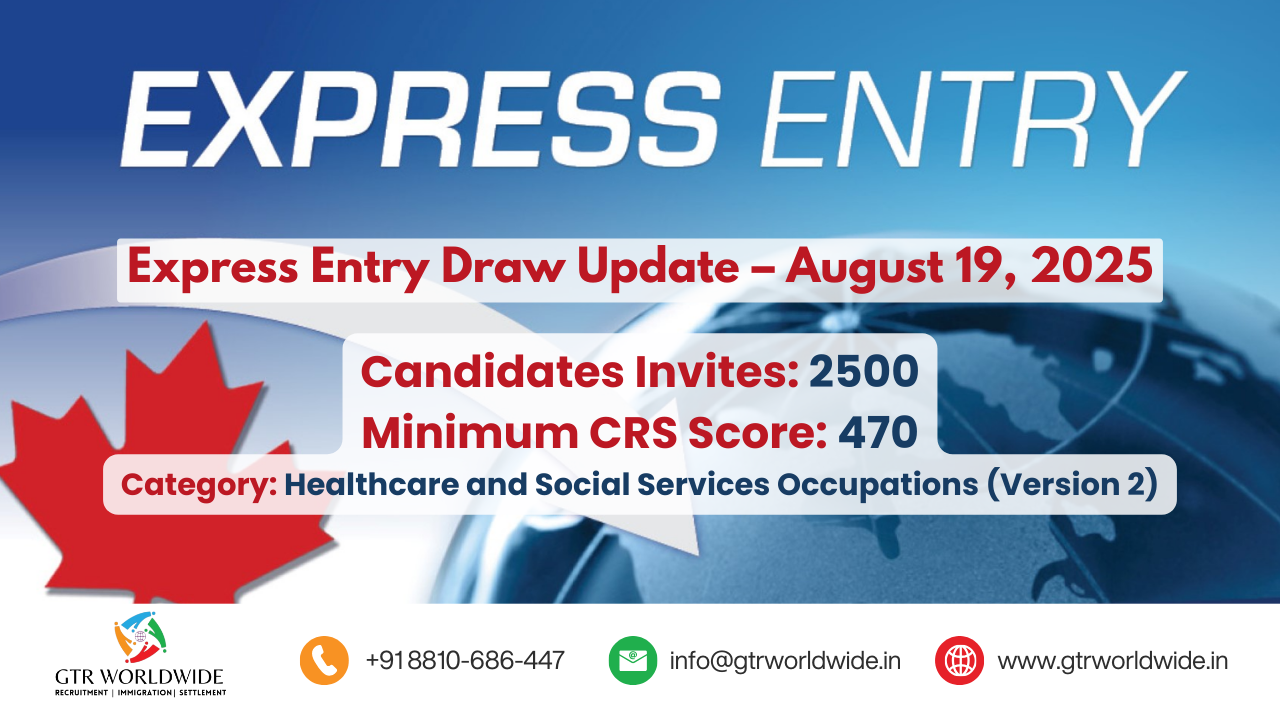
    In a significant and encouraging development for Canada PR aspirants, Immigration, Refugees and Citizenship Canada (IRCC) has once again demonstrated its commitment to attracting skilled healthcare workers. In the latest Express Entry draw occurred on August 19, 2025, department has just issued 2,500 Invitations to Apply (ITAs) for permanent residence to candidates in the Express Entry pool with experience in the healthcare and social services sector.

    This latest draw, the second-largest of its kind this year, highlights a clear and consistent trend in Canada’s immigration strategy. With a minimum Comprehensive Ranking System (CRS) score of just 470, the draw’s cut-off score is a welcome relief for many hopefuls. This targeted approach offers a distinct advantage to those with in-demand skills, providing a more direct and accessible pathway to permanent residency compared to the high-scoring general draws.

    Overview of the latest Express Entry Draw

    The draw marks the fifth of the month and the second in a single week, underscoring the rapid pace of selections. It also confirms a pattern that began in May, where IRCC has held a dedicated healthcare and social services draw every month, a notable increase in frequency compared to the earlier part of the year. This shift signals a heightened priority for these professions, which are crucial to meeting Canada’s growing labor market demands. Find below the summary of the new EE draw:

    • Express Entry Draw number: 362
    • Date: Aug 19, 2025
    • Number of invitations: 2,500
    • Category: Healthcare and social services occupations (Version 2)
    • Cut-off score: 470

    Express Entry Draw Result – 19 August 2025

    DateEE Draw CategoryNo. of ITAsMinimum CRS Score RequirementTie-breaking rule
    Aug 19, 2025Healthcare and social services occupations (Version 2)2,500470April 23, 2025 at 20:08:53 UTC

    While Provincial Nominee Program (PNP) draws and French language proficiency draws have been frequent in 2025, this latest announcement reinforces that Express Entry’s category-based selection is a powerful tool for skilled workers in specific fields. So far this year, IRCC has issued a total of 55,820 ITAs, with a clear focus on specific categories.

    For a Canada PR aspirant, this news is more than just a statistic; it’s a beacon of hope. It confirms that the right professional background can be the key to unlocking the door to a new life in Canada, even in a competitive Express Entry landscape.

    Draw TypeNumber of Draws
    Provincial Nominee Program (PNP)15
    Canadian Experience Class (CEC)8
    French-language proficiency4
    Healthcare and social services4
    Education1

    Tips to Improve Your CRS Score

    If your CRS score is close to the cut-off, here are strategies to boost your profile:

    1. Retake a language test (IELTS/CELPIP or TEF) to score higher in English or French.
    2. Claim spousal points — if your partner can complete a language test or add educational/work credentials.
    3. Pursue a Canadian job offer in a healthcare or social service role (adds 50–200 CRS points).
    4. Apply for Provincial Nominee Programs (PNPs) — a nomination adds 600 CRS points, guaranteeing an ITA.
    5. Update work experience — ensure your NOC codes match the eligible occupations listed by IRCC.

    The August 19, 2025 Express Entry draw highlights how Canada is making immigration pathways more accessible for healthcare and social service professionals. With a cut-off score of just 470, many skilled candidates who were previously on the margin now have an excellent chance of securing permanent residency.

    For applicants in these sectors, staying proactive by updating your Express Entry profile and exploring CRS-boosting strategies can be the key to success in upcoming draws.