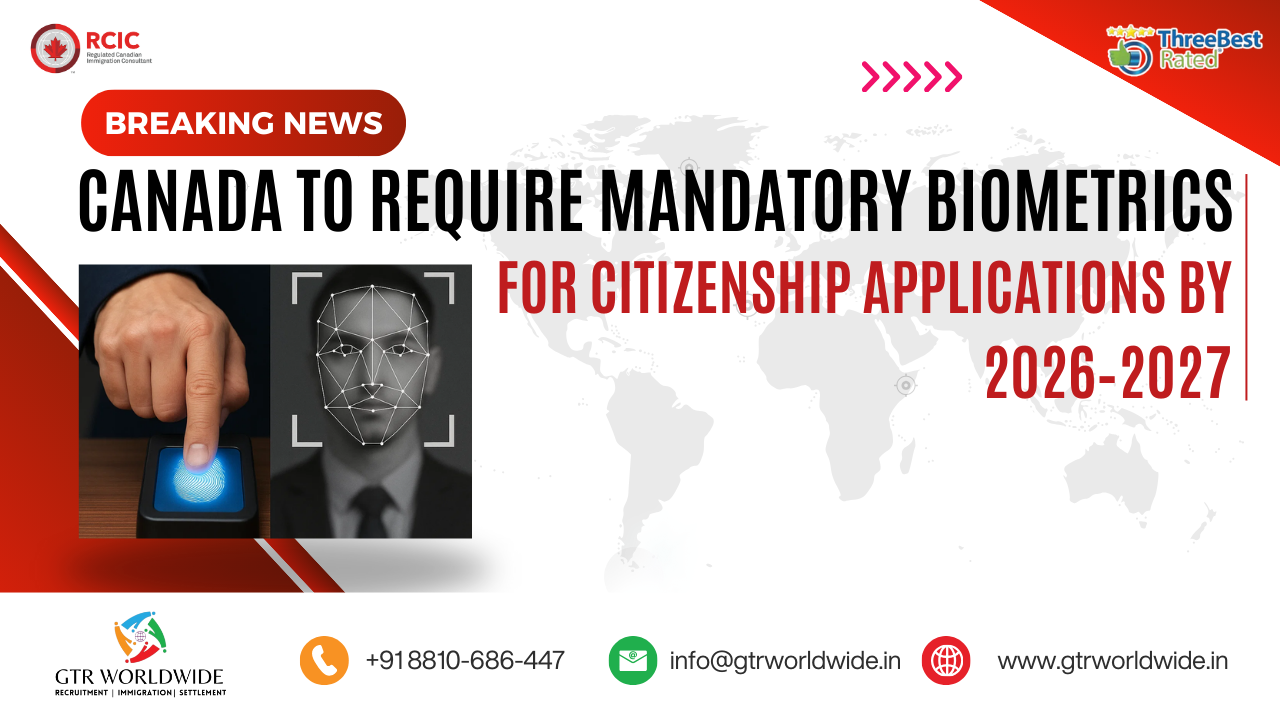
Canada is moving forward with plans to modernize its citizenship process. Beginning in 2026–2027, Immigration, Refugees and Citizenship Canada (IRCC) intends to make biometric submission a mandatory step for citizenship grant applications.
What’s Changing: Biometric Requirement for Citizenship
- IRCC is preparing regulatory amendments to the Citizenship Regulations that will require the systematic collection of biometric data (fingerprints, facial recognition, etc.) for all citizenship applications.
- This authority was established under the Budget Implementation Act, No. 1 passed in June 2023.
- The change is part of a broader effort to modernize procedures and strengthen program integrity.
Why Biometrics Are Being Implemented
- Enhanced identity verification: Reduces fraud by ensuring applicants are who they claim to be.
- Program integrity: Improves reliability of background and criminality checks.
- Greater efficiency: Automation supported by biometrics will accelerate processing, with up to 93% of applications benefiting from faster intake decisions.
- Overall objective: To deliver stronger security, better client service, and more efficient processing.
Timeline: From Consultation to Final Regulation
- This initiative is included in IRCC’s Forward Regulatory Plan for 2025–2027, announced on July 16, 2025.
- Draft amendments will be published in the Canada Gazette, Part I in 2026 for public consultation.
- Final regulations are expected in 2027 following stakeholder input and review.
What Applicants Should Expect
- Starting in 2027, all citizenship applicants will likely need to provide biometrics as part of their application.
- The change is designed to impact clients, not businesses or trade.
- Preparation tip: Applicants should plan ahead for fingerprinting or facial recognition submission requirements.
Privacy, Security, and Data Protection
- IRCC emphasizes strict adherence to privacy laws, including the Privacy Act and Charter protections.
- Fingerprints will be permanently removed from RCMP records once citizenship is granted.
- Investments are being made in upgraded biometric technology to ensure secure collection and processing.
Key Takeaway
By 2027, biometric enrollment will become a standard part of Canadian citizenship applications. This shift, focused on modernization, efficiency, and security, means that applicants, lawyers, and consultants should monitor IRCC updates, prepare for consultations, and adjust application practices accordingly.
Leave a Reply