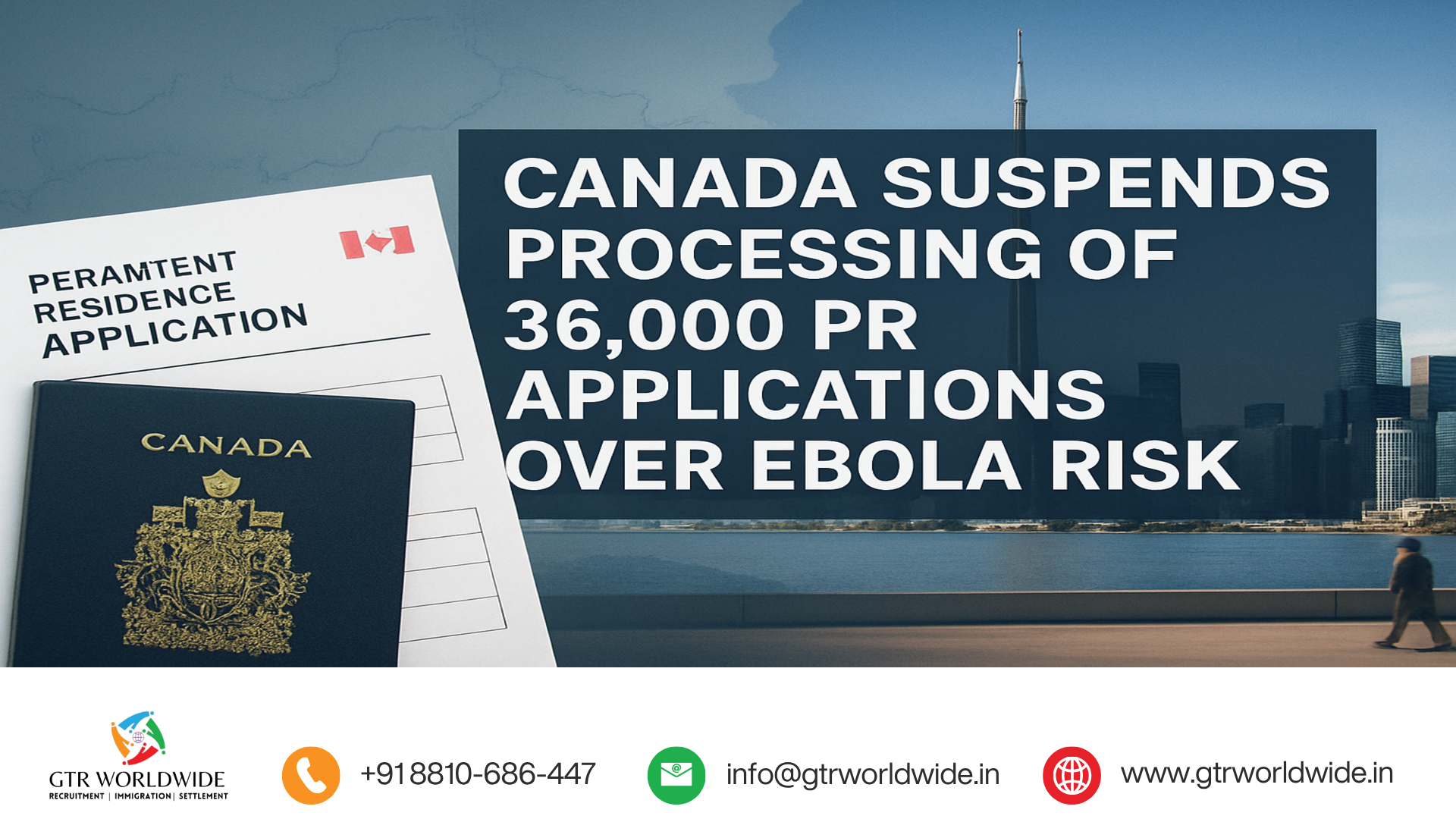
Canada suspends processing of around 36,000 PR applications amid Ebola risk in DRC, Uganda and South Sudan
Immediate summary: what changed and why it matters
On 27 May 2026, the Government of Canada suspended processing of roughly 36,000 permanent residence (PR) applications and halted issuance and use of approximately 1,700 PR visas issued to people from the Democratic Republic of the Congo (DRC), Uganda and the Republic of South Sudan. The move — announced in the Canada Gazette on 13 June 2026 at 2 p.m. and set to remain in effect for 90 days — also affects temporary residence travel documents, including temporary resident visas (TRVs) and electronic travel authorizations (eTAs). Ottawa says the action responds to a “high or very high risk of an outbreak of Ebola disease” in those three countries. Affected applications will not be processed while the suspension is in force and affected document holders are unable to travel to Canada unless they fall under a specified exemption.
This update matters because it interrupts the normal path for many people who were at various stages of immigration to Canada: permanent residence applicants, recent PR visa recipients who planned to travel, and holders of temporary travel documents. The suspension is the first public use of powers granted by Bill C-12, which took effect in March 2026 and allows the Governor in Council to issue orders suspending immigration application processing and related permits.
Legal and policy context behind the measure
The government framed the measure as a public‑health and border‑management response. Bill C-12, a law that came into force in March 2026, expanded executive authority to pause immigration processing in defined circumstances. According to the official publication in the Canada Gazette, the order targeting the DRC, Uganda and South Sudan invokes that authority as a temporary quarantine-related measure tied to the identified Ebola risk.
Because the action was published in the Canada Gazette, the numbers reported there — about 36,000 affected PR applications and roughly 1,700 PR visas — are the official counts tied to this order as of the Gazette publication timestamp (June 13, 2026 at 2 p.m.). The suspension covers both permanent and temporary travel documents originating from the specified countries, creating a single, time-limited policy response across several immigration categories rather than a narrower program-specific pause.
Exactly what has been suspended
The Canada Gazette notice and related announcements specify these concrete elements:
- Processing for approximately 36,000 pending permanent residence applications linked to foreign nationals in the Democratic Republic of the Congo, Uganda and the Republic of South Sudan has been suspended.
- About 1,700 PR visas already issued to individuals from those same countries have been suspended, effectively preventing those visa holders from travelling to Canada while the measure is in force.
- Temporary residence documents — including temporary resident visas (TRVs) and electronic travel authorizations (eTAs) — tied to people from the listed countries are also impacted.
- The suspension took effect on 27 May and is set to remain in effect for 90 days from that date. While in force, affected applications will not be processed and affected document holders cannot travel to Canada unless they qualify under a specified exemption set out by the government.
No further procedural details or lists of exemptions were included in the Gazette figures published on June 13, 2026; the government has indicated the suspension is tied to assessments of Ebola risk in the named countries.
Why this step is notable in immigration policy
Two aspects make this development notable:
First, the intervention is explicitly framed as quarantine-related and tied to infectious disease risk — a public-health justification that can directly affect immigration processing timelines. Second, this is the first recorded use of the specific authority created or clarified by Bill C-12, which provides the Governor in Council the power to suspend processing of immigration applications and permits in circumstances deemed necessary. That first use establishes a precedent for how such powers might be applied in future public‑health or other emergency scenarios.
For applicants and stakeholders, the combination of health rationale and new statutory authority signals that immigration processing can be paused nationwide for narrowly defined geopolitical or epidemiological situations. The government’s choice to apply the suspension to multiple document types — PR visas, TRVs and eTAs — shows a broad, transport‑and‑entry focus rather than a narrow administrative tweak.
Who is directly and indirectly affected
Directly affected parties named in the official notice include:
- Foreign nationals from the Democratic Republic of the Congo, Uganda and the Republic of South Sudan with pending permanent residence applications — these roughly 36,000 files will not be processed while the suspension is active.
- People from those three countries who already hold PR visas — around 1,700 individuals who received PR visas before the order are prevented from travelling to Canada to activate those visas while the suspension applies.
- Holders of temporary residence travel documents from those countries, including TRVs and eTAs, who face restrictions on travel to Canada unless they meet a specified exemption.
Indirectly affected parties could include family members in Canada expecting reunification, employers awaiting incoming workers, educational institutions expecting international students, or service providers involved in travel and relocation. The source content does not provide a list of exempt categories or examples of indirect consequences; any broader impacts must be understood as logical ripple effects rather than stated facts in the official notice.
Practical implications for applicants and document holders
From the information published in the Canada Gazette, applicants and visa holders should expect these immediate practical outcomes:
- Processing delays for those 36,000 permanent residence applications. Files that were active on or after 27 May will not move forward during the 90‑day suspension window.
- PR visa holders from the affected countries will be unable to travel to Canada to use their visas while the suspension is in force, which may delay landing dates and the activation of permanent resident status.
- Temporary travel permissions (TRVs, eTAs, and other temporary residence travel documents) tied to the specified countries are likewise suspended for travel unless the holder meets a government exemption.
- The suspension is explicitly time‑limited to 90 days from its effective date. During that timeframe, no processing of affected applications will occur under this order; after the 90 days, the government may allow processing to resume, extend the suspension, or take other measures — the Gazette publication provides the snapshot of the decision but not any subsequent administrative steps.
Because the published notice cites public‑health risk as the reason, travellers and applicants should not assume processing simply resumes automatically once the 90 days expire; follow-up announcements or further orders could modify the timeline.
What applicants should watch and verify next
Given the suspension’s temporary nature and the limited detail in the official notice, applicants and document holders should monitor official Government of Canada publications and any specific communication that may be sent to them. Practical points to pay attention to include:
- Official updates published in the Canada Gazette or by immigration authorities confirming whether the suspension will be lifted, extended, or refined after the 90-day period.
- Any personal communications from immigration authorities regarding the status of a named application or visa, including whether an individual applicant may qualify for a specified exemption. The Gazette notice mentions exemptions but does not enumerate them; affected people should look for official guidance on those exemptions.
- Timing implications for landing, family reunification, employment start dates, or study plans that depend on travel to Canada. Where timelines were already tight, affected parties should prepare for delays and consider notifying Canadian employers, educational institutions, or family members as appropriate.
- Verification of official documentation: PR visa holders should check whether their visa has been administratively marked as suspended and whether any instructions have been provided about rebooking travel or reissuing documents once the suspension ends.
Because the source material does not list exemptions or procedural steps, applicants must rely on future official updates for firm guidance rather than speculative interim fixes.
Numbers and dates to keep in mind from the official notice
- Effective date of suspension: 27 May 2026 (measure took effect on this date).
- Publication of figures: Canada Gazette, June 13, 2026 at 2 p.m. — the counts are accurate as of that publication.
- Duration specified in the notice: 90 days from the effective date.
- Reported counts: approximately 36,000 permanent residence applications suspended; about 1,700 PR visas suspended preventing travel to Canada.
These are the concrete figures and timestamps provided in the official Gazette notice; any other timelines or numbers are not included in the source content and should not be assumed.
How to remain informed and practical next steps
Because this situation is active and the government has indicated updates will follow, the most reliable course is to watch for new, official communications. Applicants and visa holders should retain copies of their immigration correspondence and be ready to present documentation if an exemption or special processing path is announced. Where travel or arrival in Canada was already planned, affected parties should prepare contingency plans in consultation with Canadian contacts (for example, employers or educational institutions), while avoiding assumptions about alternative arrangements until the government provides explicit guidance.
Finally, those assessing eligibility for Canadian permanent residence are reminded that the official notice itself repeats the prompt to “See your eligibility for Canadian permanent residence.” Affected applicants who believe their case might be eligible for an exemption will need to wait for the government to publish or clarify the specific exemption criteria referenced in the Gazette.
For personalized support with your Canadian immigration pathway, contact GTR Immigration. Call us: +91-8810-686-447
#CanadaImmigration #EbolaRisk #PermanentResidence #PRApplications #TravelRestrictions #ImmigrationUpdate #BillC12
Leave a Reply