Quebec baptismal records and citizenship by descent: how IRCC treats parish registers and what applicants must do
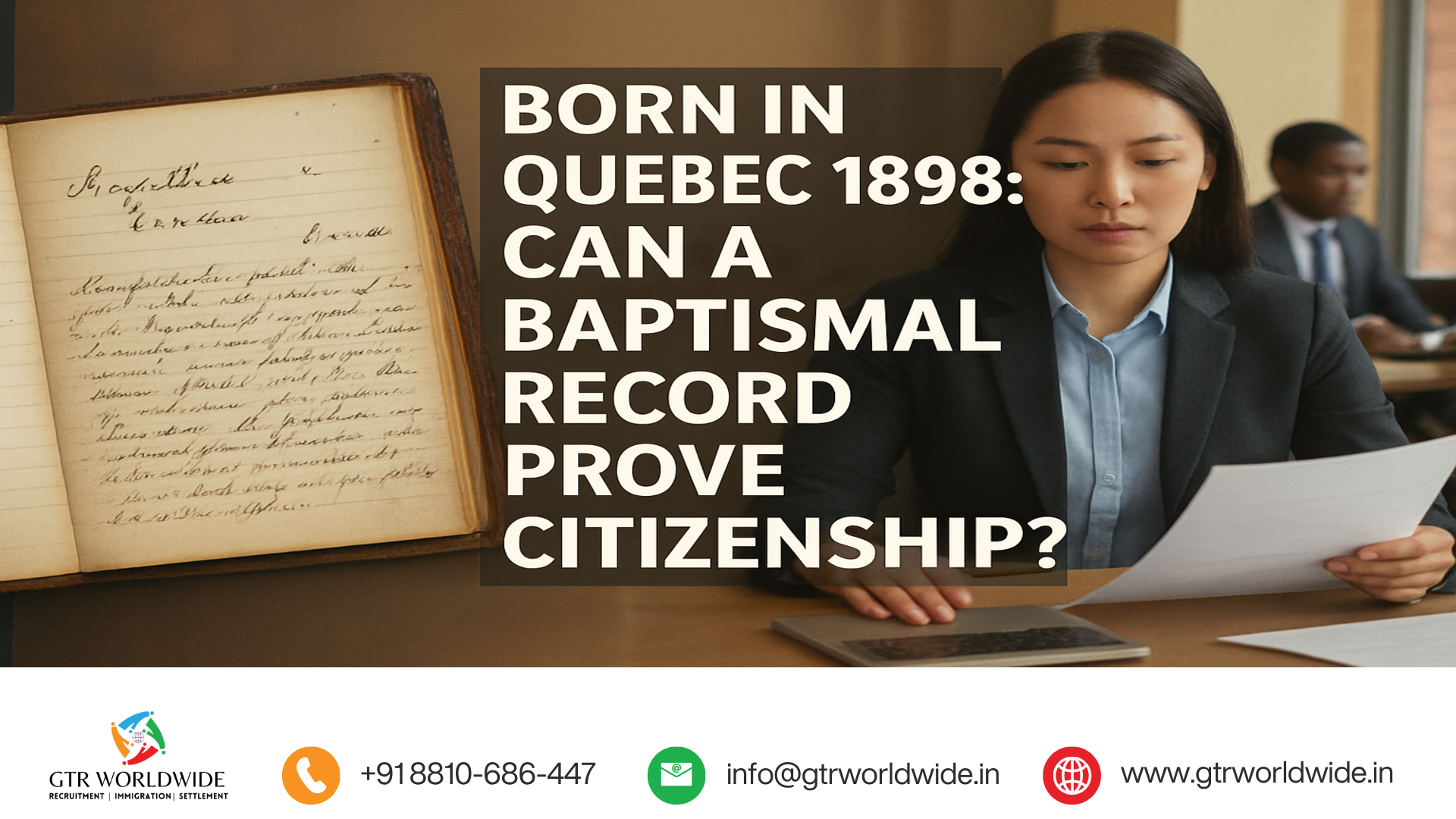
For many genealogy-based citizenship claims, a parish baptismal entry is the only original birth record for ancestors born in Quebec before 1994. Immigration, Refugees and Citizenship Canada (IRCC) treats these baptismal acts as secondary evidence rather than a primary civil birth certificate. That does not automatically block a citizenship-by-descent claim, but it does change how officers assess a file and increases the need for supporting documentation. If your chain of descent depends on a Quebec baptismal act, you should prepare a clear, documented file before applying.
Why Quebec parish records are common
Until 1994, parish clergy in Quebec acted as civil registrars and recorded births, baptisms, marriages and deaths in parish registers. Those parish acts — with courthouse duplicates deposited at local archives — often served as the official record of birth. After 1994, responsibility moved to the Directeur de l’état civil (DEC), which reissues civil birth certificates when a civil registration exists. For many events before 1994, no separate civil birth certificate was ever created.
What “secondary” evidence means in practice
IRCC’s classification reflects evidentiary weight: a provincial birth certificate is primary; a parish baptismal act is secondary. Secondary evidence from the original holding authority (a diocesan archive or Bibliothèque et Archives nationales du Québec — BAnQ) is acceptable. By contrast, an unsourced printout from a genealogy website is a third‑party copy and cannot support a claim on its own. IRCC has said applications cannot rest solely on third‑party records.
What IRCC expects when a primary civil record is missing
IRCC guidance for cases without a primary document is twofold:
– Explain in writing why the civil record is unavailable.
– Show proof you tried to obtain it.
You do not strictly need a formal “No Record Found” letter, but tangible evidence of searches helps. Save email replies from archives, search confirmations from BAnQ, and any written response from the Directeur de l’état civil stating no civil registration exists for the name/date/parish.
Practical checklist when your anchor ancestor has only a baptismal act
– A copy of the parish act obtained from the diocesan archive, parish, or BAnQ (not only a genealogy website printout).
– Evidence of search attempts at the DEC, with any written replies or search confirmations.
– Correspondence with the diocese or parish archive detailing what registers they hold.
– Independent corroborating records: census entries, marriage and death certificates, immigration records, courthouse duplicates that match names/dates/relationships.
– If the act is in Latin, a professional translation and an affidavit from the translator (IRCC does not accept translations prepared by family members).
– A concise cover letter listing who you contacted, the parish and date, and summarizing each response. Attach copies of all correspondence and search results.
Matching records and name variants
Read the parish act carefully before filling forms. IRCC accepts documents in English or French without translation; Latin entries need an independent translation and affidavit. Make sure names and dates on your application match the register. Franco‑Québécois families often anglicized given names and surnames over time, so expect variants (for example, Marie → Mary). Unexplained changes in names or birth years are gaps; marriage certificates, legal name-change records, or consistent census entries can help bridge them.
How officers decide
Officers assess citizenship-by-descent claims on a balance of probabilities — whether your documentation makes your account more likely true than not. A documented search and a clear explanation convert an unexplained missing birth certificate into a plausible absence. Conversely, a missing document with no evidence of effort looks like a gap.
When to get professional help
Consider professional review if your chain has a sourcing gap, if generations rest on unsourced online copies, or if names diverge and you cannot explain the changes. Early expert review can be more efficient than chasing the wrong documents later.
Final practical tips
– Keep originals or authoritative copies from archives, not just screenshots from genealogy sites.
– Save all correspondence and search confirmations from DEC, diocesan archives, and BAnQ.
– Each generation in the chain must be documented; secondary evidence for one generation does not replace a missing record in another.
– IRCC may request certified copies later even though they are not required at filing.
For personalized support with your Canadian immigration pathway, contact GTR Immigration. Call us: +91-8810-686-447
#QuebecBirthRecords #CitizenshipByDescent #IRCC #ParishRegisters #Genealogy #DirecteurDeLEtatCivil #CanadianCitizenship #ImmigrationDocumentation
Leave a Reply