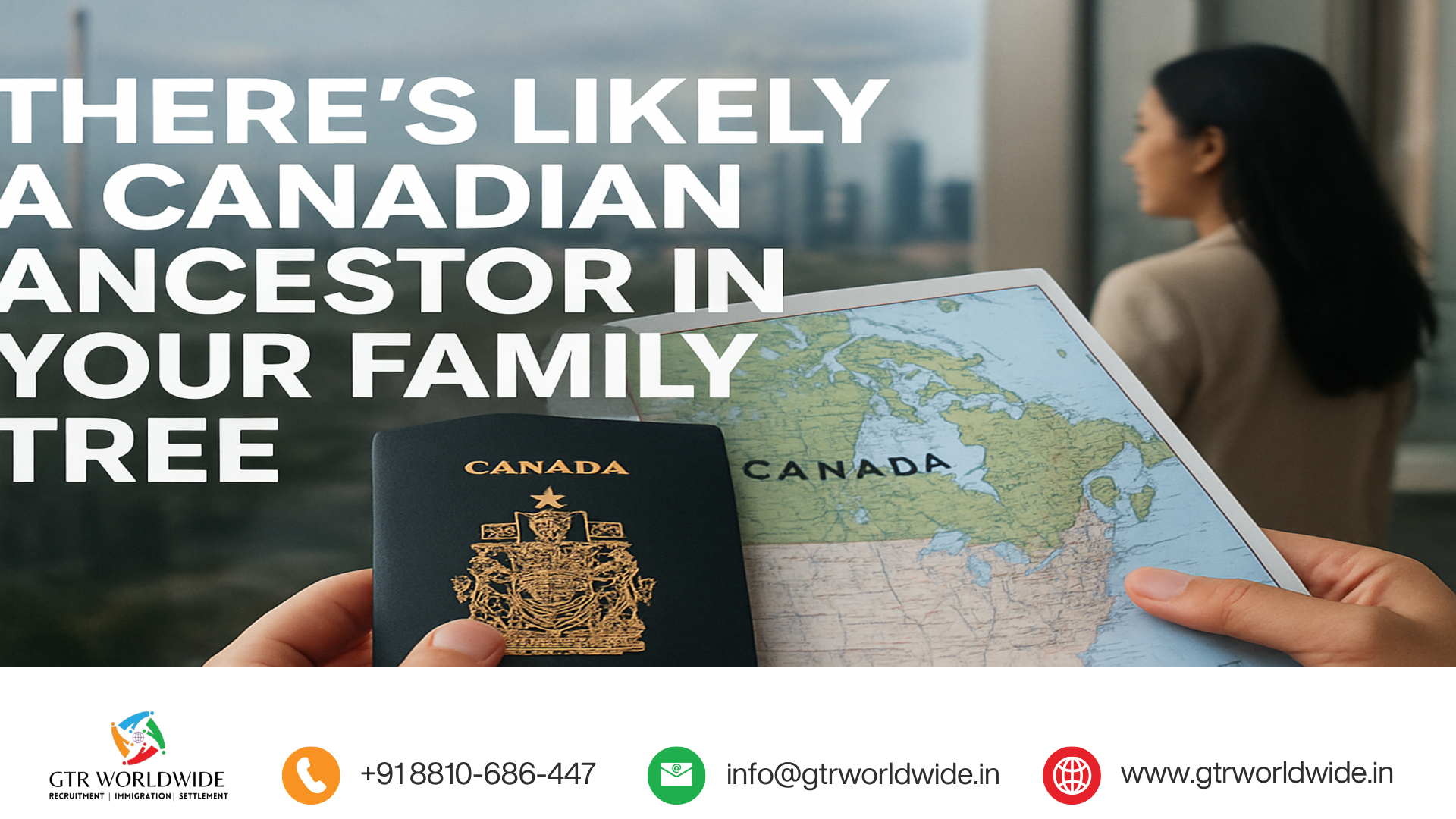
Canadian citizenship by descent: the December 15, 2025 rule change and what it means for families
The rule change that opens the door
On December 15, 2025 Canada removed the “first‑generation limit” on citizenship by descent. Previously, a Canadian parent born in Canada could pass citizenship only to the first generation born abroad. The change restores the ability to transmit citizenship across multiple generations: if you can trace an unbroken line to an ancestor who was Canadian, you may already be a Canadian citizen. This is not a residency pathway or a new naturalization program — it simply restores automatic transmission where the lineage can be documented. There are no language tests, residency requirements, citizenship exams, or oaths for people who already qualify by descent.
Why this matters
Family trees expand quickly, so one Canadian ancestor several generations back can mean dozens of living descendants with the same claim. Large migration waves from Quebec to New England mill towns and to parts of the Upper Midwest produced clusters of families whose Canadian roots are often overlooked. If an ancestor in your pedigree was born in Quebec or lived in New Brunswick before a family moved south, that single verified link could be enough.
Where to look first
Clues cluster around geography, surnames, and family stories:
– Geography: New England mill towns (Lewiston, Manchester, Lowell, Woonsocket, Fall River) and parts of Michigan, Minnesota and Washington State are strong leads. The source notes nearly 900,000 French Canadians left Quebec for textile work between 1840 and 1930.
– Surnames: Names were often Anglicized — e.g., Leblanc → White, Boisvert → Greenwood, Roy → King, Charpentier → Carpenter, La Rivière → Rivers. A name change around the migration period often marks the crossing.
– Family stories: A vanished New Brunswick village, a village near Trois‑Rivières, a relative who prayed in French, or an elder whose birthplace wasn’t asked about are softer clues that point where to search.
What IRCC expects as proof
IRCC divides evidence into primary and secondary documents by their evidentiary value.
– Primary: Records IRCC values most — provincial birth certificates, citizenship or naturalization certificates, and proof of British subject status before 1947. For every generation in the chain you should supply, or at least attempt to obtain, at least one primary document issued by the office that created the record.
– Secondary: Supportive items like baptismal records, census pages, marriage and death records, passenger manifests and military files. These strengthen a file but generally cannot carry a generation on their own.
Key procedural notes
– Downloads from genealogy websites count as third‑party material and are not a substitute for originals ordered from the issuing authority.
– IRCC does not require certified copies up front, though an officer may request them if authenticity is questioned.
– If a record is unavailable, document your search efforts so you can show you tried.
Common mistakes to avoid
1. Treating secondary documents as if they were primary.
2. Relying on genealogy site downloads instead of ordering originals from issuing authorities.
3. Leaving unexplained gaps when names or dates shift between records.
4. Assuming volume replaces clarity — inconsistent documentation can weaken a claim.
What a citizenship certificate gives you
A citizenship certificate is legal proof of Canadian citizenship. It lets you enter, live and work in Canada without visas or sponsorship and enables you to apply for a Canadian passport, which can expand visa‑free travel and work options abroad. Canadian citizens can access International Experience Canada working‑holiday opportunities in many countries. Canada and the United States both permit dual citizenship; holding both does not automatically create Canadian tax obligations for a non‑resident (Canada taxes residents, not citizens).
Timing and next steps
Processing for citizenship by descent is lengthy (the source cites about 25 months). Your application clock starts when IRCC receives a complete file, so prepare thoroughly before you file.
Practical steps
1. Identify the ancestor and trace the line generation by generation.
2. Prioritize primary documents for each generation.
3. Use secondary evidence to support and explain gaps.
4. Order originals from issuing authorities; document searches when records are unavailable.
5. Provide clear written explanations for name/date discrepancies.
6. Expect a long processing time and consider professional review for complex cases.
Who benefits most
This change primarily helps descendants of Canadians who emigrated (especially from Quebec to New England and the Upper Midwest), people whose family records are thin after land crossings, and those whose claims were previously blocked by the one‑generation cap.
For personalized support with your Canadian immigration pathway, contact GTR Immigration. Call us: +91-8810-686-447
#CanadianCitizenship #CitizenshipByDescent #IRCC #CanadianAncestry #DualCitizenship #ImmigrationLaw #CanadianPassport #FamilyHistory
Leave a Reply