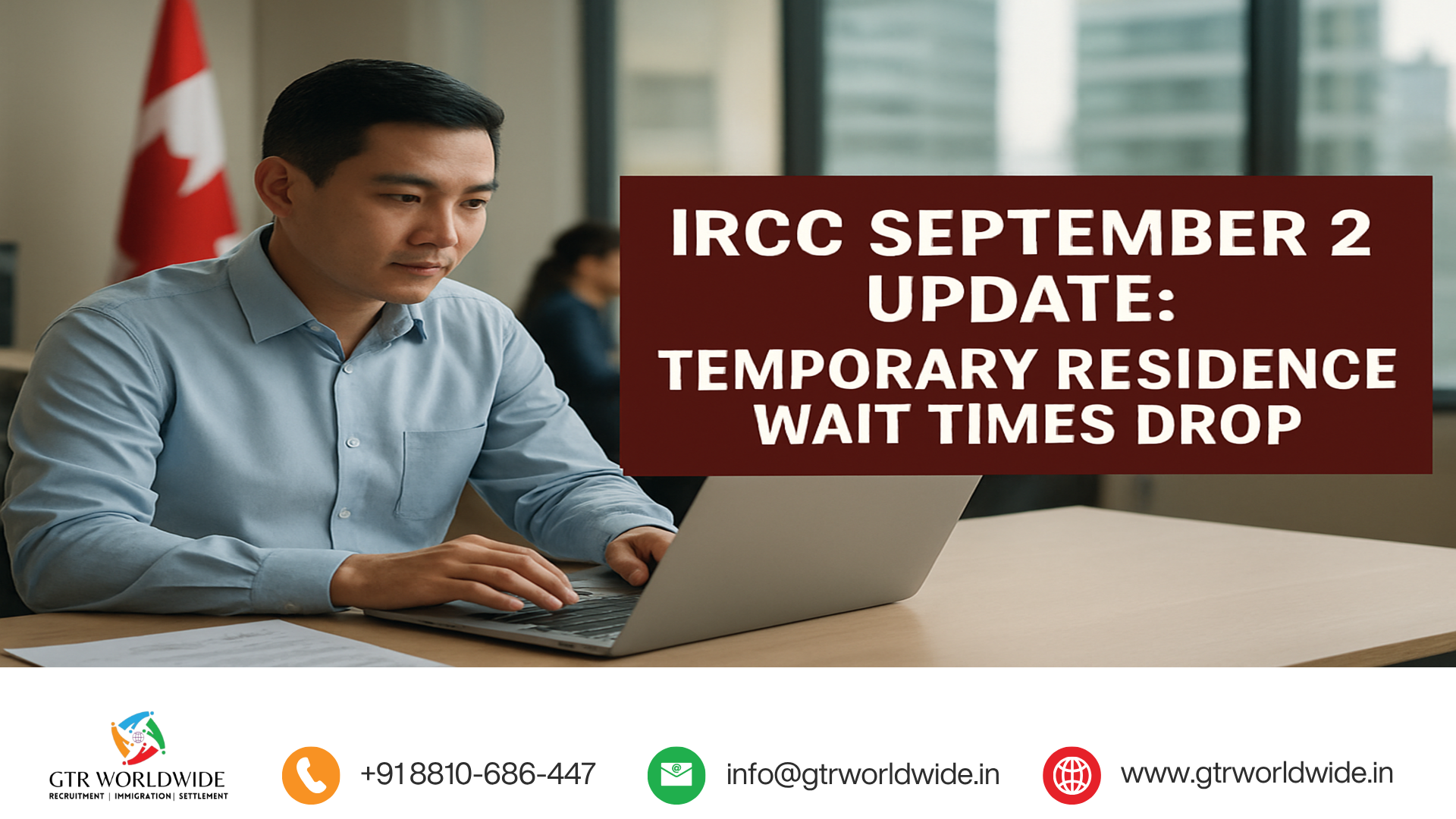
Canada temporary-residence update — IRCC processing time changes (Sept 2, 2026)
On September 2, Immigration, Refugees and Citizenship Canada (IRCC) published revised processing-time estimates for several temporary-residence categories. Some waits shortened — notably work permits from Pakistan (one-week decline), study permits from India (two-week decline), and super visas from Pakistan (23-day decline) and the Philippines (11-day decline). At the same time, IRCC reported increases: work permit waits rose by two weeks for the Philippines and by one week for India, and in-Canada study permit processing rose by one week to its highest level in at least three months. These shifts can affect travel plans, job start dates, and family reunification timing.
Why IRCC’s weekly updates matter
IRCC posts two related measures: processing-time estimates and service standards. Processing-time estimates are rolling figures that indicate how long a newly submitted application may take, based on historical completion rates or forward-looking inventory and capacity projections. Service standards are performance targets (typically finalizing 80% of files within a stated timeframe) and are updated less often—the temporary-residence service standards were last revised in 2018–2019.
Temporary-residence processing estimates are updated weekly, so small week-to-week changes are normal. The September 2 update compares current waits with the August 26 figures. The next update is expected on or around September 9, 2026.
Context: volumes
IRCC reported it processed 1,566,455 temporary-residence applications in the first half of 2026, with more than 401,000 still awaiting a decision at the end of June. Those volumes help explain weekly timing fluctuations.
Key changes in the Sept 2 update (vs Aug 26)
Work permits
– Applying from Canada (in-Canada submissions): 113 days (was 115 days) — a new low for 2026.
– Applying from India: 10 weeks (was 9 weeks) — +1 week.
– Applying from Pakistan: 7 weeks (was 8 weeks) — −1 week.
– Applying from Nigeria: 9 weeks (unchanged).
– Applying from the United States: 2 weeks (unchanged).
– Applying from the Philippines: 7 weeks (was 5 weeks) — +2 weeks (largest increase in this update).
Service standards: in-Canada submissions (initial and extensions) — 120 days; outside-Canada submissions — 60 days.
Study permits
– Applying from Canada: 8 weeks (was 7 weeks) — +1 week; highest in at least three months.
– Applying from India: 5 weeks (was 7 weeks) — −2 weeks.
– Applying from Pakistan: 7 weeks (unchanged).
– Applying from Nigeria: 9 weeks (unchanged).
– Applying from the United States: 5 weeks (unchanged).
– Applying from the Philippines: 4 weeks (unchanged).
Service standards: in-Canada submissions (initial and extensions) — 120 days; outside-Canada submissions — 60 days.
Visitor visas
Changes were small (one to two days):
– Applying from Canada: 11 days (was 12 days).
– Applying from India: 31 days (was 32 days).
– Applying from Pakistan: 78 days (was 77 days).
– Applying from Nigeria: 80 days (was 78 days).
– Applying from the United States: 20 days (was 21 days).
– Applying from the Philippines: 18 days (was 20 days).
Service standard: outside-Canada submissions — 14 days; in-Canada submissions — N/A.
Super visas
Mostly shorter waits, except for India:
– Applying from India: 66 days (was 61 days) — +5 days.
– Applying from Pakistan: 139 days (was 162 days) — −23 days.
– Applying from Nigeria: 52 days (was 55 days) — −3 days.
– Applying from the United States: 116 days (was 123 days) — −7 days.
– Applying from the Philippines: 93 days (was 104 days) — −11 days.
Service standard: 112 days. Note: super visa applications must be submitted from outside Canada.
How to interpret these movements
– Small absolute changes can still matter. A one- or two-day shift for visitor visas is minor for most travellers, while multi-week moves for work permits or super visas can materially affect start dates and family arrangements.
– Country-level differences persist. India, Pakistan and the Philippines showed the most notable week-to-week movement in this update.
– Service standards are targets, not guarantees, and estimates can be above or below them. For example, the service standard for in-Canada work permits is 120 days while the current estimate is 113 days (below that target).
– Individual files can be delayed by application complexity, requests for additional documents, or further checks.
Who should pay attention
– Employers and temporary workers: watch work permit estimates when coordinating start dates (the Philippines saw a two-week increase).
– Students and institutions: a two-week improvement for applicants from India may reduce the risk of missed term starts; in-Canada applicants should note the one-week rise.
– Visitors and travel planners: small changes still matter for time-sensitive travel.
– Families using the super visa: notable declines for Pakistan and the Philippines may shorten planning timelines; applicants from India should note the small increase.
Practical tips
– Factor current IRCC estimates into scheduling and contingency planning.
– Prepare complete applications to reduce chances of additional document requests.
– Consider flexible start dates, remote onboarding, or backup travel plans.
– Check the weekly IRCC update before making major travel or employment commitments.
Next steps and reminders
– Next weekly update: expected on or around September 9, 2026.
– Service standards to remember:
– Work and study permits: in-Canada — 120 days; outside Canada — 60 days.
– Visitor visas: outside Canada — 14 days; in-Canada — N/A.
– Super visa: 112 days (applications only from outside Canada).
– Volumes: 1,566,455 temporary-residence applications processed in H1 2026; 401,000+ still pending at end of June.
IRCC’s Sept 2 update shows modest but meaningful week-to-week shifts. Treat published estimates as planning tools, not guarantees, and keep contingency plans ready.
For personalized support with your Canadian immigration pathway, contact GTR Immigration. Call us: +91-8810-686-447
#CanadaImmigration #IRCC #WorkPermit #StudyPermit #VisitorVisa #SuperVisa #ProcessingTimes #ImmigrationUpdate
Leave a Reply