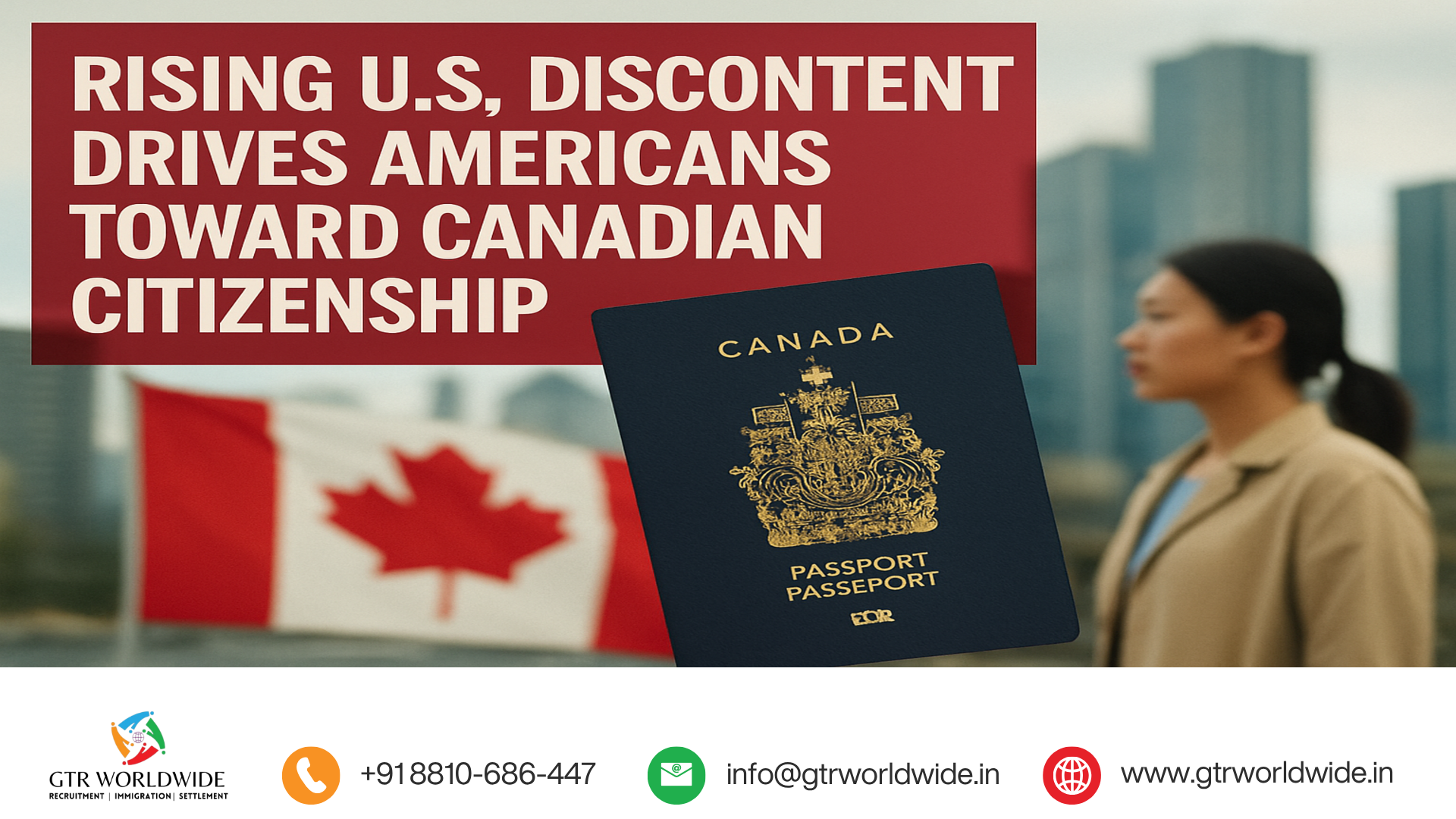
Bill C-3 and the “Mark Carney Effect”: Why U.S. citizens with Canadian ancestry are flocking for proof of Canadian citizenship
Immediate significance: a legal change that meets political sentiment
Bill C-3 came into force on December 15, 2025, and removed the “first-generation limit” from the Citizenship Act. That change allows many people — including U.S. citizens born before December 15, 2025 — to claim Canadian citizenship by descent if they can document an unbroken line to a Canadian ancestor. Since the change, applications have surged: January 2026 saw more U.S. applications than the next nine source countries combined, and the national queue for citizenship decisions rose from 70,400 in May 2026 to 136,000 by September 2026. Processing time for a proof of citizenship application was reported at 33 months in September 2026 and is updated monthly.
Why this matters
For eligible Americans, a citizenship certificate confirms rights to live, work and study in Canada without a permit, to apply for a Canadian passport, and to access public services if they settle in Canada. Canada allows dual citizenship, and obtaining the certificate alone does not, by itself, create Canadian tax residency for U.S. residents. The scale of demand and long processing timelines make careful preparation essential.
How Bill C-3 changed descent rules
Previously, the “first-generation” rule limited transmission of citizenship to children born abroad. Bill C-3 removed that restriction for people born abroad before December 15, 2025 who can demonstrate an unbroken line of descent from a Canadian ancestor (parent, grandparent, great-grandparent or further back). For children born abroad on or after December 15, 2025, a Canadian parent who was also born abroad must have spent at least 1,095 days (three years) physically present in Canada before the child’s birth to pass citizenship automatically.
Context: political sentiment and the “Mark Carney Effect”
Polling reported rising dissatisfaction with U.S. leadership, and some Americans are increasingly interested in leaving the U.S. That trend intersects with favorable views of Canada: a Spark Insights survey cited roughly 70% approval for the Carney government and 74% approval for how relations with the U.S. are being handled. Media accounts, including writing in Maclean’s, describe an influx of record requests from U.S. residents seeking to document family ties — a phenomenon some have called the “Mark Carney Effect.”
What the surge looks like in practice
– U.S.-origin applications in January 2026 exceeded the combined total of the next nine source countries.
– The backlog for citizenship decisions grew from 70,400 in May 2026 to 136,000 in September 2026.
– Processing time for a proof of Canadian citizenship application was reported at 33 months in September 2026.
Who is most directly affected
– U.S. citizens born before December 15, 2025 who can document an unbroken descent from a Canadian ancestor.
– Children born abroad before December 15, 2025 (covered by Bill C-3).
– Children born abroad on/after December 15, 2025, where the Canadian parent born abroad must meet the 1,095-day residency rule.
– Younger applicants who, after certification, can access International Experience Canada youth mobility agreements.
Practical implications and planning tips
– Documentation matters. Compile thorough genealogical and vital records to prove the unbroken line of descent.
– Expect long processing delays and plan accordingly; an incomplete file can add years to the timeline.
– Consider professional guidance from qualified immigration lawyers or specialists to reduce the risk of errors.
– If filing for a child born on/after December 15, 2025, confirm whether the parent meets the 1,095-day residence requirement.
– Remember that a citizenship certificate does not, by itself, change tax residency; Canada taxes based on residency, not citizenship.
Key numbers and dates to remember
– Bill C-3 effective date: December 15, 2025.
– Residency requirement for children born on/after December 15, 2025: 1,095 days in Canada for a Canadian parent born abroad.
– Queue growth: 70,400 waiting in May 2026; 136,000 waiting in September 2026.
– Processing time for a proof of Canadian citizenship: 33 months as of September 2026.
– January 2026: U.S. applications exceeded the combined total from the next nine source countries.
Next steps
– Confirm your eligibility under Bill C-3 and establish the unbroken line of descent.
– Gather certified vital records and archival materials early.
– Factor current processing times into your plans.
– Consider legal or immigration advice if you’re unsure about documentation.
– Monitor official processing-time updates from Canadian authorities.
For personalized support with your Canadian immigration pathway, contact GTR Immigration. Call us: +91-8810-686-447
#BillC3 #CanadianCitizenship #ProofOfCitizenship #DualCitizenship #CanadaImmigration #MarkCarneyEffect #USApplicants
Leave a Reply