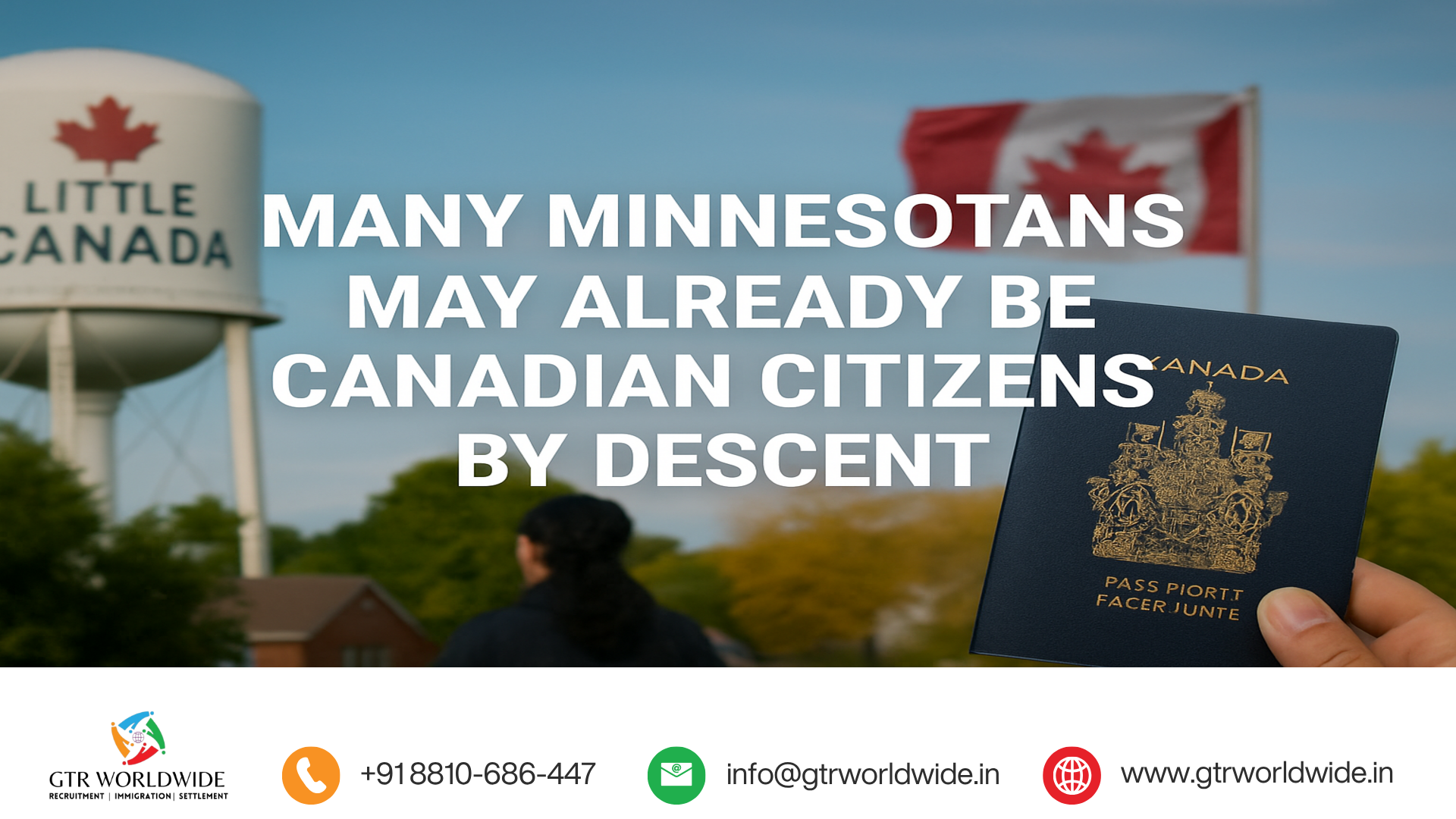
Bill C-3 and Canadian citizenship by descent — what Minnesota residents need to know
Why this matters now
On December 15, 2025, Canada’s Bill C-3 removed the “first-generation limit” in the Citizenship Act. That change means people who can trace an unbroken line of descent to a Canadian ancestor may already be Canadian citizens by descent. For Minnesotans — in a state with deep French Canadian roots and places like Little Canada near St. Paul — that could affect a sizable number of residents. A citizenship certificate lets you apply for a Canadian passport and to live, work, and travel as a Canadian, and it does not by itself create Canadian income tax obligations.
Minnesota’s historical ties to Canada
French Canadian migration shaped parts of Minnesota in the 19th century. Settlements founded by French Canadian families influenced place names, local institutions, and even the state motto, L’Étoile du Nord. Little Canada, founded in 1844, is a visible reminder of that heritage. Those historical connections matter today because Canada’s citizenship-by-descent rules recognize ancestry regardless of how long a family has lived outside Canada.
What Bill C-3 changed
Previously, Canadian law limited transmission of citizenship to one generation born abroad. Bill C-3 removed that restriction. Now, if you can document each generational link to a Canadian-born ancestor, you may already be a Canadian citizen by descent. The practical step is applying for a proof of citizenship and receiving a Canadian citizenship certificate, which is the official document needed for a passport.
Who in Minnesota may qualify
The U.S. 2024 American Community Survey five-year estimates report more than 6,000 Minnesotans with “Canadian” ancestry and more than 41,000 with “French Canadian” ancestry. Combined, those categories represent roughly 47,000 ancestry responses in Minnesota that could indicate a potential claim under citizenship-by-descent rules. These figures are self-reported ancestry responses (not unique individuals), and the actual number of eligible people is likely higher because families sometimes lose track of distant ancestors.
Practical benefits for successful applicants
– A Canadian citizenship certificate is proof of citizenship and enables application for a Canadian passport.
– Canadian citizens can live and work in Canada without extra immigration permission.
– Young people (under 30, or 35 in some cases) may access youth mobility arrangements that allow work and travel in many countries, mainly in Europe.
– Receiving a certificate does not automatically make you liable for Canadian income tax; tax obligations depend on residence and income sources.
Documentary requirements and common challenges
Citizenship depends on documentary proof. Each link in the chain from you back to the Canadian-born ancestor must be supported by original-source documents (birth, marriage, etc.) issued by authoritative bodies. Common hurdles include missing or incomplete records, older records in another language or script, and the need for certified copies or translations. Family stories or census self-identification do not replace primary documents.
How to assess whether to pursue a claim
1. Identify the Canadian-born ancestor and map each generational link to yourself.
2. Check whether official records exist for each link (births, marriages, etc.).
3. If primary-source documents appear obtainable, prepare a proof of Canadian citizenship application with those originals or certified copies as required.
4. If records are missing, search local archives, historical societies, or vital statistics offices where the ancestor lived.
Scenarios and likely outcomes
– Recent discovery of a Canadian-born grandparent: If you can document the line, your claim is often straightforward under the revised law.
– Claims through great-grandparents or earlier: Bill C-3 allows these descendants to qualify, but you must produce reliable records for the additional generations.
– Young adults seeking mobility: Citizenship can expand work-and-travel options through youth mobility arrangements.
– Tax concerns: Citizenship itself does not equal tax residency; tax status depends on where you live and earn income.
Key dates and figures to remember
– Bill C-3 came into force on December 15, 2025.
– U.S. Census Bureau 2024 American Community Survey five-year estimates: more than 6,000 Minnesotans reported “Canadian” ancestry; more than 41,000 reported “French Canadian” ancestry; combined roughly 47,000 ancestry responses.
– Little Canada’s population was about 10,800 in the 2020 census.
Next steps
Start with an ancestry audit: confirm the Canadian ancestor, map generational links, and assess the availability of primary-source records. If documents are obtainable, prepare a proof of citizenship application to obtain the certificate that allows you to apply for a passport and assert Canadian citizenship rights.
For personalized support with your Canadian immigration pathway, contact GTR Immigration. Call us: +91-8810-686-447
#CanadianCitizenship #BillC3 #CitizenshipByDescent #MinnesotaCanada #ProofOfCitizenship #DualCitizenship #ImmigrationAdvice
Leave a Reply