Category: Immigration

  • Ontario Receives Higher Immigration Allocation for 2026

    Ontario Receives Higher Immigration Allocation for 2026

    The province of Ontario has officially received a larger immigration nomination allocation for 2026 under the Ontario Immigrant Nominee Program, creating increased opportunities for skilled workers, healthcare professionals, international graduates, and trades people seeking Canadian permanent residency.

    According to Ontario’s official update, the province has been allocated 14,119 provincial nominations for 2026 by the federal government. This represents a significant increase compared to the 10,750 nomination spots Ontario received in 2025.

    Ontario’s 2026 Nomination Allocation

    YearOINP Nomination Allocation
    202421,500
    202510,750
    202614,119

    The new allocation marks approximately a 31% increase over 2025 levels, signaling renewed federal support for Provincial Nominee Programs across Canada.

    What This Means for Immigration Candidates

    The increase in nomination spaces is expected to create more opportunities across Ontario’s major immigration streams, including:

    • Employer Job Offer streams
    • Express Entry-linked streams
    • Skilled Trades pathways
    • Healthcare-focused draws
    • International Student streams

    Ontario continues to prioritize sectors facing critical labour shortages, particularly healthcare, education, construction trades, and regional economic development.

    The province has already started conducting targeted draws in 2026, focusing on physicians, healthcare workers, early childhood educators, and other in-demand occupations.

    Why Ontario Increased Its Allocation

    The higher allocation is linked to Canada’s expanded Provincial Nominee Program targets under the federal Immigration Levels Plan 2026–2028.

    Canada plans to significantly increase overall PNP admissions in 2026, allowing provinces such as Ontario to nominate more skilled immigrants to support labour market needs and long-term economic growth.

    Ontario remains one of Canada’s most popular immigration destinations due to its strong economy, employment opportunities, and large immigrant population.

    Processing and Competition Still Expected

    Despite the increased allocation, immigration experts suggest competition will remain strong due to high demand across OINP streams. Ontario may continue conducting targeted invitations instead of broad draws to focus on occupations and sectors with the greatest labour shortages.

    Reports also indicate Ontario is preparing regulatory changes and possible redesigns to certain immigration streams in order to better align selection criteria with labour market priorities.

    Conclusion

    Ontario’s increased immigration allocation for 2026 is positive news for skilled workers and international graduates planning to immigrate to Canada. With 14,119 nomination spaces available under the OINP, the province is expected to continue expanding opportunities for candidates in healthcare, skilled trades, education, and employer-driven streams.

    While competition remains high, the larger allocation signals Ontario’s ongoing commitment to attracting global talent and addressing critical workforce shortages through targeted immigration pathways.


  • Ontario Targets Greater Toronto Area in Latest OINP Draws, Issuing 997 ITAs

    Ontario Targets Greater Toronto Area in Latest OINP Draws, Issuing 997 ITAs

    The province of Ontario has conducted a major targeted immigration draw under the Ontario Immigrant Nominee Program, issuing 997 Invitations to Apply (ITAs) to candidates with valid job offers in the Greater Toronto Area (GTA).

    The latest draw, held on April 30, 2026, focused on two Employer Job Offer streams: the Foreign Worker Stream and the International Student Stream. The initiative reflects Ontario’s continued effort to address labour shortages and strengthen economic growth in the GTA region.

    Latest OINP Draw Results

    StreamInvitations IssuedMinimum ScoreProfile Selection Window
    Employer Job Offer: Foreign Worker Stream78657July 2, 2025 – April 28, 2026
    Employer Job Offer: International Student Stream27781July 2, 2025 – April 28, 2026
    Total997

    To qualify for the draw, candidates were required to be residing in Canada with a valid work or study permit and hold a job offer from an employer located within the Greater Toronto Area, including Durham, Halton, Peel, Toronto, and York regions.

    Focus on Key Labour Sectors

    The draw targeted candidates across several high-demand occupations, including healthcare, construction, administration, technology, and skilled trades. Ontario continues to prioritize workers who can immediately contribute to the province’s labour market and economic development.

    This GTA-focused draw follows several regional invitation rounds earlier in 2026 that targeted Northern, Eastern, Southwestern, and Central Ontario communities. The return to the GTA indicates renewed attention on labour demands in Canada’s largest metropolitan area.

    What Invited Candidates Need to Do

    Candidates who received an invitation must complete strict application timelines under the OINP process:

    1. Employers must submit employment position approval documents within 14 calendar days.
    2. Candidates must submit their complete provincial nomination application within 17 calendar days after receiving the ITA.

    Why This Draw Matters

    Ontario’s latest immigration draw demonstrates the province’s strategy of conducting targeted invitations based on regional labour market demands. The relatively low minimum score for the Foreign Worker Stream suggests Ontario is actively working to expand its skilled workforce in the GTA.

    The province has already issued thousands of invitations across multiple streams in 2026, signaling strong immigration activity and increased opportunities for skilled workers and international graduates seeking Canadian permanent residency.

    Conclusion

    The latest Ontario Immigrant Nominee Program draw highlights Ontario’s continued commitment to attracting skilled workers and international graduates to the Greater Toronto Area. By issuing 997 invitations across the Foreign Worker and International Student streams, the province aims to strengthen critical sectors facing labour shortages while supporting long-term economic growth.

    As Ontario continues to refine its immigration strategy through targeted and regional draws, skilled professionals with valid job offers in high-demand sectors may find strong pathways toward Canadian permanent residency in 2026.

  • Canada’s Fee Waiver for Reclaiming Indigenous Names on Identity Documents Ending Soon

    Canada’s Fee Waiver for Reclaiming Indigenous Names on Identity Documents Ending Soon

    The Government of Canada has announced that the temporary fee waiver program allowing Indigenous people to reclaim their traditional names on official identity documents will officially end on May 30, 2026.

    The initiative was introduced in 2021 by Immigration, Refugees and Citizenship Canada as part of Canada’s response to the Truth and Reconciliation Commission’s Call to Action 17. The program enabled Indigenous people, residential school survivors, and their families to update identity documents with reclaimed Indigenous names at no cost.

    What the Fee Waiver Covers

    Under the program, eligible applicants could replace or update several important Canadian identity documents free of charge, including:

    • Passports
    • Travel documents
    • Citizenship certificates
    • Permanent Resident cards

    The fee waiver applies only until May 30, 2026. Beginning May 31, 2026, applicants will still be able to update their names through regular procedures, but standard government processing fees will apply.

    Why the Program Was Introduced

    The fee waiver was created to support Indigenous peoples affected by historical policies that forced many to abandon or change their traditional names, particularly during the residential school era.

    The Truth and Reconciliation Commission urged governments across Canada to remove administrative barriers and waive fees related to reclaiming Indigenous names on official documents. In response, IRCC launched the five-year waiver program in 2021.

    Eligibility Requirements

    To qualify for the fee waiver before the deadline, applicants generally must:

    • Be an Indigenous person, residential school survivor, or descendant
    • Hold valid identity documents
    • Provide proof of legal name change or supporting documentation for the reclaimed Indigenous name

    Certain documents, such as passports and PR cards, must also meet validity requirements at the time of application.

    Important Deadline

    Eligible individuals who wish to reclaim Indigenous names without paying administrative fees are encouraged to submit their applications before May 30, 2026.

    After the deadline, the special waiver will expire, and applicants will need to follow regular replacement and name-change procedures with applicable fees.

    Conclusion

    The upcoming end of Canada’s fee waiver program marks the conclusion of a significant reconciliation initiative aimed at helping Indigenous peoples restore traditional names on official identity documents. Since its launch in 2021, the program has helped remove financial barriers for Indigenous communities seeking to reclaim an important part of their cultural identity and heritage.

    With the May 30, 2026 deadline approaching, eligible individuals still have an opportunity to access the service free of charge before standard processing fees return.

  • Manitoba Issues 906 Letters of Advice to Apply in Largest MPNP Draw of 2026

    Manitoba Issues 906 Letters of Advice to Apply in Largest MPNP Draw of 2026

    In a major development for Canadian immigration, the Manitoba Provincial Nominee Program (MPNP) has conducted its largest draw of 2026, issuing 906 Letters of Advice to Apply (LAAs) to skilled workers and international graduates seeking permanent residency in Canada.

    The latest draw reflects Manitoba’s continued efforts to address labour shortages across key industries while attracting skilled talent to support the province’s economic growth. The draw targeted candidates under multiple immigration streams, including Skilled Workers in Manitoba, Skilled Workers Overseas, and International Education pathways.

    According to the official update, Manitoba focused heavily on candidates with strong employment connections, relevant work experience, language proficiency, and the ability to contribute to the provincial labour market. Several invitations were also issued to candidates currently working in high-demand occupations across healthcare, trades, transportation, manufacturing, and other essential sectors.

    The Manitoba Provincial Nominee Program remains one of the most accessible pathways for immigrants looking to settle in Canada outside of major metropolitan areas. The province has consistently increased its efforts to retain international graduates and temporary foreign workers already contributing to Manitoba’s economy.

    Immigration experts believe this larger-than-usual draw signals Manitoba’s growing demand for skilled workers in 2026. With Canada continuing to prioritize economic immigration, provincial nominee programs are expected to play a key role in meeting labour market needs nationwide.

    Candidates selected through the MPNP can receive a provincial nomination, significantly increasing their chances of obtaining Canadian permanent residence through the federal immigration system.

    The draw also aligns with Canada’s broader immigration strategy focused on regional immigration and workforce development. Provincial governments across Canada are increasingly using nominee programs to address local labour shortages and population growth challenges.

    Applicants interested in Manitoba immigration pathways are encouraged to maintain updated profiles, improve language scores where possible, and explore opportunities in occupations currently facing labour shortages within the province.

    Conclusion

    Manitoba’s issuance of 906 Letters of Advice to Apply marks a significant milestone in the province’s 2026 immigration efforts. The record-breaking draw highlights the province’s urgent need for skilled workers and its commitment to supporting economic growth through immigration. As Canada continues expanding regional immigration programs, Manitoba remains an attractive destination for skilled professionals, international graduates, and temporary foreign workers seeking long-term opportunities and permanent residency in Canada.

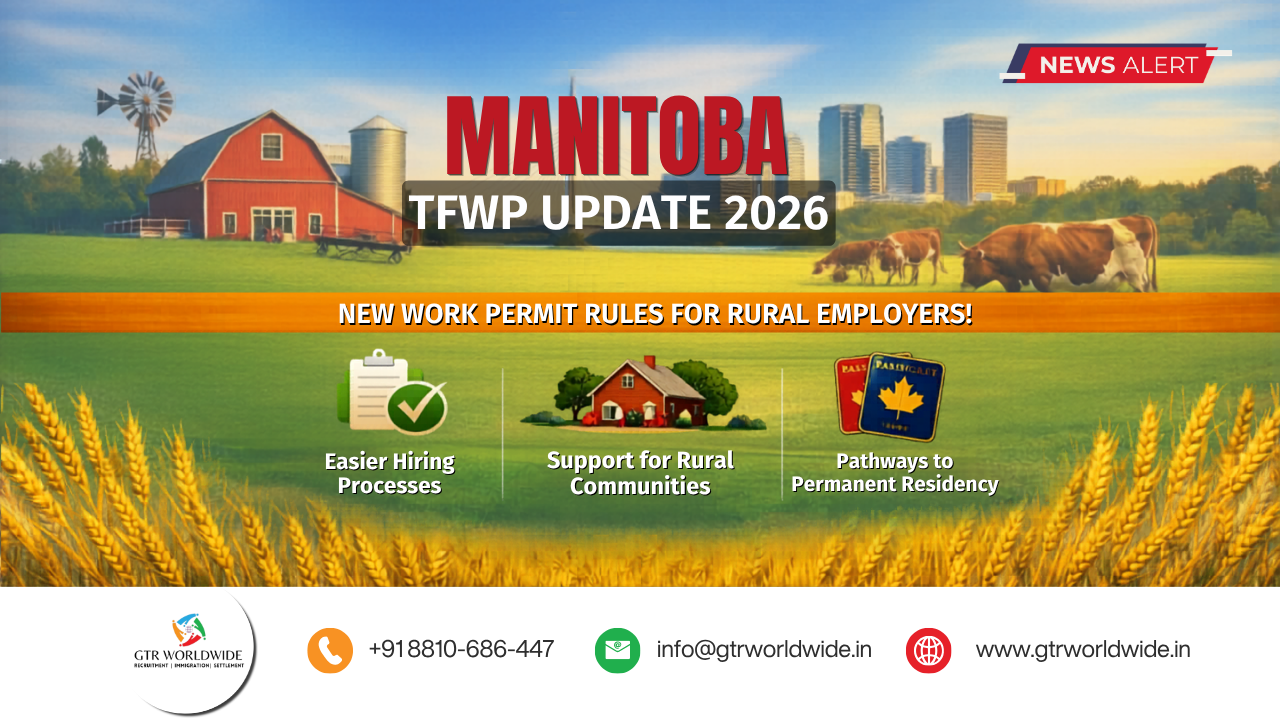
  • Manitoba TFWP Update 2026: New Work Permit Rules for Rural Employers

    Manitoba TFWP Update 2026: New Work Permit Rules for Rural Employers

    In a major move to address ongoing labour shortages, Manitoba has officially expanded access to work permits for rural employers and foreign workers under new Temporary Foreign Worker Program (TFWP) measures.

    Effective April 14, 2026, Manitoba opted into special federal temporary measures that allow rural employers greater flexibility when hiring temporary foreign workers for low-wage positions. These measures will remain in effect until March 31, 2027.

    This development is especially important for employers in rural and northern Manitoba struggling to fill labour shortages—and for foreign workers seeking more opportunities to work and eventually transition to permanent residence in Canada.

    What Changed Under Manitoba’s New TFWP Measures?

    Under the standard TFWP low-wage stream rules, employers are generally limited to hiring temporary foreign workers for a maximum of 10% of their workforce.

    However, under Manitoba’s new temporary measures, eligible rural employers can now:

    1. Keep Existing TFWP Workers Above the Usual Cap

    Employers can retain their current proportion of low-wage temporary foreign workers at a worksite—even if that percentage already exceeds the standard 10% cap.

    This helps businesses avoid workforce disruptions and maintain operations without losing essential staff.

    2. Increase the Hiring Cap from 10% to 15%

    Eligible employers can now hire up to 15% of their workforce through low-wage TFWP positions instead of being restricted to 10%.

    This applies across all sectors, giving employers significantly more flexibility to meet labour demands.

    Who Qualifies?

    These temporary measures apply to:

    • Employers located outside the Winnipeg Census Metropolitan Area (CMA)
    • Rural and northern Manitoba employers
    • All sectors of employment
    • Low-wage stream positions under the TFWP

    The Winnipeg CMA is excluded from these benefits.

    Employers must still meet all standard TFWP requirements, including proving efforts to hire Canadians and permanent residents first before seeking foreign workers.

    Why Manitoba Introduced These Measures

    Manitoba continues to face serious labour shortages, particularly in rural and northern communities where recruitment challenges are more severe.

    The provincial government stated that these changes are intended to help employers fill critical labour gaps and maintain economic stability across rural regions.

    Industries expected to benefit most include:

    • Agriculture
    • Food processing
    • Manufacturing
    • Hospitality
    • Health support services
    • Transportation
    • Rural construction
    • Seasonal industries

    How This Helps Foreign Workers

    For temporary foreign workers, this creates:

    More Job Opportunities

    More employers can now hire under the low-wage stream, increasing available job openings.

    Better Job Stability

    Workers already employed under TFWP may be more likely to keep their positions as employers can maintain staffing levels above previous limits.

    Stronger PR Pathway Potential

    Since Canada’s new 2026 TR to PR pathway focuses heavily on rural workers, foreign nationals working in rural Manitoba may gain stronger long-term permanent residence opportunities.

    This makes rural Manitoba an increasingly attractive destination for workers planning their future in Canada.

    Important Timeline

    Effective Date:

    April 14, 2026

    Expiry Date:

    March 31, 2027

    Only new LMIA applications submitted during this period may qualify for these special measures. Applications submitted before implementation are not eligible.

    Final Thoughts

    Manitoba’s decision to expand TFWP access marks a significant shift for both employers and temporary foreign workers in rural Canada.

    With higher hiring caps, better workforce retention, and stronger links to future PR pathways, this policy could become one of the most important immigration developments for rural workers in 2026.

    For employers, it means faster hiring solutions.

    For foreign workers, it means more opportunities—and potentially a clearer path to permanent residence in Canada.

    As Canada continues prioritizing rural immigration and economic development, Manitoba is positioning itself as one of the strongest provinces for work permit and PR opportunities.

  • Canada’s New TR to PR Pathway Excludes Major Cities in 2026

    Canada’s New TR to PR Pathway Excludes Major Cities in 2026

    Canada’s highly anticipated new Temporary Resident to Permanent Resident (TR to PR) pathway for 2026 has taken a major turn. Immigration Minister Lena Metlege Diab has confirmed that temporary workers living in major Canadian cities—including Toronto, Vancouver, and Montreal—will not be eligible under the new pathway.

    Instead, the program will prioritize workers living and working outside Census Metropolitan Areas (CMAs), focusing on rural and smaller communities across Canada. This update significantly changes the immigration strategy for thousands of temporary residents hoping to secure permanent residence.

    What Is Canada’s New TR to PR Pathway?

    The new TR to PR pathway is a one-time immigration measure designed to grant permanent residence to up to 33,000 temporary foreign workers over 2026 and 2027. The initiative targets workers already contributing to Canada’s labor market, particularly in sectors facing serious shortages such as healthcare, agriculture, food processing, and skilled trades.

    Unlike the broad 2021 TR to PR program, this new pathway follows a “regional-first” model, giving preference to workers settled outside Canada’s major urban centers.

    Which Cities Are Excluded?

    Minister Diab clarified that all Census Metropolitan Areas (CMAs) will be excluded from this pathway. This means applicants living in Canada’s largest urban centers will not qualify.

    Some major excluded cities include:

    • Toronto
    • Vancouver
    • Montreal
    • Calgary
    • Edmonton
    • Halifax
    • Hamilton
    • Kitchener–Cambridge–Waterloo
    • Ottawa–Gatineau
    • Winnipeg
    • Quebec City

    Statistics Canada currently recognizes 41 CMAs across the country, covering approximately 84% of Canada’s population. This means the majority of temporary residents in urban Canada may not be eligible for this specific pathway.

    Why Is Canada Excluding Major Cities?

    The federal government aims to reduce temporary resident concentration in major cities while addressing labor shortages in smaller communities and rural regions.

    By limiting eligibility to non-CMA regions, Canada hopes to:

    • Strengthen regional economies
    • Support employers in rural communities
    • Encourage long-term settlement outside major urban hubs
    • Reduce housing and infrastructure pressure in large cities

    This strategy aligns with Canada’s broader immigration policy shifts for 2026.

    Who May Still Qualify?

    Temporary residents may still qualify if they:

    • Live and work outside a CMA
    • Hold valid temporary resident status
    • Work in an eligible in-demand occupation
    • Have Canadian work experience (likely at least one year)
    • Meet minimum language requirements (possibly CLB 4+)

    Final eligibility details from IRCC are expected soon, but workers in rural communities are advised to begin preparing documents now.

    What If You Live in Toronto, Vancouver, or Another CMA?

    If you are currently living in a major city, this pathway may not be available—but your PR options are not over.

    Alternative immigration pathways include:

    1. Express Entry

    Improve your CRS score through:

    • Higher language scores (CLB 9+)
    • More skilled work experience
    • French proficiency
    • Canadian education credentials

    2. Provincial Nominee Programs (PNPs)

    Programs like OINP, BC PNP, and Alberta pathways still actively recruit skilled workers in urban centers.

    3. Employer-Supported Options

    LMIA-supported work permits and employer sponsorship can still create strong PR pathways.

    Conclusion

    The new TR to PR pathway is no longer a broad “open-to-all” permanent residence option. It is now clearly a rural-focused immigration stream aimed at retaining workers outside major cities.

    For temporary residents in Toronto, Vancouver, Montreal, and other CMAs, the message is clear: this pathway may be closed, but strategic alternatives remain available.

    Understanding your location, your occupation, and your best PR route is now more important than ever.

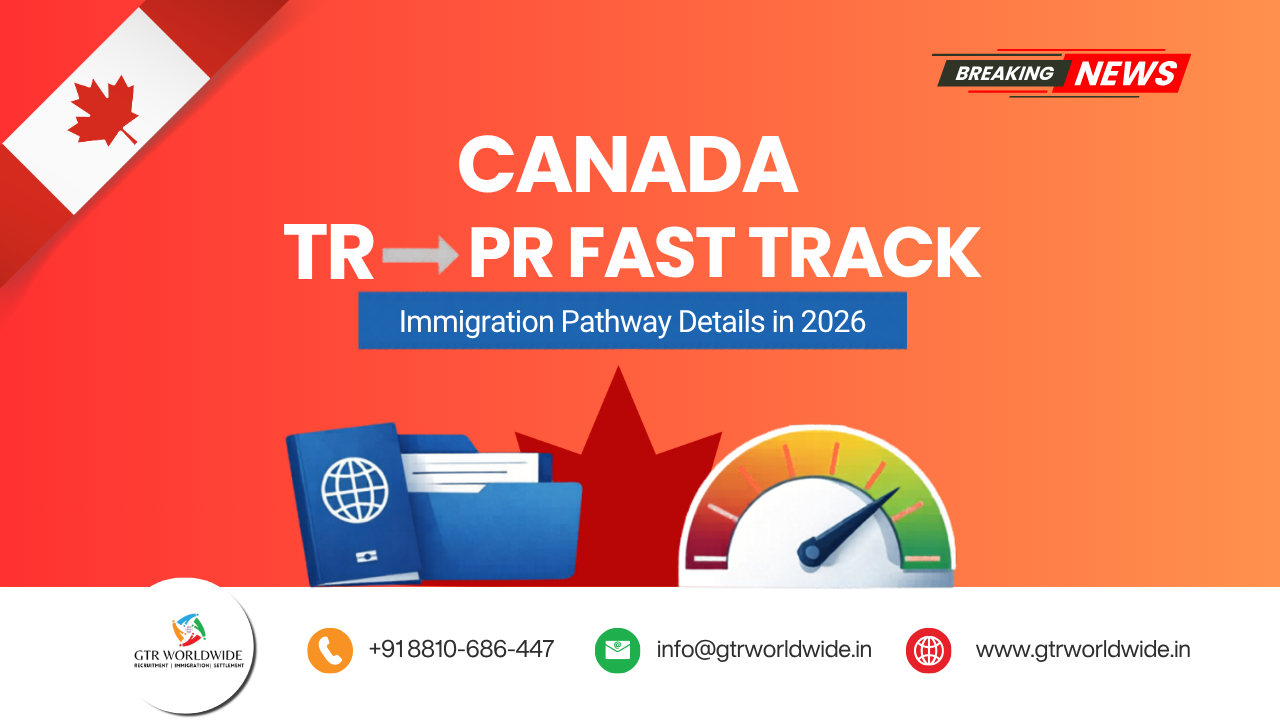
  • TR to PR Canada 2026: Fast-Track Immigration Pathway Details

    TR to PR Canada 2026: Fast-Track Immigration Pathway Details

    Canada is accelerating permanent residence (PR) processing for select temporary residents under a new targeted initiative in 2026. This move reflects a broader shift toward prioritizing in-Canada workers who are already contributing to the economy.

    Canada has introduced a one-time immigration initiative to accelerate permanent residence (PR) for temporary residents already in the country—commonly referred to as the TR-to-PR pathway (Temporary Resident → Permanent Resident).

    • Targets up to 33,000 workers over 2026–2027
    • Focuses on workers already living and working in Canada
    • Designed to speed up PR processing rather than open a broad new intake

    This is not a permanent program—it’s a limited, strategic measure.

    Fast-Tracking: What does it mean?

    “Fast-tracking” doesn’t mean instant PR—it means:

    • Prioritized processing for eligible applicants already in the system
    • Focus on existing PR applicants, not new ones in many cases
    • Faster transitions from temporary status to permanent residence

    Example:

    • About 3,600 workers already received PR (Jan–Feb 2026)
    • Canada aims for ~20,000 approvals in 2026 alone

    Who is eligible?

    While full criteria vary, the initiative generally targets:

    Key eligibility factors

    • Already in Canada with valid temporary status
    • Applied for PR (or eligible under specific programs)
    • At least 1 year of Canadian work experience
    • Working in in-demand sectors
    • Demonstrated community ties (especially rural areas)

    Priority groups

    • Workers in rural or smaller communities
    • Individuals contributing to labour shortages
    • People with long-term residence and tax contributions

    Priority industries

    Canada is prioritizing sectors with labor shortages, including:

    • Healthcare (nurses, caregivers)
    • Transportation & logistics
    • Agriculture & agri-food
    • Hospitality & tourism
    • Construction

    These sectors align with economic needs and workforce gaps.

    Key policy goals

    The fast-track initiative is designed to:

    • Reduce reliance on temporary workers
    • Support rural population growth
    • Retain workers already contributing to the economy
    • Improve immigration processing efficiency

    It’s part of Canada’s broader 2026–2028 Immigration Levels Plan.

    Important limitations

    • Not open to everyone
    • Not a new open application stream (in most cases)
    • Focused on specific candidates already in process
    • Likely limited quotas (33,000 total)

    Timeline

    • March–May 2026: Program launched / expanded
    • 2026: Majority of approvals targeted (~20,000)
    • 2027: Remaining applications processed

    Why Canada is doing this?

    The policy is driven by 3 strategic goals:

    1. Reduce temporary resident population pressure
    2. Fill labor shortages in critical sectors
    3. Support rural and smaller communities

    Canada is prioritizing workers who:

    • Already live in the country
    • Pay taxes and contribute economically
    • Have strong community ties

    TR-to-PR vs Express Entry (Quick Insight)

    FactorTR-to-PR Fast TrackExpress Entry
    SelectionSector + location-basedCRS score
    SpeedFaster (targeted cases)Variable
    EligibilityIn-Canada workersGlobal applicants
    CompetitionLower (targeted groups)High

    This makes TR-to-PR more accessible for lower CRS candidates working in essential roles.

    Conclusion:

    Canada’s 2026 fast-track initiative is a strategic shift toward targeted immigration:

    • Prioritizing workers already in Canada
    • Supporting key industries
    • Improving processing efficiency

    While it doesn’t open new doors, it significantly accelerates PR for the right candidates

  • High-Wage Advantage: The New Strategy to Win Express Entry in 2026

    High-Wage Advantage: The New Strategy to Win Express Entry in 2026

    Canada is preparing one of the most significant changes to its immigration system in over a decade. At the center of the proposed Express Entry overhaul is a new concept: the high-wage occupation factor—a policy designed to prioritize candidates with stronger earning potential.

    This shift signals a major evolution in how Canada selects immigrants, focusing less on traditional criteria alone and more on economic impact and labor market outcomes.

    What Is the High-Wage Occupation Factor?

    The high-wage occupation factor is a proposed addition to the Comprehensive Ranking System (CRS) that would award extra points to candidates working in high-paying occupations.

    Under this proposal, candidates may receive additional CRS points if they:

    • Have Canadian work experience, or
    • Hold a valid job offer in Canada,
    • In an occupation classified as high-wage

    The goal is to prioritize immigrants who are more likely to succeed economically after arriving in Canada.

    How “High-Wage” Is Defined

    Rather than using an individual’s salary, the system will rely on median wage data by occupation (NOC code) from official sources like Job Bank.

    Proposed wage tiers:

    • 2× median wage → Top-tier professions (e.g., physicians, senior executives)
    • 1.5× median wage → Mid-high tier (e.g., engineers, teachers)
    • 1.3× median wage → Skilled occupations (e.g., financial analysts, trades)

    This means:
    It’s not about your personal salary, but how your occupation ranks in the Canadian labor market.

    Why Canada Is Introducing This Factor

    The policy is driven by clear economic evidence:

    • Higher pre-landing earnings correlate strongly with better post-landing income and integration
    • Canada wants immigrants who can contribute immediately to economic growth
    • It aligns immigration with labor shortages and high-demand sectors

    In short, Canada is shifting toward a “top talent” selection model.

    How It Will Affect CRS Scores

    While exact point values are not finalized, the impact is expected to be significant:

    • Candidates in high-wage occupations will receive additional CRS points
    • Existing CRS factors (age, education, language) will remain unchanged
    • Profiles in the pool may be re-ranked automatically once implemented

    This could dramatically change who receives Invitations to Apply (ITAs).

    Relationship with Job Offer Points

    Canada previously removed job offer CRS points due to fraud concerns (LMIA misuse).

    Now, under the new proposal:

    • Job offer points may return
    • But only for high-wage occupations and regulated roles

    This creates a more controlled and targeted system, reducing abuse while rewarding genuine high-value employment.

    Who Will Benefit the Most?

    The biggest winners under this reform are likely:

    Candidates with:

    • Canadian work experience in high-paying roles
    • Job offers in top-tier occupations
    • Experience in sectors like:
      • Healthcare
      • Engineering
      • Management
      • Skilled trades with strong wages

    Candidates at risk:

    • Low-wage or entry-level occupation holders
    • Applicants relying solely on education or language scores

    Important Limitations (As of May 2026)

    • The policy is still in proposal/consultation stage
    • No official list of qualifying occupations yet
    • Implementation timeline remains uncertain (possibly phased or fast-tracked)

    What This Means for Future Applicants

    This reform represents a fundamental shift in Canada’s immigration strategy:

    Old System FocusNew Direction
    Education & languageEconomic outcomes & wages
    Equal weight for occupationsPriority for high-paying jobs
    Broad eligibilityTargeted talent selection

    In practical terms:
    Your occupation and earning potential may soon matter more than ever.

    Strategic Tips for Applicants

    To stay competitive under the new system:

    • Target high-wage occupations aligned with Canadian demand
    • Gain Canadian work experience where possible
    • Secure a valid job offer in a strong-paying role
    • Monitor updates from IRCC for the official rollout

    Final Thoughts

    The proposed high-wage occupation factor could become the most impactful change to Express Entry in years. By prioritizing earning potential, Canada is moving toward a more data-driven, economically focused immigration model.

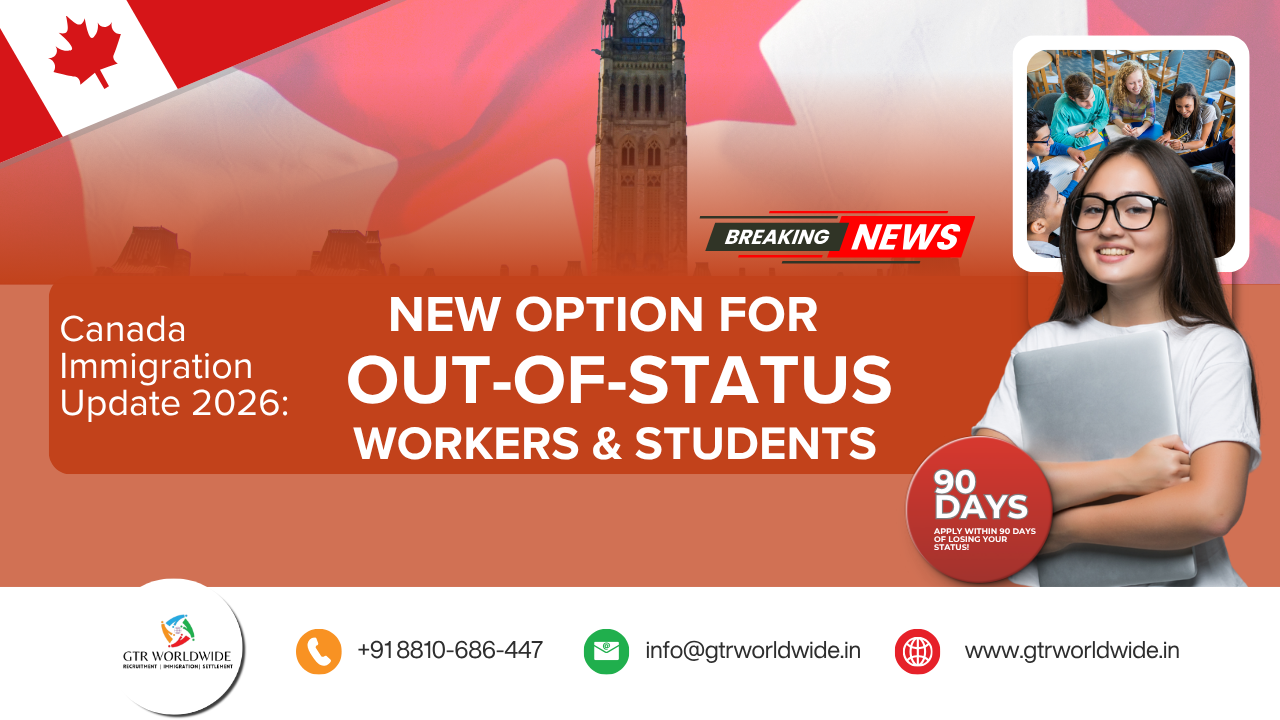
  • Canada Immigration Update 2026: New Options for Out-of-Status Workers & Students

    Canada Immigration Update 2026: New Options for Out-of-Status Workers & Students

    Canada has introduced a major policy update in 2026 that creates new pathways for out-of-status workers and students in Canada. This change allows eligible individuals to remain in the country and restore their legal status without needing to leave—offering a critical second chance for many temporary residents.

    What does “out-of-status” mean?

    “Out-of-status” refers to temporary residents (international students or foreign workers) whose:

    • Study permit or work permit has expired, and
    • They no longer have valid legal status in Canada

    Key Policy Update (May 2026)

    Under new immigration rules, out-of-status workers and students now have more flexibility to stay legally in Canada.

    1. Restoration as a Visitor (Major Change)

    • Individuals can now apply to restore their status as a visitor
    • This allows them to remain in Canada legally without leaving the country

    Previously:

    • They often had to leave Canada and re-enter to regain visitor status

    Now:

    • They can stay and apply from inside Canada

    2. 90-Day Restoration Window

    To qualify:

    • You must apply within 90 days of losing your status
    • You must remain in Canada while waiting for a decision

    3. No Work or Study While Restoring

    Important restriction:

    • Once status is lost, you must stop working or studying immediately
    • You cannot resume until a new permit is approved

    4. Visitor Status as a “Bridge Option”

    This is the biggest practical benefit:

    • Workers/students without immediate permit options can:
      • Stay in Canada as visitors
      • Buy time to:
        • Apply for a new work permit
        • Explore PR pathways
        • Prepare next steps

    5. Additional Applications Allowed

    • You can apply for:
      • A new work permit or study permit
      • At the same time as your restoration request
    • However:
      • Restoration is assessed first before any new permit

    Important Risks & Considerations

    Discretionary Approval

    • Approval is not guaranteed
    • Each case is reviewed individually

    Immigration Record Impact

    • Being out-of-status may:
      • Affect future visa or PR applications
      • Even if restoration is later approved

    Bottom line:
    Restoration is a backup option—not a strategy

    Why This Policy Matters

    For Workers

    • Avoid forced departure from Canada
    • Maintain continuity while seeking new employment options

    For Students

    • Stay legally while:
      • Switching programs
      • Applying for new permits

    For Canada

    • Helps retain talent already in the country
    • Reduces disruptions to the labor market

    Quick Summary

    AspectBeforeNow
    Apply as visitor inside CanadaNoYes
    Need to leave CanadaOften requiredNot required
    Work/study during restorationNot allowedNot allowed
    Time limit90 days90 days

    Conclusion

    The 2026 policy update offers a valuable opportunity for out-of-status workers and students in Canada to regain legal footing. While not a substitute for maintaining valid status, it provides a crucial fallback option in difficult situations.

  • Express Entry Update: 4,000 Invitations Issued in Third Draw of the Week

    Express Entry Update: 4,000 Invitations Issued in Third Draw of the Week

    Canada continues its aggressive immigration strategy with another major round of invitations under the Express Entry system. In the third draw of the week, Immigration, Refugees and Citizenship Canada (IRCC) issued 4,000 Invitations to Apply (ITAs) to candidates.

    Key Details of the Latest Express Entry Draw

    • Date: April 29, 2026
    • Draw Type: French-language proficiency
    • Invitations Issued: 4,000
    • Minimum CRS Score: 400
    • Tie-breaking Rule: April 7, 2026

    This draw stands out due to its large number of invitations and relatively low CRS cut-off, making it one of the most accessible rounds in 2026 so far.

    Three Express Entry Draws in One Week

    The latest round completes a series of three draws conducted within a single week:

    • April 27, 2026: Provincial Nominee Program (PNP) – 473 ITAs
    • April 28, 2026: Canadian Experience Class (CEC) – 2,000 ITAs
    • April 29, 2026: French-language proficiency – 4,000 ITAs

    In total, 6,473 ITAs were issued in just three days, reflecting a strong push by IRCC to meet immigration targets.

    Strong Focus on French-Speaking Candidates

    The Express Entry draw April 2026 highlights Canada’s continued emphasis on attracting Francophone immigrants.

    Key observations:

    • CRS score dropped to 400, significantly lower than many other draws
    • French-language category draws are becoming more frequent and larger in size
    • Candidates with French proficiency have a clear competitive advantage

    This aligns with Canada’s goal of increasing French-speaking populations outside Quebec.

    Express Entry Trends in 2026

    So far, 2026 has shown several clear trends in Express Entry:

    1. Rise of Category-Based Selection

    IRCC is prioritizing candidates based on specific criteria such as:

    • Language ability (French)
    • Work experience
    • Occupation demand

    2. Preference for In-Canada Applicants

    Programs like:

    • Canadian Experience Class (CEC)
    • Provincial Nominee Program (PNP)
      continue to dominate selections.

    3. High Volume of ITAs

    Canada has already issued over 70,000 ITAs in 2026, indicating a strong immigration intake plan.

    What This Means for Express Entry Candidates

    This latest draw provides important insights:

    • Candidates with CRS scores around 400+ now have better chances
    • Learning French can significantly boost selection chances
    • IRCC is focusing on targeted and strategic immigration draws

    For many applicants, especially those outside Canada, improving language skills may now be one of the most effective strategies.

    How to Improve Your Chances

    To increase your chances in future Express Entry draws:

    • Improve your French or English language scores
    • Gain Canadian work experience
    • Secure a Provincial Nomination (adds 600 CRS points)
    • Keep your Express Entry profile updated and competitive

    Conclusion

    The Express Entry draw April 2026 demonstrates Canada’s evolving immigration priorities. With 4,000 ITAs issued in a single draw, IRCC is clearly accelerating invitations while targeting specific groups like French-speaking candidates.