Category: Immigration

  • Canada Express Entry Draw – August 19, 2025: 192 ITAs Issued with CRS of 800

    Canada Express Entry Draw – August 19, 2025: 192 ITAs Issued with CRS of 800

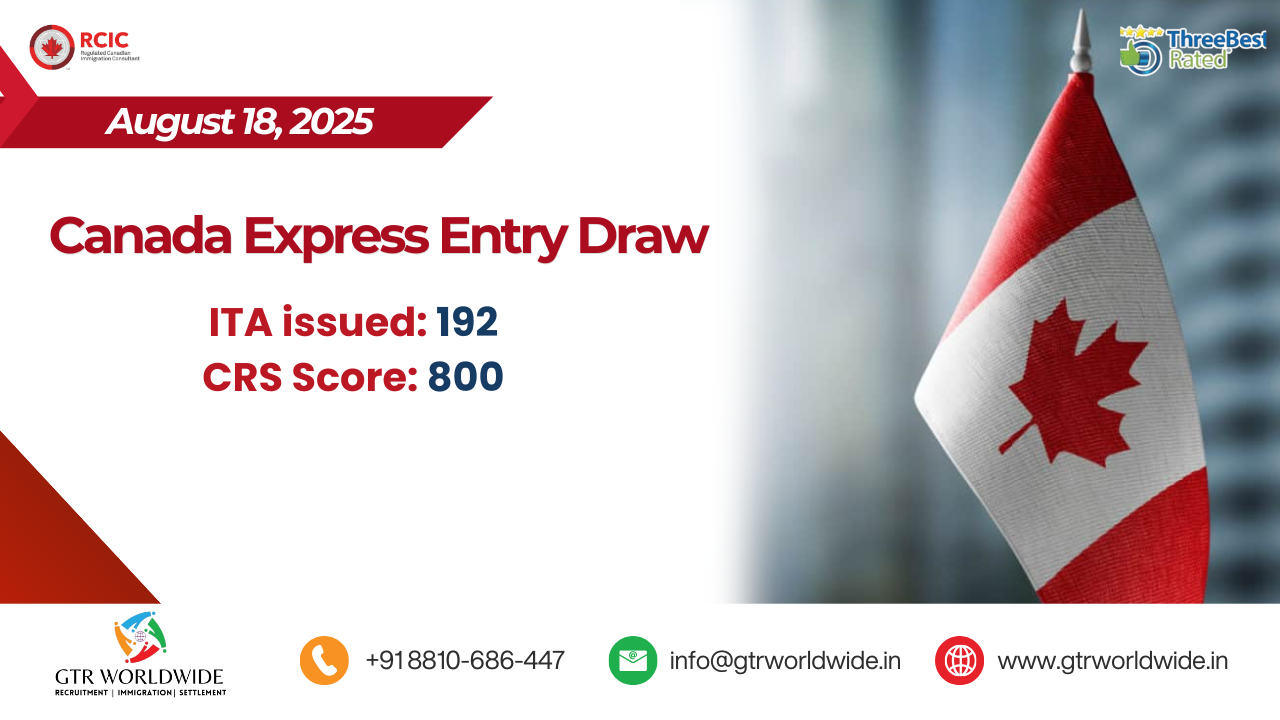
    On August 19, 2025, Immigration, Refugees and Citizenship Canada (IRCC) conducted its latest Express Entry draw, issuing 192 Invitations to Apply (ITAs) for permanent residency. This was a Provincial Nominee Program (PNP)-specific draw, with the minimum Comprehensive Ranking System (CRS) score set at 800, making it one of the most competitive rounds of the year.

    For skilled workers aspiring to build a future in Canada, this draw underscores both the opportunities and challenges present within the Express Entry system.

    Overview of the August 19, 2025 Draw

    Here are the key details of the latest draw:

    • Date of Draw: August 19, 2025
    • Program Targeted: Provincial Nominee Program (PNP)
    • Number of ITAs Issued: 192
    • Minimum CRS Score: 800
    • Tie-breaking Rule: February 11, 2025, at 19:17:09 UTC

    The high CRS cut-off highlights the competitive nature of PNP-specific draws. Since candidates with a provincial nomination automatically receive an additional 600 CRS points, only those with already strong profiles were able to secure an invitation.

    Express Entry Draw Trends in 2025

    This draw was the fourth Express Entry round in August 2025, and the second PNP-focused draw of the month. Here’s a snapshot of recent rounds:

    • August 6, 2025: 225 PNP candidates invited, minimum CRS 739
    • August 7, 2025: 1,000 Canadian Experience Class (CEC) candidates invited, CRS 534
    • August 8, 2025: 2,500 French-language proficiency candidates invited, CRS 481
    • August 18, 2025: 192 PNP candidates invited, CRS 800

    So far in 2025, IRCC has issued more than 53,000 ITAs, covering PNP, CEC, and category-based draws targeting French speakers, healthcare workers, and educators.

    PNP-specific draws in 2025 have seen some of the highest CRS cut-offs, with the August 19 draw ranking second only to the February 4 draw, which required a CRS of 802.

    The Importance of This Draw

    The August 19 draw carries significant implications for immigration hopefuls:

    • High Competition: With a CRS of 800, securing a provincial nomination is key to standing out in the competitive field.
    • PNP as a Strong Pathway: Candidates who secure a provincial nomination from provinces like Ontario, British Columbia, or Alberta can greatly enhance their chances of receiving an ITA.
    • IRCC’s Balanced Approach: By holding various types of draws (PNP, CEC, French, occupation-specific), Canada is ensuring that a wide array of talented individuals can contribute to its workforce.

    Strategies to Improve Your CRS Score

    If your CRS score is currently not competitive, here are some ways to boost it:

    • Pursue a Provincial Nomination: Provinces have different streams aligned with local job market needs.
    • Improve Your Language Proficiency: Higher scores in language tests like IELTS, CELPIP, or TEF can significantly increase your CRS points.
    • Enhance Your Education Credentials: Additional education or getting foreign education recognized can help increase your CRS score.
    • Leverage Spousal Points: If applicable, your partner’s education, work experience, or language test results can add valuable points.
    • Stay Informed: With regular draws happening every few weeks, staying prepared and up-to-date is crucial.

    About the Express Entry System

    The Express Entry system is Canada’s primary pathway for skilled workers to immigrate. It manages applications for three key programs:

    1. Federal Skilled Worker Program (FSWP)
    2. Federal Skilled Trades Program (FSTP)
    3. Canadian Experience Class (CEC)

    Candidates enter the Express Entry pool and are ranked using the CRS based on factors such as age, education, language ability, and work experience. ITAs are issued to the highest-ranking candidates in each draw, and those with a provincial nomination receive an additional 600 CRS points, making them virtually guaranteed an invitation.

    The August 19, 2025, Express Entry draw further emphasizes the significance of the Provincial Nominee Program in Canada’s immigration strategy. With just 192 ITAs issued and a CRS cut-off of 800, competition remains fierce, but skilled workers who align with Canada’s labour needs still have strong opportunities.

    If you are considering immigrating to Canada, now is the time to explore provincial streams, improve your CRS score, and prepare for upcoming draws. With careful planning, your path to permanent residency may be closer than you think.
  • Canada to Introduce Mandatory Biometrics for Citizenship Applications by 2026–2027

    Canada to Introduce Mandatory Biometrics for Citizenship Applications by 2026–2027

    Canada is moving forward with plans to modernize its citizenship process. Beginning in 2026–2027, Immigration, Refugees and Citizenship Canada (IRCC) intends to make biometric submission a mandatory step for citizenship grant applications.

    What’s Changing: Biometric Requirement for Citizenship

    • IRCC is preparing regulatory amendments to the Citizenship Regulations that will require the systematic collection of biometric data (fingerprints, facial recognition, etc.) for all citizenship applications.
    • This authority was established under the Budget Implementation Act, No. 1 passed in June 2023.
    • The change is part of a broader effort to modernize procedures and strengthen program integrity.

    Why Biometrics Are Being Implemented

    • Enhanced identity verification: Reduces fraud by ensuring applicants are who they claim to be.
    • Program integrity: Improves reliability of background and criminality checks.
    • Greater efficiency: Automation supported by biometrics will accelerate processing, with up to 93% of applications benefiting from faster intake decisions.
    • Overall objective: To deliver stronger security, better client service, and more efficient processing.

    Timeline: From Consultation to Final Regulation

    • This initiative is included in IRCC’s Forward Regulatory Plan for 2025–2027, announced on July 16, 2025.
    • Draft amendments will be published in the Canada Gazette, Part I in 2026 for public consultation.
    • Final regulations are expected in 2027 following stakeholder input and review.

    What Applicants Should Expect

    • Starting in 2027, all citizenship applicants will likely need to provide biometrics as part of their application.
    • The change is designed to impact clients, not businesses or trade.
    • Preparation tip: Applicants should plan ahead for fingerprinting or facial recognition submission requirements.

    Privacy, Security, and Data Protection

    • IRCC emphasizes strict adherence to privacy laws, including the Privacy Act and Charter protections.
    • Fingerprints will be permanently removed from RCMP records once citizenship is granted.
    • Investments are being made in upgraded biometric technology to ensure secure collection and processing.

    Key Takeaway

    By 2027, biometric enrollment will become a standard part of Canadian citizenship applications. This shift, focused on modernization, efficiency, and security, means that applicants, lawyers, and consultants should monitor IRCC updates, prepare for consultations, and adjust application practices accordingly.

  • IRCC Reintroduces Mandatory Upfront Medical Exams for Express Entry Applicants

    IRCC Reintroduces Mandatory Upfront Medical Exams for Express Entry Applicants

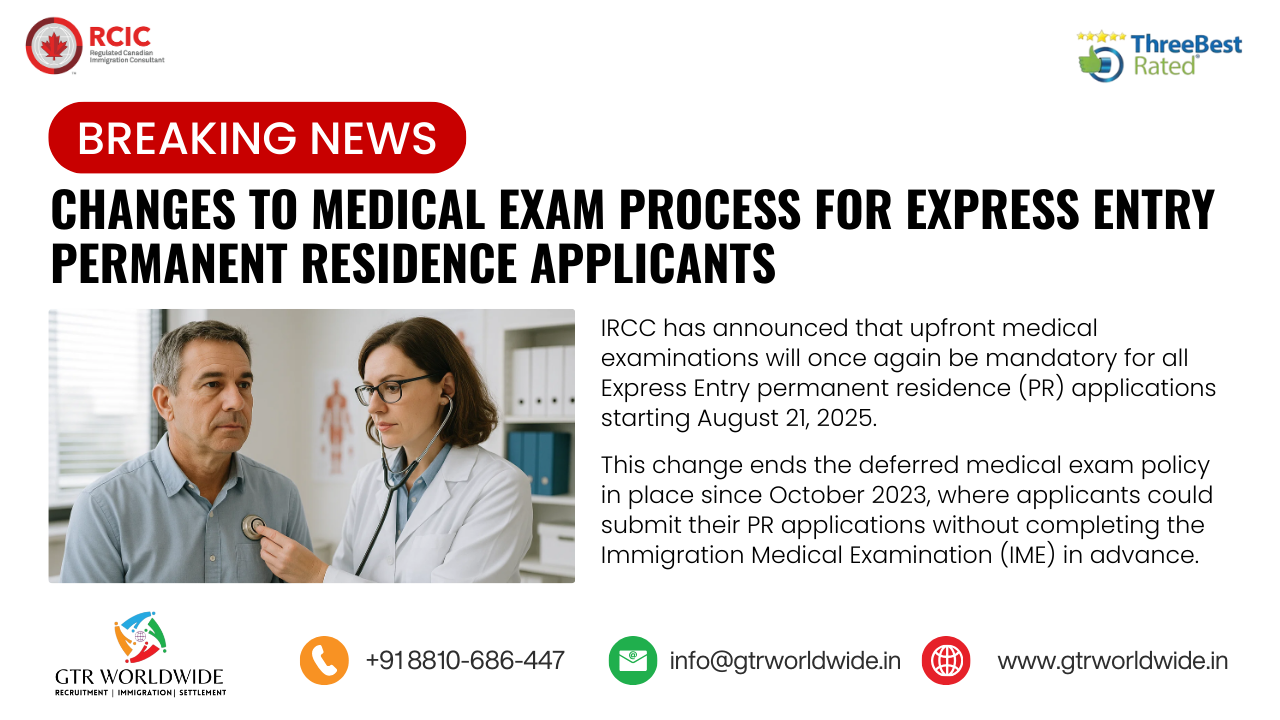
    Starting August 21, 2025, Immigration, Refugees and Citizenship Canada (IRCC) will once again require applicants under the Express Entry permanent residence (PR) system to complete their Immigration Medical Examination (IME) before submitting an application.

    This marks the end of the deferred medical exam policy introduced in October 2023, which allowed applicants to submit PR applications first and provide medical results later.

    Key Updates on the New Medical Exam Rules

    • Effective Date: August 21, 2025
    • Who Is Affected: All Express Entry applicants, including both accompanying and non-accompanying dependents
    • Major Change: Medical exams must be completed prior to PR application submission
    • Purpose: To speed up application processing and ensure earlier health admissibility checks

    Who Must Complete an IME?

    The following individuals are required to undergo an upfront IME:

    1. Principal Applicants under the Federal Skilled Worker Program (FSWP), Federal Skilled Trades Program (FSTP), and Canadian Experience Class (CEC).
    2. All accompanying family members – spouse, common-law partner, and dependent children.
    3. Non-accompanying dependents, who must also undergo the exam for admissibility purposes.

    Exemptions – When a New IME May Not Be Required

    You may not need to redo your medical exam if:

    • You are already in Canada and completed an IME within the past 5 years for a work permit, study permit, or PR application.
    • Your previous IME is still valid and accessible to IRCC.

    In such cases, you can provide your IME number (UMI). However, if IRCC determines your past IME is expired or unusable, a new exam will still be required.

    What Does the Medical Exam Involve?

    Exams must be conducted by an IRCC-approved panel physician. A typical IME includes:

    • Physical check-up (weight, height, blood pressure, vision, etc.)
    • Blood and urine tests
    • Chest X-ray (commonly for TB screening)
    • Review of medical history and current conditions

    Validity: Results are valid for 12 months. If your PR case is not finalized within that period, you may need another exam.

    Documents You’ll Need for Your IME

    Prepare the following before your appointment:

    • Valid passport or government-issued ID
    • Glasses/contact lenses (if applicable)
    • Previous medical reports or prescriptions
    • List of current medications
    • Four recent photos (if the clinic does not use eMedical)
    • IMM 1017E Medical Report Form (if provided by IRCC)

    Cost of the Immigration Medical Exam

    Fees vary depending on country and clinic but generally range from USD $100–500, covering:

    • Physician consultation
    • Laboratory testing
    • Radiology (X-rays)
    • Specialist referrals if required

    If No Panel Physician Is Available

    If there are no IRCC-approved doctors near you:

    1. Write a Letter of Explanation describing your situation.
    2. Submit it with your PR application through IRCC’s online web form.
      IRCC will then review your case and advise next steps.

    Why the Change?

    • 2023–2025 policy: Applicants could defer IMEs to prevent premature expiry of results.
    • 2025 policy shift: IRCC confirms that upfront IMEs will reduce processing backlogs, speed up decisions, and allow earlier health admissibility screening.

    Tips for a Smooth Medical Exam Process

    1. Book early – appointments fill quickly in high-demand areas.
    2. Bring all required documents to avoid delays.
    3. Check validity – ensure your exam won’t expire before your PR is finalized.
    4. Use only IRCC-approved panel physicians – other doctors’ exams will not be accepted.

    From August 21, 2025, anyone applying for permanent residence under Express Entry must complete and submit an Immigration Medical Examination upfront. By preparing early and using an IRCC-approved panel physician, applicants can avoid delays and improve their chances of a smooth application process.

  • Canada Considering Three New Express Entry Categories for 2026

    Canada Considering Three New Express Entry Categories for 2026

    Canada is exploring the introduction of three new Express Entry categories in 2026—Leadership, Research & Innovation, and National Security & Defence—to attract top-tier talent and strengthen national priorities.

    According to Immigration, Refugees and Citizenship Canada (IRCC), these categories are being discussed alongside the existing sector-based pathways to ensure Canada’s immigration system aligns with emerging economic, technological, and security needs. Public and stakeholder consultations are playing a key role in shaping the final framework.

    The Three Potential Categories

    1. Leadership
    Targeting senior executives and strategic decision-makers, this category aims to bring in individuals who can guide Canada’s business growth, shape economic strategy, and enhance global competitiveness.

    2. Research & Innovation
    Designed for scientists, researchers, and innovators, this category supports Canada’s vision of boosting its innovation capacity, fostering technology development, and strengthening the knowledge economy.

    3. National Security & Defence (Under consideration)
    Although not yet confirmed, this category could prioritize expertise in defence, security, and related research. The idea reflects Canada’s growing investment in defence readiness, such as NORAD modernization and defence innovation programs.

    Existing Categories to Continue

    Core categories like French-language proficiency, healthcare, STEM, skilled trades, agriculture/agri-food, and education will remain in place. IRCC is reviewing these to address ongoing labour shortages and improve policy effectiveness.

    Strategic Goals Behind the Changes

    • Balancing Short- and Long-Term Needs: Existing categories address immediate labour gaps, while new ones aim to secure leadership, innovation, and security capabilities for the future.
    • Inclusive Policy Development: Broad consultations ensure immigration priorities align with Canada’s economic and societal objectives.
    • National Security Focus: Investments in advanced technology and defence partnerships highlight the importance of safeguarding Canada’s strategic interests.

    Advice for Potential Applicants

    • Stay updated on IRCC announcements regarding category inclusion.
    • Highlight relevant leadership, research, or security experience in your Express Entry profile.
    • Keep track of developments in Canada’s innovation and defence policies that may influence eligibility criteria.
  • Immigration Processing Times Update – IRCC’s Latest Report (August 2025)

    Immigration Processing Times Update – IRCC’s Latest Report (August 2025)

    As of August 6, 2025, the IRCC has updated its processing times, which are essential for individuals planning to apply.

    August 2025 Processing Times by Category

    According to the ICC Immigration report (dated August 7, 2025):

    A. Citizenship

    • Grant of Citizenship: ~10 months (no change)
    • Proof of Citizenship: ~5 months (unchanged)
    • Renunciation of Citizenship: ~5 months (reduced by 2 months)

    B. Permanent Resident (PR) Cards

    • New PR Card: ~40 days (faster by 5 days)
    • PR Card Renewal: ~28 days (slower by 7 days)

    C. Family Sponsorship

    • Spousal (Outside Canada, Non-Quebec): ~13 months
    • Spousal (Inside Canada): ~36–40 months
    • Parents/Grandparents (Non-Quebec): ~36 months
    • Parents/Grandparents (Quebec): ~48 months

    D. Economic Class Immigration

    • Express Entry – CEC: ~5 months
    • Express Entry – FSWP: ~7 months
    • Express Entry PNP: ~8 months
    • Non-Express Entry PNP: ~20 months
    • Start-Up Visa: ~52 months
    • Self-Employed Program: ~60 months

    E. Temporary Visas (Visitor, Study, Work)

    • Visitor Visas (Outside Canada): India ~31 days, Philippines ~30 days, Pakistan ~43 days, USA ~20 days
    • Super Visa: India ~99 days, USA ~102 days
    • Study Permits: India ~3 weeks, USA ~8 weeks
    • Work Permits (Outside Canada): India ~6 weeks, Nigeria ~8 weeks
    • Work Permits (Inside Canada): ~181 days

    4. Key Trends & Insights

    • The Start-Up Visa and Self-Employed streams have significantly longer processing times, extending to 4–5 years.
    • Family sponsorships, particularly within Canada and Quebec, face some of the longest delays.
    • Visitor visas and study permits are processed relatively quickly, making them more efficient if all documents are in order.
    • Express Entry remains the fastest and most reliable option, with moderate processing timelines.

    How to Improve Your Chances

    • Ensure your application is complete and accurate by referring to the IRCC checklist.
    • Stay updated with IRCC’s regular updates—processing times for PR cards are revised weekly, while citizenship and sponsorship timelines are updated monthly.
    • Take extra care when applying in Quebec, as its dual provincial and federal jurisdiction may cause delays.
    • If you’re facing long processing times for your stream, explore alternatives, such as Express Entry or non-Express Entry PNP options.

    Conclusion
    The August 2025 processing times reflect a mixed scenario: many categories show stability, but there are significant delays in family sponsorship and self-employed streams. Keeping yourself informed, choosing the appropriate pathway, and submitting a well-prepared application are crucial for a smoother visa processing experience.

  • Construction Workers Targeted in Alberta’s Recent Immigration Draw

    Construction Workers Targeted in Alberta’s Recent Immigration Draw

    In July 2025, the Alberta Advantage Immigration Program (AAIP) conducted a sector-focused draw under its Express Entry–aligned Priority Sectors stream, inviting 39 candidates working in construction-related occupations. The minimum Comprehensive Ranking System (CRS) score was just 66, marking one of the lowest thresholds this year.

    This initiative is part of Alberta’s ongoing strategy to prioritize high-demand industries—Construction, Agriculture, Aviation, and Healthcare—to boost economic growth and meet labour market needs.

    Why It’s Good News for Construction Workers

    Skilled trades professionals such as carpenters, masons, heavy-equipment operators, and project supervisors stand to benefit from this draw. The combination of a low CRS cut-off and targeted invitations provides a valuable pathway for candidates who may not meet federal Express Entry scores but are in demand in Alberta.

    Draw Snapshot:

    DateStreamOccupation FocusInvitations IssuedCRS Cut-off
    July 2025Alberta Express Entry – Priority SectorsConstruction3966

    Eligibility Highlights

    To qualify under the construction stream of AAIP’s Express Entry pathway, candidates must:

    • Have an active Express Entry profile with a primary occupation in an eligible NOC construction role.
    • Ideally secure a valid job offer from an Alberta employer in that occupation.
    • Meet a minimum CRS score of 66 (though higher scores improve competitiveness).

    Candidates already working in Alberta may also consider the Alberta Opportunity Stream (AOS), but Priority Sector draws typically offer a faster route to permanent residency.

    The Bigger Picture

    Canada’s construction industry is facing a shortage of approximately 64,000 workers nationwide. Alberta’s targeted draws—alongside federal initiatives such as granting legal status to undocumented construction workers—highlight the urgent need for skilled trades talent.

    For construction professionals with Express Entry eligibility and an Alberta job offer, this draw presents a timely and promising opportunity to advance toward permanent residency.

    Keep track of Alberta PNP draw updates and check your eligibility with Alberta’s official points calculator. For tailored advice, consult a licensed Canadian immigration consultant.

  • West Kootenay Publishes Employer List for BC’s Rural Community Immigration Pilot

    West Kootenay Publishes Employer List for BC’s Rural Community Immigration Pilot

    West Kootenay Publishes First Official List of Designated Employers for Rural PR Pathway Under RCIP

    The West Kootenay region in southeastern British Columbia has officially released its list of designated employers under the Rural Community Immigration Pilot (RCIP), opening a direct pathway to permanent residency for foreign workers in smaller communities such as Nelson, Castlegar, Trail, Kaslo, Nakusp, Creston, and others.

    Why This Matters:

    Only job offers from approved employers in five key sectors qualify candidates for a community recommendation, which is required to apply for permanent residence through the RCIP. These employers must meet specific criteria and actively support the settlement of newcomers to retain their designation.

    Priority Sectors Under RCIP – West Kootenay:

    1. Health
    2. Education, Law, Social & Community Services
    3. Sales & Service
    4. Trades, Transport & Equipment Operators
    5. Manufacturing & Utilities

    Qualified job offers within these sectors include 19 National Occupation Classification (NOC) codes such as:

    • Carpenters, cooks, early childhood educators, health care aides
    • Truck drivers (with ≥ 75% of duties based in the West Kootenay region)
    • Heavy-duty mechanics, material handlers, painters, social workers, and office support staff
      Most roles require language proficiency (CLB 4–6).

    Sample Designated Employers by Sector (as of July 23, 2025):

    Health Sector:

    • Ancron Medical Services (Nelson)
    • CareCorp, Castleview Care Centre, Trail Association for Community Living

    Education & Social Services:

    • Blueberry Creek Community School, Brent Kennedy Learning Centre, Community Connections Support Services, Songbird Early Learning Centre, Silly Monkeys Childcare

    Sales, Food, Hospitality:

    • Boston Pizza, Kootenay Tamil Kitchen, Ashley Furniture, The Adventure Hotel, Kootenay Co-op Grocery, Ferraro Foods, Mainstreet Diner

    Trades & Transport:

    • A3 Plumbing, Ace Couriers, Martech Electrical Systems, Valor Painting, The Sutherland Group

    Manufacturing & Utilities:

    • Kalesnikoff Lumber, Spearhead, Nelson Naturals, KC Recycling, Popov Leather, Treasure Life Flour Mills

    RCIP Eligibility Criteria:

    To qualify for permanent residency via the West Kootenay RCIP:

    • Full-time, permanent job offer from a listed designated employer
    • Job must fall within the priority sectors and eligible occupations
    • Minimum 1,560 hours of relevant work experience in the last 3 years (or recent local graduate)
    • CLB 4–6 in language proficiency, depending on the role
    • Proof of education equivalency and settlement funds (if applying from outside Canada)
    • Must be prepared to relocate permanently to the community if selected

    Application Timeline & Limits:

    • Employer designation began in June 2025
    • RCIP applications opened on July 21, 2025
    • Each employer may nominate:
      • Up to 3 candidates/year (if < 66 employees)
      • Up to 6 candidates/year (if ≥ 66 employees)

    With the RCIP portal now accepting applications, foreign professionals across the five priority sectors have a compelling new route to Canadian permanent residence—backed by a community recommendation and employer support. Candidates must apply through public job postings and should not contact employers directly unless instructed.

    Stay up to date on RCIP developments, employer lists, and application steps via the official West Kootenay RCIP portal.

  • Express Entry Draw Update – August 6, 2025

    Express Entry Draw Update – August 6, 2025

    Canada Invites 225 PNP Candidates for Permanent Residency

    On August 6, 2025, Immigration, Refugees and Citizenship Canada (IRCC) issued 225 Invitations to Apply (ITAs) for permanent residency under the Provincial Nominee Program (PNP) through its Express Entry system. Candidates required a minimum CRS score of 739 and must have submitted their Express Entry profile before 6:35 a.m. UTC on April 23, 2025.

    This is the first Express Entry draw for August. In July, IRCC conducted:

    • July 22: Healthcare & Social Services draw
    • July 21: PNP-specific draw
    • July 8: Canadian Experience Class (CEC) draw

    To date, 49,628 ITAs have been issued through Express Entry in 2025.

    📊 Breakdown of Express Entry Draws in 2025

    IRCC’s Express Entry draws this year reflect Canada’s evolving workforce needs:

    • 14 draws for PNP nominees
    • 7 draws for CEC candidates
    • 3 draws for French-speaking applicants
    • 3 draws for Healthcare and Social Services
    • 1 draw for the Education stream

    Since June 10, IRCC has consistently alternated between PNP and CEC draws every two weeks, alongside monthly healthcare-specific draws.

    🇨🇦 What Is Express Entry?

    Express Entry is Canada’s leading pathway for skilled immigrants seeking permanent residency. It manages three main economic immigration programs:

    • Federal Skilled Worker Program (FSWP)
    • Federal Skilled Trades Program (FSTP)
    • Canadian Experience Class (CEC)

    Candidates are scored using the Comprehensive Ranking System (CRS). Those with the highest scores are invited to apply during regular draws.

    PNP nominees gain an additional 600 CRS points, significantly enhancing their chances of receiving an invitation.

    🌐 How the PNP Supports Skilled Workers

    The Provincial Nominee Program (PNP) enables provinces and territories to nominate candidates who meet their specific economic needs and labour shortages.

    PNP advantages include:

    • Customized streams for skilled workers and entrepreneurs
    • In many cases, faster processing than federal programs
    • Greater opportunities to settle outside of major urban centres

    Note: Quebec manages its own immigration system and is not part of the PNP.

    🤝 Why Choose GTR Worldwide?

    At GTR Worldwide, we specialize in Canadian immigration and settlement solutions. Our team of licensed immigration consultants (RCICs) helps individuals and families successfully navigate Express Entry, PNP, and other PR pathways.

    We assist you with:

    • Eligibility assessment and profile creation
    • Improving your CRS score
    • Securing a provincial nomination
    • End-to-end application management

    📞 Contact GTR Worldwide today and take the first step toward your future in Canada.

  • Nova Scotia Immigration Update 2025: Key Changes You Need to Know

    Nova Scotia Immigration Update 2025: Key Changes You Need to Know

    In 2025, Nova Scotia has introduced significant updates to its immigration policies, affecting both local residents and international applicants. With federal quota reductions, temporary pauses in programs, and new digital systems, staying informed is critical for anyone considering immigration to Nova Scotia this year or in the near future.

    Major Reduction in Immigration Quotas

    As part of the Canada Immigration Levels Plan 2025–2027, Nova Scotia’s overall immigration allocation has been reduced by nearly 50%.

    • The combined number of Provincial Nominee Program (PNP) and Atlantic Immigration Program (AIP) nominations has dropped from 6,300 in 2024 to just 3,150 in 2025.

    This sharp decrease means increased competition and a stronger focus on candidates already living and working in Nova Scotia.

    New Prioritization in the Nova Scotia Nominee Program (NSNP)

    The NSNP remains open, but processing is now strictly limited to specific priority groups. Nova Scotia immigration authorities are giving preference to:

    • In-province applicants whose work permits expire in 2025
    • Workers in high-demand sectors such as:
      • Healthcare and social assistance (NAICS 62)
      • Construction (NAICS 23)

    Out-of-province and international candidates will be considered only if they belong to critical occupations, including:

    • Nurses and healthcare aides
    • Skilled tradespersons in construction
    • Select roles in trucking, clean energy, and technology

    New Online System: LaMPSS

    As of May 1, 2025, Nova Scotia has launched LaMPSS (Labour Market Programs Support System), replacing the previous AIP Online portal. This marks a shift toward digital efficiency and centralized processing.

    Through LaMPSS, designated employers can:

    • Submit and track endorsement applications
    • Manage files through a streamlined digital platform
    • Maintain designation without needing to reapply

    Employers must first register through the MyNS portal to access the LaMPSS system.

    What This Means for 2025 Applicants

    With reduced immigration allocations, a pause in AIP processing, and the introduction of a new digital system, Nova Scotia is now prioritizing strategic immigration aligned with immediate labor needs.

    Whether you’re:

    • A temporary foreign worker already in Nova Scotia,
    • An employer looking to hire international talent,
    • Or an international applicant aiming to settle on Canada’s East Coast —

    It’s vital to stay current with the latest immigration changes and adjust your plans accordingly for the best chance of success.

  • Canada Increases Settlement Fund Requirements for Atlantic Immigration Program (AIP)

    Canada Increases Settlement Fund Requirements for Atlantic Immigration Program (AIP)

    Effective July 29, 2025, Immigration, Refugees and Citizenship Canada (IRCC) has announced an official increase in the minimum settlement fund requirements for the Atlantic Immigration Program (AIP). This update aims to ensure that newcomers have adequate financial resources to successfully settle in Atlantic Canada.

    What Are Settlement Funds and Why Are They Important?

    Settlement funds are financial resources that immigration applicants must demonstrate to prove they can support themselves and their families after arriving in Canada. This requirement applies to AIP applicants who do not currently have a valid Canadian work permit.

    The adjustment aligns with recent changes to Canada’s Low-Income Cut-Off (LICO), reflecting the rising cost of living across Atlantic provinces such as Nova Scotia, New Brunswick, Prince Edward Island, and Newfoundland and Labrador.

    Updated Settlement Fund Requirements (2025)

    Family Size2025 Required Funds (CAD)2024 Required Funds (CAD)
    1$3,815$3,672
    2$4,750$4,572
    3$5,840$5,620
    4$7,090$6,824
    5$8,042$7,740
    6$9,070$8,729
    7$10,098$9,718
    Each additional member$1,028$989

    Who Needs to Show Proof of Settlement Funds?

    You must show proof of funds if:

    • You are applying under AIP from outside Canada
    • You do not hold a valid Canadian work permit

    You do not need to show proof of funds if:

    • You are already living in Canada with a valid work permit
    • You are employed full-time in an eligible AIP job in one of the Atlantic provinces

    What Counts as Acceptable Proof of Funds?

    To satisfy the settlement fund requirement, you must submit official financial documents from recognized institutions showing:

    • Your name and the institution’s contact information
    • Account numbers and current balance
    • Six-month average balance
    • Confirmation of any debts or liabilities

    About the Atlantic Immigration Program (AIP)

    The AIP is an employer-driven immigration program for foreign nationals who want to live and work permanently in Atlantic Canada, including the provinces of:

    • New Brunswick
    • Nova Scotia
    • Prince Edward Island
    • Newfoundland and Labrador

    Eligibility Criteria:

    Applicants must:

    • Have a valid job offer from a designated Atlantic employer
    • Get the offer endorsed by the province

    They must also belong to one of the following categories:

    • Skilled workers with relevant experience (in or outside Canada)
    • Recent graduates from an Atlantic Canadian post-secondary institution

    In addition, applicants need to meet criteria in:

    • Education
    • Language proficiency (English or French)
    • Financial capacity, by proving the required settlement funds

    Eligible applicants can:

    • Apply for Permanent Residence (PR) through IRCC
    • Apply for a temporary work permit (valid for up to two years) to begin working while their PR application is in process