Blog

  • Ontario Introduces New PR Pathways for Skilled Workers and Francophones

    Ontario Introduces New PR Pathways for Skilled Workers and Francophones

    Ontario is entering one of its most significant immigration reform periods in the last decade. With ongoing labour shortages, an aging workforce, and rising demand in high-growth sectors, the province is preparing to launch new permanent residence (PR) pathways under the Ontario Immigrant Nominee Program (OINP). These changes include:

    • A new Talent Stream targeting high-skill professionals
    • Expansion of regional and rural immigration pilots
    • A new Francophone PR pathway
    • Stronger OINP rules and integrity measures
    • Suspension and redesign of certain older streams

    Why Ontario Is Launching New PR Pathways in 2025

    Ontario remains Canada’s top destination for newcomers, receiving:

    • Over 40% of total immigrants annually
    • The majority of international students
    • The highest number of temporary foreign workers

    However, Ontario faces serious challenges:

    • Acute labour shortages in health care, trades, technology & manufacturing
    • High urban concentration (GTA attracts over 75% of newcomers)
    • Declining French-speaking population outside Quebec
    • Growing regional disparities
    • Pressure on housing & public services

    As a result, the government is restructuring OINP to:

    ✔ Attract talent Ontario needs

    ✔ Distribute newcomers more evenly across the province

    ✔ Strengthen the workforce in critical sectors

    ✔ Support bilingual and francophone communities

    ✔ Make immigration more flexible and responsive

    This explains the introduction of multiple new PR pathways.

    New “Talent Stream” Under OINP: What We Know So Far

    Enabled by Bill 30, Ontario has gained new authority to create PR pathways through regulation—allowing rapid response to labour shortages.

    What is the Talent Stream?

    A new OINP category focusing on specialized, high-value professions, including:

    • Research & development professionals
    • Culinary arts experts & executive chefs
    • Creative arts & cultural professionals
    • Entrepreneurs & innovation specialists
    • Technical specialists in emerging industries

    Likely Selection Factors:

    While criteria are not officially published, based on OINP trends, selection may include:

    • Education in a high-skill field
    • Specialized certifications
    • Portfolio or experience evidence (for creative/culinary applicants)
    • Job offer from an Ontario employer
    • Language proficiency (likely CLB 6–9 depending on stream)

    Why this matters:

    Ontario is moving away from broad immigration categories toward occupation-specific targeted immigration, similar to federal Express Entry category-based draws.

    REDI Pilot: A Major Regional Immigration Pathway

    Launched January 2025, the Regional Economic Development through Immigration (REDI) Pilot is Ontario’s answer to ongoing workforce shortages in rural and northern communities.

    3.1. Goals of the REDI Pilot

    • Increase population in small & rural communities
    • Support regional industries with chronic labour shortages
    • Reduce dependence on Toronto & Ottawa labour markets
    • Attract skilled workers who are willing to settle long-term

    3.2. Eligible Sectors (Expected Priority Areas)

    • Health care (nurses, PSWs, lab technicians)
    • Industrial trades (welders, mechanics, electricians)
    • Manufacturing workers
    • Hospitality & food services
    • Logistics & transportation

    3.3. REDI Eligibility Overview

    RequirementDescription
    Job OfferMust be from an employer in a participating community
    NOC OccupationSkilled or semi-skilled depending on sector
    Work ExperienceLikely 6 months – 2 years
    LanguageCLB 4–6 depending on job
    Settlement PlanMust intend to live in the community

    REDI is expected to function similarly to RNIP but with Ontario-specific economic goals.

    New Francophone PR Pathway: Supporting French-Speaking Immigration

    Canada’s federal goal is 4.4% francophone immigration outside Quebec, but Ontario has consistently fallen below this target.

    The new Francophone Community Immigration Pilot (FCIP) aims to change that.

    Target Region:

    Superior East (Northern Ontario)

    Who Is Eligible:

    • French-speaking candidates
    • Valid job offer in designated communities
    • Priority sectors: healthcare, service, trades, logistics
    • Must demonstrate ability to integrate into francophone communities

    Benefits:

    • More PR opportunities for French-speaking applicants
    • Boosts bilingual workforce
    • Employers receive support for recruitment
    • Increased settlement services available

    Updated OINP Regulations: Stronger Integrity Measures

    Ontario has implemented new rules allowing the OINP to suspend or return applications under more conditions.

    5.1. Why the Rules Changed

    • Increase in fraudulent job offers seen nationally
    • Need to ensure employer compliance
    • Sudden labour market shifts require flexibility (e.g., layoffs)

    5.2. New Reasons OINP Can Suspend or Return Applications

    • Employer fails to meet business requirements
    • Job offer no longer valid
    • Change in applicant’s eligibility
    • Evidence of misrepresentation
    • Stream suspension or redesign

    This is why Ontario paused the Express Entry Skilled Trades Stream to update requirements.

    Ontario’s New PR Pathways & Updates (2025)

    Program / PathwayTarget GroupKey FeaturesStatus
    Talent Stream (New)Innovators, chefs, creative professionals, researchersTargeted high-skill PR pathwayLaunching soon
    REDI PilotSkilled workers with rural job offersPR for designated Ontario communitiesActive
    Francophone Pilot (FCIP)French-speaking workersSupports Franco-Ontarian regional growthActive
    Updated OINP RegulationsAll applicantsStronger integrity rulesIn effect
    Suspended Skilled Trades StreamExpress Entry trades candidatesBeing redesigned to match labour needsUnder review

    What These Changes Mean for Immigration Candidates

    More opportunities for specialized workers

    Talent-based selection gives an advantage to those with strong professional backgrounds.

    Greater access for rural & northern workers

    Candidates willing to move outside Toronto now have significantly better chances.

    French-speaking candidates benefit

    Ontario’s new pilot may make French-speaking applicants among the most competitive.

    Employers gain new hiring channels

    Ontario businesses can attract international specialists who may not qualify under standard streams.

    Applicants must prepare for stricter verification

    Accurate documentation and employer credibility will be critical.

    Who Should Apply Under Ontario’s New Pathways?

    Ideal candidates include:

    • Researchers with Canadian or international experience
    • Chefs, culinary managers & hospitality experts
    • Artists, musicians, digital creators, performers
    • Tradespeople open to relocating to rural communities
    • Healthcare assistants, nurses & technicians
    • French-speaking professionals
    • International graduates working in Ontario

    These changes reflect Ontario’s shift toward skills-based immigration, not just general economic immigration.

    Expert Tips for Applicants

    To increase your chances:

    • Secure a valid Ontario job offer (strongest advantage)
    • Target designated communities participating in REDI
    • Build a strong portfolio (creative, research, culinary fields)
    • Improve French-language proficiency if eligible
    • Maintain accurate records to avoid integrity flags
    • Follow OINP news as new criteria will be released throughout 2025

  • CEC Express Entry Draws – The Most Common Profiles Receiving ITAs in 2025

    CEC Express Entry Draws – The Most Common Profiles Receiving ITAs in 2025

    The Canadian Experience Class (CEC) continues to play a central role in Canada’s immigration strategy, with Immigration, Refugees and Citizenship Canada (IRCC) holding a series of competitive and increasingly frequent draws throughout 2025. Recent data from multiple trusted sources shows clear patterns in the CRS cut-off scores, candidate characteristics, and draw frequency, revealing exactly what types of applicants are being selected for permanent residency.

    Overview of Recent CEC Draws (Mid–Late 2025)

    Between June and November 2025, IRCC held several major CEC draws, with cut-off scores mostly in the 533–534 CRS range, indicating high competitiveness. Here is a summarized look:

    DateITAs IssuedCRS Cut-offKey Notes
    Nov 12, 20251,000533Tie-breaker: Oct 17, 2025. Second CEC draw within two weeks.
    Oct 28, 20251,000533Profile creation before Mar 21, 2025 required.
    Oct 1, 20251,000534Continued trend of 1,000-invite CEC draws.
    Sep 3, 20251,000534Stable competitiveness early fall.
    Aug 7, 20251,000534One of the highest CEC cut-offs of the year.
    Jul 8, 20253,000518A rare large draw with significantly lower cut-off.
    Jun 26, 20253,000521High-volume draw lowered the CRS threshold.
    Jun 12, 20253,000529Beginning of mid-year draw expansions.
    May 13, 2025500547Smallest and most selective draw of the year.

    These draw results show that while the CEC pathway remains one of the most reliable ways for temporary residents to obtain PR, the competition is sharper than ever.

    What Types of Candidates Are Being Invited?

    Based on the cut-off ranges, draw frequencies, and pool analysis, here are the candidate profiles most likely to receive an ITA (Invitation to Apply):

    1. Candidates With High CRS Scores (530+)

    Most CEC draws in late 2025 require CRS scores in the 533–534 range. This score level typically reflects:

    • Strong English or French language test results
    • Completion of Canadian post-secondary education
    • 1+ years of skilled Canadian work experience
    • Younger age brackets (20–32)
    • Additional CRS points from arranged employment, Canadian studies, or spouses

    2. Strong English/French Proficiency

    CLB 9–10 test scores remain a major differentiating factor among CEC candidates, elevating profiles into the 530+ range.

    3. Early Profile Creators

    The tie-breaker rule shows IRCC often selects candidates based on profile submission date when scores are identical.
    Example: The Nov 12 draw only invited candidates who created their profile before Oct 17, 2025.

    4. In-Canada Skilled Workers

    CEC is designed for candidates who already have:

    • One year of full-time skilled work experience in Canada
    • Temporary status (Post-Graduation Work Permit holders, skilled workers on LMIA-based or LMIA-exempt permits)

    IRCC continues to rely heavily on CEC draws to convert temporary residents into permanent residents.

    5. Candidates in High-Demand Sectors

    Although CEC is not occupation-based, many invited candidates typically work in:

    • Technology
    • Business and finance
    • Healthcare
    • Education
    • Skilled trades
    • Hospitality and service roles

    These sectors contribute significantly to Canada’s labor market, making candidates with Canadian experience highly attractive.

    Why Are CRS Cut-Offs So High?

    Several factors contributed to a competitive pool in 2025:

    • A growing number of international graduates and skilled workers in Canada
    • Reduced CEC draw sizes in late 2025 (1,000 ITAs vs. 3,000 earlier in the year)
    • More candidates in the 500+ CRS range compared with previous years
    • IRCC balancing CEC draws with category-based and PNP draws

    When IRCC reduced draw sizes, the CRS cut-offs rose accordingly.

    What This Means for Future Applicants

    If you are planning to apply through the Canadian Experience Class, you may benefit from:

    • Improving language test results (IELTS/CELPIP/TEF/TCF)
    • Completing a Canadian education program
    • Adding spousal CRS points
    • Obtaining Canadian work experience in skilled occupations
    • Submitting your profile early to benefit from future tie-breaker rules

    CEC remains one of the fastest and most consistent pathways to Canadian PR, but preparation and timing are now more important than ever.

  • Canada Announces New Immigration Levels Plan 2026–2028

    Canada Announces New Immigration Levels Plan 2026–2028

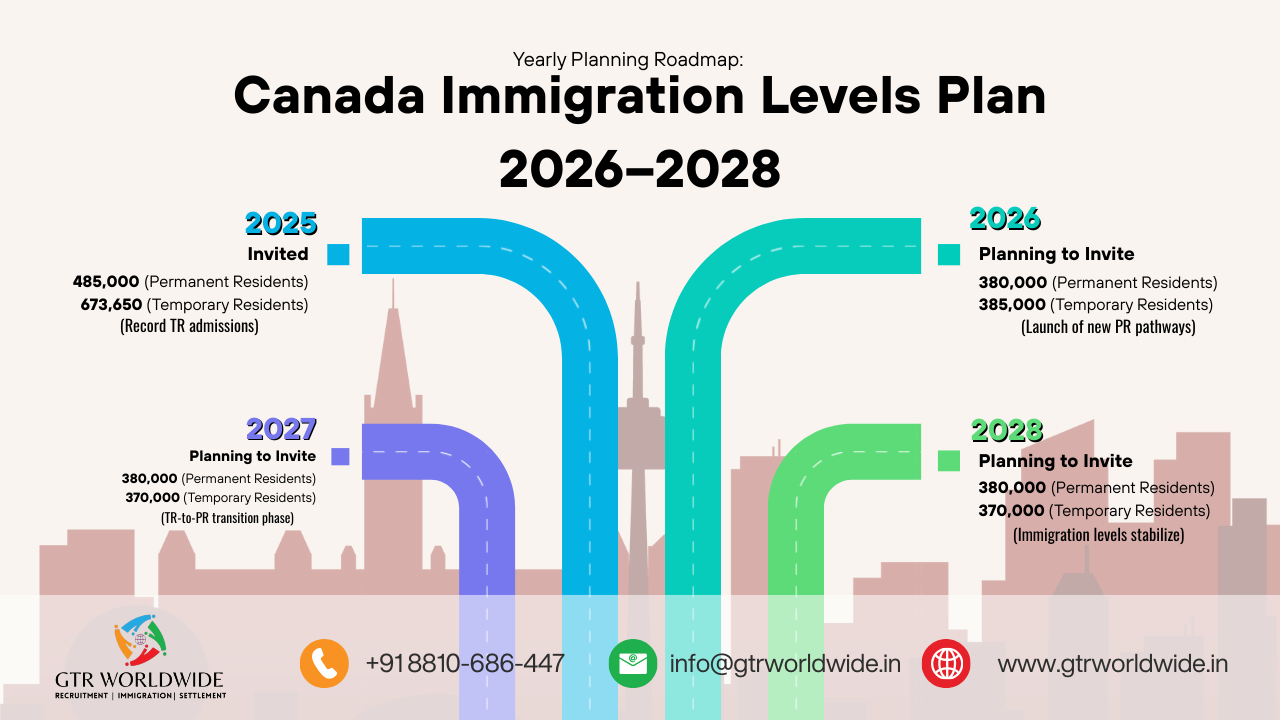
    Canada’s federal government has officially revealed the 2026–2028 Immigration Levels Plan, confirming a consistent intake of 380,000 new permanent residents (PRs) annually for the next three years.
    This plan highlights a shift toward stability and sustainability, while at the same time opening new pathways for temporary residents — including foreign workers, international graduates, and protected persons — to transition to permanent residency (PR) in Canada.

    According to Immigration, Refugees and Citizenship Canada (IRCC), the plan is designed to balance economic growth with population management and address national challenges such as housing shortages, infrastructure pressure, and service demand.

    A Balanced Immigration Approach for Long-Term Growth

    The 2026–2028 plan focuses on selecting immigrants already living and working in Canada, ensuring a smoother integration into the economy and communities.
    Canada aims to maintain strong immigration outcomes while reducing temporary resident (TR) admissions — a major policy shift from the previous years.

    Canada’s Immigration Targets 2025–2028

    YearPermanent Residents (PR)Temporary Residents (TR)Key Highlights
    2025485,000673,650Record TR admissions
    2026380,000385,000Launch of new PR pathways
    2027380,000370,000TR-to-PR transition phase
    2028380,000370,000Immigration levels stabilize

    This adjustment aims to bring the temporary resident population down to below 5% of Canada’s total population by the end of 2027.

    New Measures: Pathways from Temporary to Permanent Residence

    One of the key features of the new plan is the launch of special PR transition programs for temporary residents. The government will introduce a one-time or limited-duration initiative to grant permanent residency to up to 33,000 work permit holders between 2026 and 2027.

    Additionally, IRCC announced a two-year measure to recognize and grant PR to eligible Protected Persons currently residing in Canada.

    These changes reflect the government’s focus on an “in-Canada selection model, where preference is given to candidates who already contribute to the economy, speak English or French, and have local experience.

    Overview of New PR Transition Programs (2026–2028)

    CategoryDurationExpected BeneficiariesDescription
    Work Permit Holders2026–2027Up to 33,000Temporary foreign workers with Canadian experience may qualify for PR through a one-time pathway
    Protected Persons2026–2028ThousandsHumanitarian initiative granting PR to eligible residents already in Canada
    International GraduatesOngoingContinuousExpanded PR options through Express Entry and PNP systems

    Economic Immigration Remains Canada’s Priority

    Under the 2026–2028 Immigration Levels Plan, economic immigration will account for up to 64% of total admissions — an increase from the previous 59%.
    Programs like Express Entry and Provincial Nominee Programs (PNPs) will continue to be the main channels for skilled workers to settle in Canada permanently.

    Provinces and territories will also gain greater flexibility to align their immigration nominations with regional labour market needs, especially in healthcare, construction, and technology sectors.

    What to Expect in 2026 and Beyond

    • Mid-2026: Expected launch of TR-to-PR transition stream.
    • Ongoing: Focus on permanent over temporary pathways.
    • 2027–2028: Gradual stabilization of immigration growth.
    • After 2028: More emphasis on integration, housing, and community development.

    Conclusion

    The 2026–2028 Immigration Levels Plan reflects Canada’s continued commitment to inclusive, sustainable immigration.
    By maintaining steady PR targets while introducing new Temporary to Permanent Residence (TR to PR) pathways, the government is ensuring that people already contributing to the country’s success can make Canada their permanent home.

    For foreign workers, graduates, and temporary residents, 2026 marks the beginning of a new era of opportunity.

  • Canada PR Invitations Surge in October 2025: Over 21,000 Candidates Invited to Apply.

    Canada PR Invitations Surge in October 2025: Over 21,000 Candidates Invited to Apply.

    Canada’s immigration momentum remains strong as the Immigration, Refugees and Citizenship Canada (IRCC) issued a total of 21,281 Invitations to Apply (ITAs) for permanent residency in October 2025.
    This figure highlights one of the most active months of the year for Canada’s immigration programs, showcasing the country’s continued focus on attracting skilled workers and transitioning temporary residents to permanent status.

    These invitations were distributed through a mix of Express Entry draws, Provincial Nominee Programs (PNP), and category-based selection rounds for in-demand occupations and language skills.

    Breakdown of Permanent Residency Invitations – October 2025

    DateDraw TypeNumber of InvitationsCRS Cut-offRemarks / Category
    Oct 29, 2025French Language Proficiency6,000416Category-based draw for French speakers
    Oct 28, 2025Canadian Experience Class (CEC)1,000533Targeted toward temporary residents in Canada
    Oct 27, 2025Provincial Nominee Program (PNP)302761For candidates nominated by provinces
    Oct 15, 2025Healthcare & Social Services2,500472Category-based draw for healthcare occupations
    Oct 14, 2025Provincial Nominee Program (PNP)345778PNP stream supporting regional labor needs
    Oct 8, 2025Trade Occupations650441Skilled trade professionals
    Oct 3, 2025General Express Entry10,484495Open draw for all categories

    Total Invitations (October 2025): 21,281

    This data shows that October was not only diverse in draw types but also balanced between targeted and general rounds — an indication of Canada’s ongoing efforts to fill both national and provincial labor shortages.

    Express Entry Draw Highlights – October 2025

    Stream / CategoryKey FocusApproximate Share of Total ITAsTrend
    French Language ProficiencyBoosting bilingual workforce~28%Increasing focus
    Healthcare & Social ServicesAddressing health sector shortages~12%Consistent priority
    Canadian Experience Class (CEC)Transitioning temporary workers~5%Stable
    Skilled Trades & PNPsFilling regional gaps~15%Steady demand
    General DrawsOpen to all eligible candidates~40%Strong ongoing intake

    This diversified strategy allows IRCC to balance targeted economic immigration with general skilled migration, ensuring Canada remains responsive to both immediate and long-term labor demands.

    IRCC’s 2025–2027 Immigration Plan

    Under the 2025–2027 Immigration Levels Plan, Canada aims to welcome approximately 395,000 new permanent residents in 2025.
    More than 40% of these admissions are expected to come from temporary residents already in Canada, such as foreign workers and international students.

    The IRCC also announced plans to modernize the Express Entry system with smarter, data-driven selection methods and to enhance collaboration with provinces and territories for regional PNP quotas.

    What To Expect in Late 2025 and 2026

    PeriodExpected Focus AreasPotential Policy Direction
    Late 2025Continuation of category-based draws (French, healthcare, tech)Sustained high ITA volumes
    Early 2026More pathways for in-Canada temporary workersSimplified transition from study/work to PR
    Mid–Late 2026Increased PNP allocations to smaller provincesStronger regionalization of immigration
    2026 overallPotential adjustment of CRS thresholdsBroader inclusion of skilled trades and STEM roles

    Experts predict that Canada will maintain — or even increase — monthly ITA volumes through 2026 as the country continues addressing labor shortages and population growth goals.

    Key Takeaways for Applicants

    • Keep your Express Entry profile active and up to date.
    • Improve your language scores — French proficiency is becoming a major advantage.
    • Explore Provincial Nominee Programs (PNPs) that align with your profession.
    • If you’re already in Canada, ensure you qualify under CEC or in-Canada transition programs.

    While receiving an ITA is a strong step forward, remember it is not automatic approval — successful applicants must still meet all medical, security, and documentation requirements.

    Conclusion

    With over 21,000 invitations issued in October 2025, Canada’s immigration landscape continues to show strength and stability.
    For international applicants and temporary residents alike, now is an excellent time to position yourself for permanent residency in Canada as the country heads toward another high-intake year in 2026.

  • Alberta Immigration Draws October 2025: 202 Candidates Invited Under Five AAIP Streams

    Alberta Immigration Draws October 2025: 202 Candidates Invited Under Five AAIP Streams

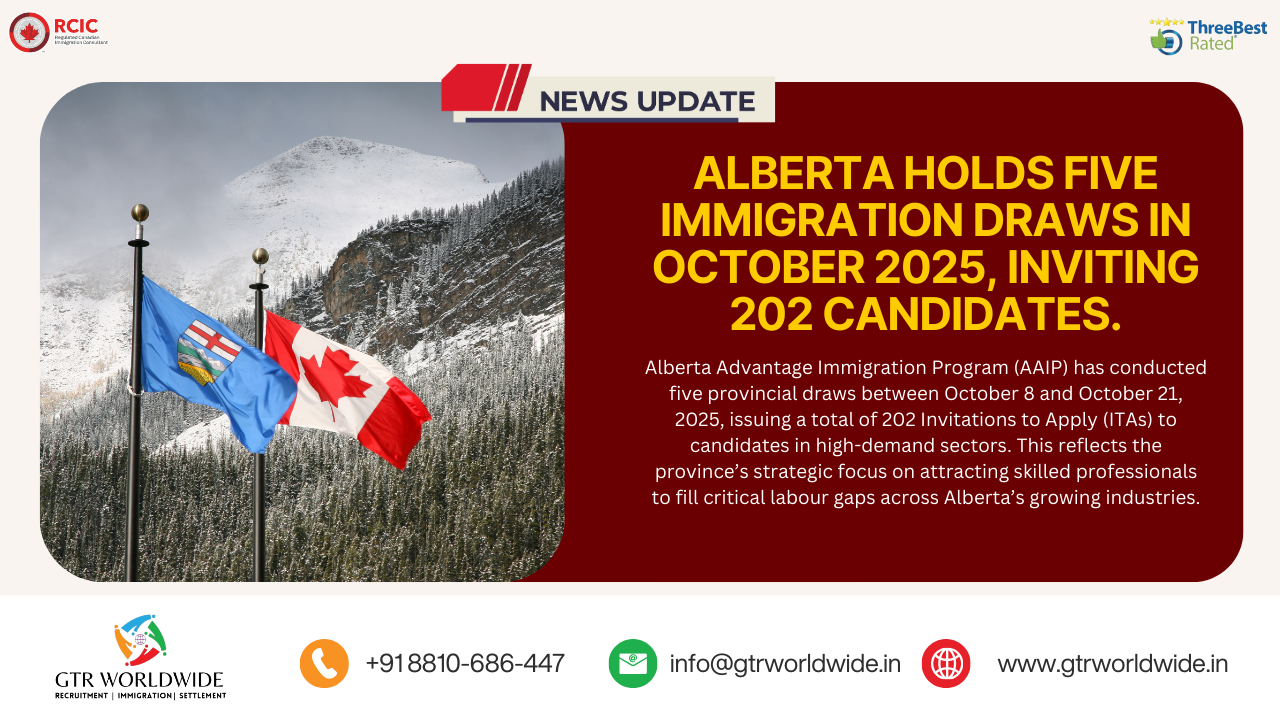
    The Alberta Advantage Immigration Program (AAIP) has conducted five provincial draws between October 8 and October 21, 2025, issuing a total of 202 Invitations to Apply (ITAs) to candidates in high-demand sectors. This reflects the province’s strategic focus on attracting skilled professionals to fill critical labour gaps across Alberta’s growing industries.

    Summary of Recent Alberta Draws

    DateStreamITAs IssuedMinimum Score
    October 21, 2025Express Entry – Accelerated Tech Pathway8960
    October 16, 2025Express Entry – Priority Sectors (Aviation)1346
    October 15, 2025Express Entry – Priority Sectors (Agriculture)1067
    October 10, 2025Dedicated Health Care Pathway (Non–Express Entry)4145
    October 8, 2025Dedicated Health Care Pathway (Express Entry)4652

    In total, 202 candidates received invitations, with the lowest cut-off score dropping to just 45 under the non–Express Entry health care draw — indicating Alberta’s strong commitment to address workforce shortages in vital sectors.

    Alberta’s 2025 Nomination Statistics

    As of October 21, 2025, Alberta has issued 4,689 provincial nominations out of its 6,403 allocation slots for the year, leaving 1,714 spaces still available.

    StreamAllocationNominations IssuedRemainingEOI in Pool
    Alberta Opportunity Stream3,3562,54481236,778
    Rural Renewal Stream1,1008772334,024
    Tourism & Hospitality Stream245212335,689
    Dedicated Health Care Pathways2454383721,402
    Accelerated Tech Pathway2911701212,621
    Law Enforcement Pathway261610105
    Priority Sectors & Other Initiatives5534121414,444

    These numbers highlight the province’s continued momentum in welcoming skilled newcomers through its multiple AAIP streams.

    What This Means for Applicants

    The recent series of draws underlines Alberta’s commitment to recruiting professionals in key industries, including:

    • Technology (Accelerated Tech Pathway)
    • Health Care (Dedicated Health Care Pathways)
    • Aviation and Agriculture (Priority Sectors)

    To maximize your eligibility, ensure that your Express Entry profile is active and up-to-date, and that your occupation aligns with Alberta’s targeted sectors.

    Steps for Interested Candidates

    1. Review eligibility criteria on the Alberta Advantage Immigration Program (AAIP)
    2. Create or update your Express Entry profile.
    3. Highlight relevant sector-specific experience in tech, health care, agriculture, or aviation.
    4. Monitor ongoing Alberta draw results to stay informed of trends and cut-off scores.
    5. Be prepared to apply promptly upon receiving an Invitation to Apply (ITA).

    Conclusion

    The latest five draws under the Alberta Advantage Immigration Program reinforce the province’s goal of building a diverse and resilient labour market. With many nomination slots still open, professionals in high-demand sectors are encouraged to take advantage of Alberta’s welcoming immigration pathways in 2025.

  • Canada Immigration Levels Plan 2026–2028 – What to Expect

    Canada Immigration Levels Plan 2026–2028 – What to Expect

    Canada’s next Immigration Levels Plan (ILP) 2026–2028 will soon be unveiled, shaping the country’s immigration priorities for the next three years. Following the 2025–2027 plan, which already began moderating record-high immigration levels, this new plan is expected to reflect a balanced approach — ensuring economic growth while addressing public concerns about housing, infrastructure, and integration capacity.

    According to the Government of Canada, the ILP outlines the number of new permanent residents the country aims to welcome each year, broken down into three main categories: economic, family, and refugee/humanitarian streams.

    1. Expected Immigration Targets for 2026–2028

    The previous ILP (2025–2027) targeted 395,000 new permanent residents in 2025, 380,000 in 2026, and 365,000 in 2027.
    Experts project that the 2026–2028 plan will maintain a similar or slightly adjusted range, possibly between 360,000 and 400,000 annually. This indicates a stabilization trend after several years of rapid growth.

    A report by the Parliamentary Budget Officer (PBO) suggests that reduced immigration may slightly slow overall GDP growth but could improve GDP per capita and ease housing demand — two key concerns influencing upcoming targets.

    2. Economic-Class Immigration: Still a Priority

    The economic class will continue to dominate admissions, accounting for about 60–62% of total permanent residents.
    This includes skilled workers, health professionals, and tradespeople — especially through Express Entry and Provincial Nominee Programs (PNPs).

    Analysts from Moving2Canada and Amir Ismail & Associates predict that the government will continue emphasizing talent-driven immigration to address labour shortages in construction, healthcare, and technology sectors.

    3. Family Reunification and Humanitarian Commitments

    While the focus remains on economic growth, Canada’s ILP will still prioritize family reunification and refugee resettlement.
    The Canadian Council for Refugees (CCR) has called for increased family sponsorship allocations and faster processing for humanitarian cases.
    It’s likely that the family class will remain around 22% of total targets, while refugee and humanitarian streams make up around 15%.

    4. Temporary Residents Now Part of the Conversation

    For the first time, Canada’s ILP framework includes temporary residents — such as international students and foreign workers — recognizing their major role in population growth.
    Under current policy, the federal government aims to reduce non-permanent residents to 5% of the total population by the end of 2026.

    This shift means future immigration planning will coordinate better between temporary-to-permanent pathways, ensuring sustainability in both labour and housing markets.

    5. Economic and Social Context

    Public attitudes toward immigration have evolved. A survey found that while most Canadians value immigration, many believe current levels are “too high” due to housing and cost-of-living pressures.
    In response, the government appears to be pursuing a “smart moderation” strategy — maintaining Canada’s global competitiveness while addressing domestic capacity limits.

    The Bank of Nova Scotia’s July 2025 Special Report confirms that slowing immigration growth will help stabilize real estate prices and allow local economies to absorb new arrivals more effectively.

    6. Consultation and Flexibility

    The federal government has emphasized broad consultations with provinces, territories, and stakeholders before finalizing the ILP 2026–2028.
    The final plan, expected in fall 2025, will likely include target ranges instead of fixed numbers to maintain flexibility amid changing economic and demographic conditions.

    Conclusion

    In summary, Canada’s Immigration Levels Plan 2026–2028 is expected to strike a careful balance between economic needs and social capacity.
    While the pace of immigration may moderate, Canada remains committed to welcoming newcomers who contribute to its growth, innovation, and cultural diversity.

    Stay tuned for the official release later this year, which will confirm exact figures and category breakdowns.

  • Henley Passport Index 2025: Canada Stays in Top 10, U.S. Falls to 12th Place

    Henley Passport Index 2025: Canada Stays in Top 10, U.S. Falls to 12th Place

    According to the Henley Passport Index (October 2025), Canada continues to hold one of the world’s most powerful passports, granting its citizens visa-free or visa-on-arrival access to 183 destinations.
    This puts Canada in 9th place globally, ahead of the United States, which fell out of the top 10 for the first time in two decades.

    Although Canada slipped slightly from 7th earlier this year, experts note that this still reflects strong international partnerships and widespread visa agreements that support Canada’s global mobility.

    The Henley Index—based on data from the International Air Transport Association (IATA)—ranks 199 passports by the number of countries their holders can visit without a prior visa.

    U.S. Passport Drops to Its Lowest Ranking in 20 Years

    The United States now ranks 12th with visa-free access to 180 destinations, sharing its position with Malaysia.
    This marks the lowest point for the U.S. in the 20-year history of the Henley Passport Index.

    The decline has been linked to:

    • Countries such as Brazil reinstating visa requirements for U.S. travelers.
    • The U.S. offering visa-free access to only 46 nations, affecting its “openness” score.
    • Rising passport strength in European and Asian countries, reflecting evolving global diplomacy.

    Analysts say the U.S. drop highlights a broader shift in soft power and international influence, as global travel freedom becomes more evenly distributed.

    Top 10 Most Powerful Passports in the World (October 2025)

    RankCountryVisa-Free / Visa-on-Arrival Destinations
    1Singapore193
    2South Korea190
    3Japan189
    4Germany, Italy, Luxembourg, Spain, Switzerland188
    5Austria, Belgium, Denmark, Finland, France, Ireland, Netherlands187
    6Greece, Hungary, New Zealand, Norway, Portugal, Sweden186
    7Australia, Czech Republic, Malta, Poland185
    8Croatia, Estonia, Slovakia, Slovenia, United Arab Emirates, United Kingdom184
    9Canada183
    10Latvia, Liechtenstein182

    Why These Rankings Matter

    For Canadians, the strong ranking confirms that Canadian citizenship remains one of the most globally mobile.
    For Americans, it’s a reminder that maintaining reciprocal visa agreements and international diplomacy plays a crucial role in global movement.

    Post-pandemic policy shifts and strengthening alliances among European and Asian countries have created a more competitive passport landscape—where smaller, highly connected nations now lead.

    Conclusion

    While Canada maintains its reputation as a global mobility leader, the U.S. experiences its sharpest drop in two decades.
    These results from the Henley Passport Index 2025 underscore how international cooperation, diplomacy, and visa reciprocity directly shape global travel freedom.

  • Alberta Holds Three Immigration Draws in October 2025, Inviting Over 1,300 Candidates Through AAIP

    Alberta Holds Three Immigration Draws in October 2025, Inviting Over 1,300 Candidates Through AAIP

    Alberta continues to stand out as one of Canada’s most dynamic destinations for skilled immigrants. In early October 2025, the province conducted three provincial immigration draws under the Alberta Advantage Immigration Program (AAIP), issuing a total of 1,324 invitations across multiple streams.

    These draws emphasize Alberta’s focused efforts to address workforce needs in key industries such as construction, technology, and general skilled trades.

    Breakdown of October 2025 AAIP Draws

    DateStream / PathwayMinimum CRS ScoreInvitations
    October 1, 2025Alberta Opportunity Stream611,003
    October 3, 2025Accelerated Tech Pathway52230
    October 7, 2025Priority Sectors – Construction6091

    The Alberta Opportunity Stream remained the most active, accounting for more than 75% of total invitations. This stream is designed for foreign workers currently employed in Alberta on valid work permits, offering them a smoother route to permanent residency.

    Meanwhile, the Accelerated Tech Pathway and Priority Construction Draw reflect Alberta’s continuous demand for skilled talent in digital innovation and infrastructure development.


    Strong Momentum from September 2025 Draws

    Before October, Alberta had already issued 1,433 invitations across three draws held between September 12 and 19, 2025:

    • Alberta Opportunity Stream – 1,113 invitations (CRS 63)
    • Accelerated Tech Pathway – 320 invitations (CRS 55)
    • Law Enforcement Pathway – <10 invitations (CRS 56)

    By late September, Alberta had utilized 3,983 of its 4,875 federal nomination allocations for 2025, demonstrating its proactive approach to filling critical workforce gaps.


    Key Highlights

    1. Alberta Opportunity Stream remains the primary pathway for temporary foreign workers to transition to permanent residency.
    2. Low CRS thresholds (52–63) make Alberta one of the most accessible provinces for skilled candidates.
    3. Draws continue to align with Alberta’s economic priorities — especially in technology, construction, and law enforcement.
    4. The rapid use of nomination quotas underscores the province’s strong demand for talent.
    5. Flexible draw scheduling allows Alberta to adapt quickly to shifting labour market needs.

    What This Means for Applicants

    Candidates with job offers in Alberta or experience in high-demand sectors — particularly in tech, construction, or essential trades — should closely monitor upcoming AAIP draws.

    Maintaining an active Express Entry profile, securing a valid Alberta job offer, and demonstrating Canadian work experience can significantly increase the chances of receiving an invitation.


    Conclusion

    The latest series of AAIP draws highlight Alberta’s unwavering commitment to attracting and retaining skilled workers to support its growing economy.

    With low CRS cut-offs, targeted pathways, and consistent invitation numbers, Alberta continues to be one of the most promising destinations for those seeking permanent residency in Canada.

  • Manitoba PNP Issues Over 800 Invitations to Skilled Workers in October 2025 Draw

    Manitoba PNP Issues Over 800 Invitations to Skilled Workers in October 2025 Draw

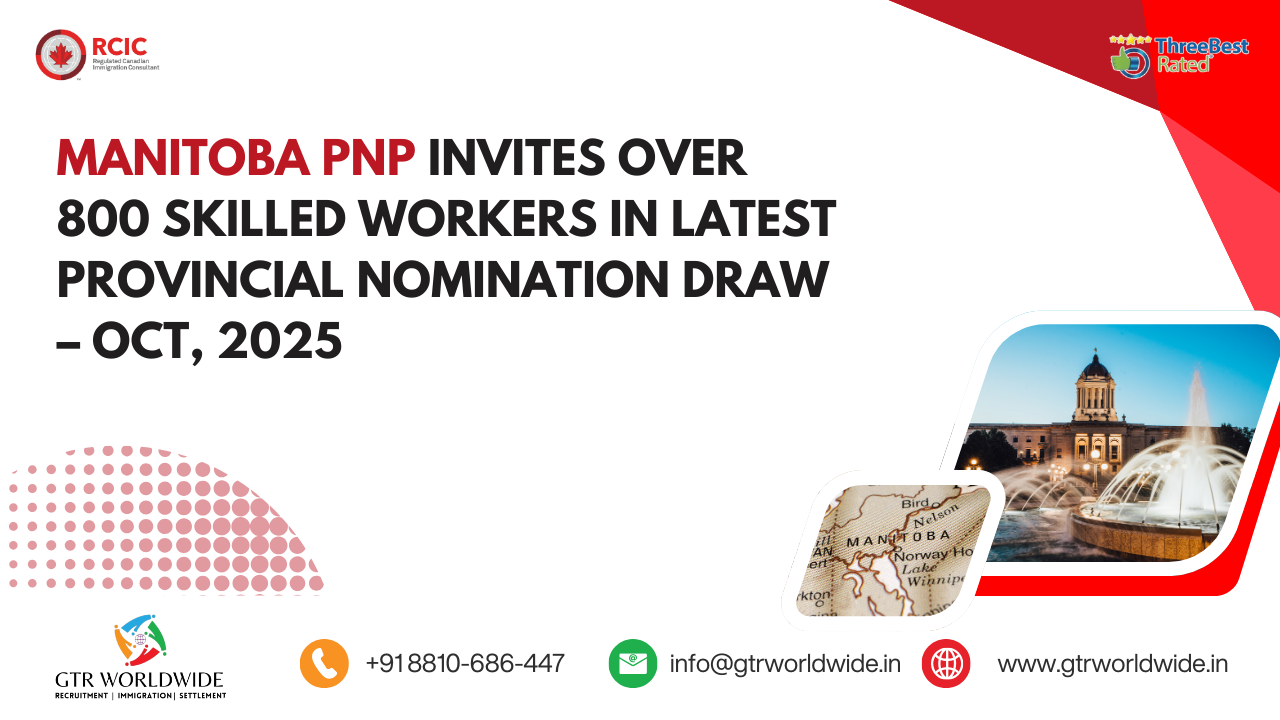
    The Manitoba Provincial Nominee Program (MPNP) has conducted its latest draw, issuing 862 Letters of Advice to Apply (LAAs) under various Skilled Worker categories. This initiative underscores Manitoba’s ongoing commitment to attracting and retaining skilled professionals to support the province’s economic growth and labor market priorities.

    Key Highlights – MPNP Draw #255 (October 9, 2025)

    • Total Invitations: 862 LAAs
    • Skilled Worker in Manitoba: 583 invitations, primarily for candidates working in healthcare and caregiving sectors
    • Skilled Worker Overseas: 279 invitations through Manitoba’s Strategic Recruitment Initiatives
    • Express Entry Stream: 203 invitations issued to candidates with active Express Entry profiles and valid job seeker validation codes

    Additional Invitations by Category:

    • Employer Services: 45
    • Francophone Community: 43
    • Regional Communities: 8
    • Ethnocultural Communities: 3
    • Temporary Public Policy (TPP): 180

    Emphasis on Healthcare and Caregiving Occupations

    This draw particularly highlighted Manitoba’s ongoing focus on healthcare and caregiving roles — including occupations such as Home Support Workers (NOC 44101) and other essential service positions. The province continues to collaborate with employers to fill high-demand roles and ensure long-term workforce stability.

    Strategic and Employer-Led Recruitment

    The MPNP remains centered on employer-driven and community-based recruitment, aiming to bring in international talent for critical industries where local supply is limited. Manitoba also continues to apply Temporary Public Policy (TPP) measures that enable eligible candidates to secure open work permits, helping them integrate into the workforce more quickly.

    Expanded Nomination Capacity for 2025

    Manitoba recently gained an additional 1,489 nomination spaces, raising its total for 2025 to 6,239 nominations. This expanded capacity will allow the province to invite more candidates in priority sectors such as healthcare, manufacturing, and education.

    Important Details for Applicants

    • Application Deadline: Invited candidates must submit complete applications via the MPNP portal within the specified timeframe.
    • Required Documents: Applicants must provide proof of employment, educational credentials, and genuine intent to settle in Manitoba.
    • Regulated Occupations: Those applying under licensed professions must present valid authorization to practice in Manitoba.
    • Express Entry Benefit: Candidates nominated through Express Entry receive an additional 600 CRS points and benefit from faster federal processing.

    Conclusion

    This latest draw showcases Manitoba’s proactive immigration approach — prioritizing skilled professionals who can immediately contribute to the province’s economy and communities. With increased nomination capacity and strengthened employer partnerships, Manitoba continues to stand out as one of Canada’s most welcoming destinations for skilled immigrants.

  • Canada Expands Low-Wage LMIA Processing Freeze – Six Additional Regions Affected from October 10, 2025

    Canada Expands Low-Wage LMIA Processing Freeze – Six Additional Regions Affected from October 10, 2025

    Starting October 10, 2025, Employment and Social Development Canada (ESDC) will expand its Low-Wage Labour Market Impact Assessment (LMIA) processing freeze. This measure is designed to safeguard job opportunities for Canadians and permanent residents in regions with unemployment rates of 6% or higher.

    This update adds six new Census Metropolitan Areas (CMAs) to the list where low-wage LMIA applications will not be processed, while one CMA has been removed due to improved labour market conditions.

    Regional Updates Effective October 10, 2025

    CategoryRegion (CMA)ProvinceChange
    AddedHalifaxNova ScotiaAdded to freeze list
    AddedBarrieOntarioAdded to freeze list
    AddedKingstonOntarioAdded to freeze list
    AddedPeterboroughOntarioAdded to freeze list
    AddedWindsorOntarioAdded to freeze list
    AddedKelownaBritish ColumbiaAdded to freeze list
    RemovedMonctonNew BrunswickRemoved due to lower unemployment

    Purpose of the Freeze

    The Low-Wage LMIA Processing Freeze prevents employers in high-unemployment regions from submitting LMIA applications for low-wage positions. This is part of the federal government’s labour market stabilization strategy, which prioritizes the hiring of Canadian citizens and permanent residents before turning to the Temporary Foreign Worker Program (TFWP). The freeze list is reviewed quarterly based on regional unemployment data.

    Impact on Employers and Foreign Workers

    • Employers in the frozen regions cannot submit new low-wage LMIA applications.
    • Applications for high-wage, agriculture, or Global Talent Stream positions are still allowed.
    • Foreign workers with pending offers in affected areas may experience delays or cancellations.
    • Employers are encouraged to consider alternative pathways, such as:
      • Provincial Nominee Program (PNP)
      • Express Entry
      • In-Canada recruitment and training incentives

    Next Review
    The freeze will remain in effect until the next quarterly review in January 2026, when ESDC will reassess unemployment trends and update the eligible CMAs accordingly.

    Conclusion
    This expansion highlights the government’s data-driven approach to labour policy. Employers in the newly frozen CMAs should review staffing strategies and seek guidance from authorized immigration experts to explore alternative work permit or visa options.