Blog

  • Canada limits LMIA-exempt C20 permits to current employees

    Canada limits LMIA-exempt C20 permits to current employees

    Reciprocal employment C20 work permit changes: worker must be currently employed abroad (July 29, 2026)

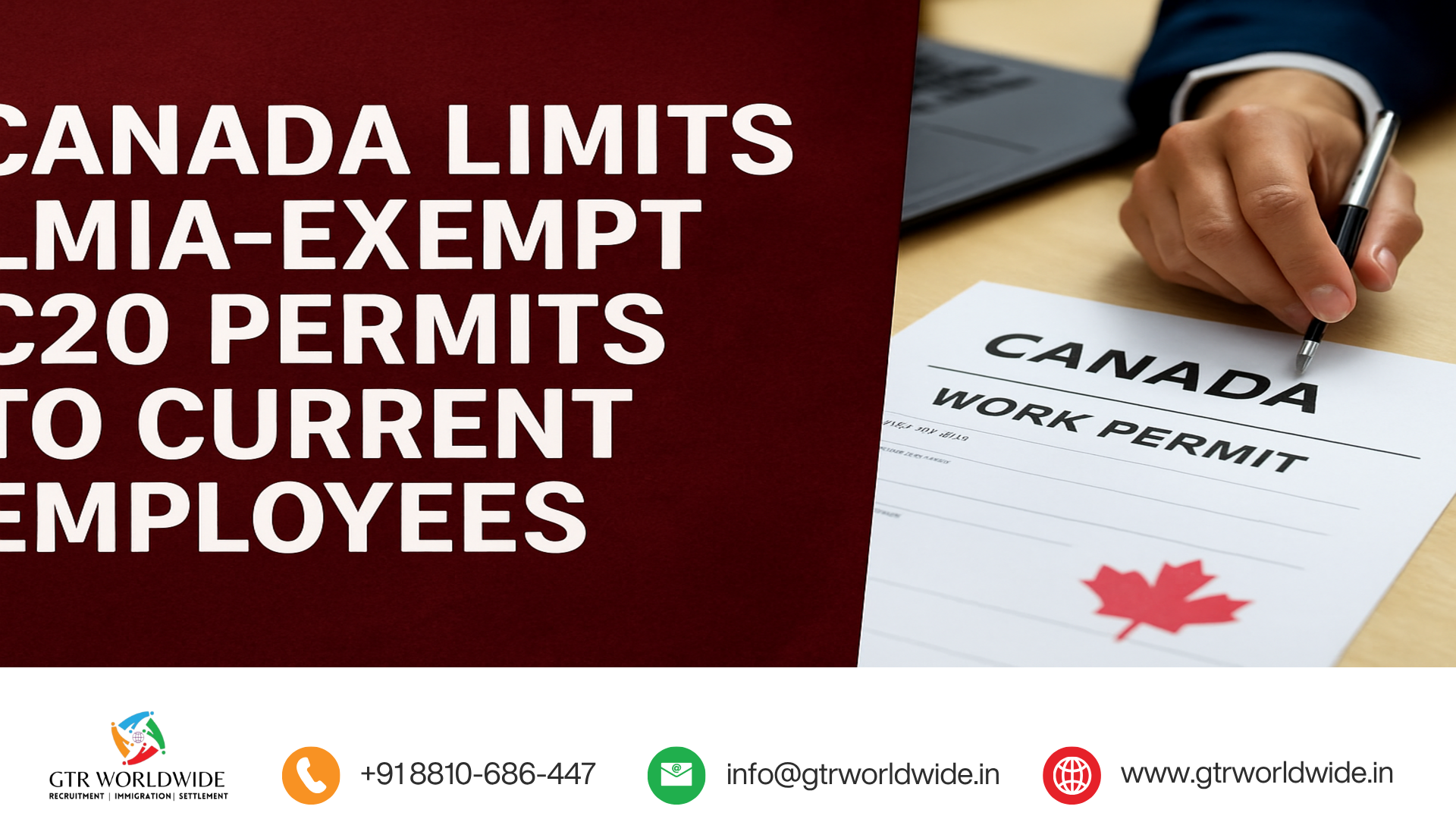
    On July 29, 2026, Immigration, Refugees and Citizenship Canada updated internal guidance for C20 (R205(b)) reciprocal employment work permits. The key change: officers must confirm the foreign national is already employed by the overseas company. Work permits cannot be issued when the employment is set to begin only upon the worker’s arrival in Canada. This affects multinationals, academic institutions, governmental bodies and international non‑profits that use C20 to bring staff without an LMIA.

    Major procedural shift for C20 (R205(b)) work permits
    The updated guidance, retitled “Reciprocal employment general guidelines [R205(b) – C20] – Canadian interests – International Mobility Program,” introduces an explicit eligibility requirement that the worker be currently employed by the employer abroad. The guidance also clarifies that starting employment only after arrival in Canada does not meet the reciprocity purpose.

    Policy origin and what changed on July 29, 2026
    C20 is enacted under Immigration and Refugee Protection Regulations R205(b), which allows work permits when the work “would create or maintain reciprocal employment of Canadian citizens or permanent residents in other countries.” The July 29 update revises how officers assess reciprocity and eligibility. Two notable textual changes are:
    – The explicit requirement that the foreign national be currently employed by the company abroad.
    – Removal of the prior emphasis on a “neutral labour market impact” test.

    How reciprocity is interpreted
    The guidance confirms reciprocity need not be a strict one‑for‑one exchange between two countries. A multinational employer can demonstrate reciprocity by showing it creates or maintains similar opportunities for Canadians across different offices worldwide.

    Which employers and programs are affected
    Typical C20 users include academic institutions, multinational corporations, governmental organizations and international non‑profits. The guidance also notes that International Experience Canada (IEC) is separate; IEC work permits are issued under R204(d), not C20.

    When C20 is not available: the LMIA fallback
    If an individual does not qualify for C20 or another IMP exemption, the employer must use the Temporary Foreign Worker Program (TFWP) and obtain an LMIA showing no qualified Canadian is available. That process requires more time and cost. The guidance also notes employers are currently barred from applying for LMIAs for roles paying less than 120% of the median wage in regions with unemployment at or above 6%.

    Why this matters in practice
    The requirement that the worker be already employed abroad eliminates C20 eligibility for arrivals whose employment would begin only in Canada. Practical impacts include:
    – Greater scrutiny by officers to confirm pre‑existing employment relationships.
    – Risk of refusal for applicants whose contracts or offers show start dates in Canada rather than active employment abroad.
    – A narrower focus on documented reciprocity and pre‑existing employment ties following removal of the “neutral labour market impact” emphasis.

    Who should pay attention
    – Foreign nationals planning to start a job in Canada only upon arrival — they can no longer rely on C20 unless already employed by the overseas entity.
    – Multinational employers, universities, government bodies and international non‑profits arranging exchanges or transfers.
    – HR and mobility teams that must align start dates and documentation with the new requirement.
    – Applicants who may need to pursue the LMIA/TFWP route if they lack the required pre‑existing employment.

    Practical readiness and next steps
    The guidance does not prescribe a fixed document checklist, but it places a premium on proving an active employment relationship abroad at the time of application. Employers and applicants should confirm employment status and align contracts, appointment letters and evidence before filing a C20 application. If a switch to the LMIA route becomes necessary, expect additional time and costs.

    Monitoring for further guidance
    This is an internal policy update to officer instructions. Applicants and employers should watch for any future clarifications that further define acceptable evidence of “currently employed” status or reciprocity demonstrations.

    For personalized support with your Canadian immigration pathway, contact GTR Immigration. Call us: +91-8810-686-447

    #reciprocalemployment #C20 #R205b #workpermit #InternationalMobilityProgram #LMIA #CanadianImmigration #immigrationupdate

  • IRCC July 28 Update: Temporary Residence Wait Times Rise

    IRCC July 28 Update: Temporary Residence Wait Times Rise

    Canada temporary residence processing times update — July 28, 2026

    Why the July 28 update matters
    IRCC’s processing-time estimates for temporary residence applications changed on July 28, with most categories showing modest increases. Even small shifts can affect study start dates, employment start times, family visits and employer hiring plans. The July 28 figures show which applicant groups moved the most over the one-week window (July 22 → July 28) and underscore the need to build time buffers into immigration plans.

    Short summary of this week’s movements
    This update compares processing-time estimates for newly submitted temporary residence applications between July 22 and July 28.

    – Work permits: Shorter for in‑Canada and Philippines-based filings; up by one week for Pakistan and Nigeria.
    – Canada: 120 days (was 122 days)
    – India: 9 weeks (unchanged)
    – Pakistan: 11 weeks (up from 10 weeks)
    – Nigeria: 7 weeks (up from 6 weeks)
    – United States: 3 weeks (unchanged)
    – Philippines: 6 weeks (down from 7 weeks)
    – Service standards: In‑Canada submissions (initial and extensions) 120 days; outside‑Canada submissions 60 days.

    – Study permits: After several weeks of stability, waits rose by one week for applicants in Pakistan and Nigeria.
    – Canada: 7 weeks (unchanged)
    – India: 5 weeks (unchanged)
    – Pakistan: 7 weeks (up from 6 weeks)
    – Nigeria: 6 weeks (up from 5 weeks)
    – United States: 5 weeks (unchanged)
    – Philippines: 4 weeks (unchanged)
    – Service standards: In‑Canada 120 days; outside‑Canada 60 days.

    – Visitor visas: Slight improvements for applicants inside Canada and the U.S.; small increases for most other listed countries.
    – Canada: 24 days (down from 29 days)
    – India: 22 days (up from 21 days)
    – Pakistan: 43 days (up from 40 days)
    – Nigeria: 64 days (up from 63 days)
    – United States: 26 days (down from 27 days)
    – Philippines: 17 days (up from 16 days)
    – Service standard (outside Canada): 14 days.

    – Super visas: Stable for U.S. applicants; increases of 2–5 days for other listed countries.
    – India: 52 days (up from 49 days)
    – Pakistan: 196 days (up from 194 days)
    – Nigeria: 41 days (up from 39 days)
    – United States: 124 days (unchanged)
    – Philippines: 73 days (up from 68 days)
    – Service standard: 112 days. (Note: super visa applications can only be submitted from outside Canada.)

    Context and why processing times vs. service standards matter
    IRCC’s processing-time estimates and its service standards are related but different. Processing-time estimates are informational—based on past finalizations or current inventory and capacity—and are not guarantees. Service standards are internal performance targets (typically for 80% of cases). A specific application can take more or less time than either published figure, depending on complexity, backlogs, operational capacity, requests for additional information, or further assessment.

    Snapshot and next update
    IRCC finalized more than 1.2 million temporary residence applications in the first five months of 2026; over 404,000 temporary residence applications remained pending as of May 31. The next temporary residence processing times update is expected on or around August 5, 2026.

    Deeper look at country-level movements and implications
    Week-to-week changes are mostly days or one week but reveal pressure points:

    – Pakistan and Nigeria: Repeated increases across categories. Work and study permits rose by one week for both; visitor and super visa times also ticked up. Pakistan’s super visa estimate (196 days) is well above the 112‑day service standard. Applicants and sponsors in these countries should factor in longer waits and arrange contingency plans.

    – Philippines: Mixed results. Work permit processing improved (6 weeks), while super visa and visitor visa times rose slightly. Employers and institutions should note the shorter work-permit timeline but watch visa timelines for visitors and super visa applicants.

    – Canada and United States: Visitor visa processing improved slightly for domestic applicants. In‑Canada work and study permit estimates remain at 120 days (the published in‑Canada figure), so applicants filing inside Canada should plan for multi-month waits and apply early.

    – India: Small increases in visitor and super visa estimates; work and study permit times stable. Families and sponsors should be aware of small upward movement in some categories.

    Who feels the effects most acutely
    – Prospective international students: Study-permit timing affects arrival for semester starts, housing and orientation. A one-week increase can matter for on-time arrival.
    – Temporary foreign workers and employers: Work-permit delays can disrupt hiring and start dates.
    – Visitor and super visa applicants: Super visa estimates exceed the service standard for some countries; avoid irreversible travel or booking commitments until a visa is issued.
    – People in Canada filing extensions: In‑Canada processing estimates remain at 120 days—apply well ahead of expiry and keep evidence of maintained status.
    – Advisers, employers and institutions: Advise candidates conservatively and monitor weekly trends.

    Practical steps applicants and sponsors should take now
    – Build time buffers: Plan using the highest recent estimate for your jurisdiction and application type, plus extra time for possible requests.
    – Submit complete files: Well-organized, complete evidence reduces follow-up requests.
    – Respond promptly to IRCC requests: Quick responses can prevent long delays.
    – Avoid non-refundable commitments: Wait for visa/permit issuance before booking non-refundable travel, housing or employment starts.
    – Monitor weekly updates: Look for trends over several weeks rather than reacting to a single-week change.
    – Consider contingency plans: Deferred registration, flexible start dates, or alternate caregiving options.
    – Keep records of submissions: Save forms, receipts and correspondence for follow-ups.

    Numbers to watch from this update
    (Selected figures from July 28 vs. July 22)

    – Work permits
    – Canada: 120 days (122 days)
    – India: 9 weeks (9 weeks)
    – Pakistan: 11 weeks (10 weeks)
    – Nigeria: 7 weeks (6 weeks)
    – United States: 3 weeks (3 weeks)
    – Philippines: 6 weeks (7 weeks)

    – Study permits
    – Canada: 7 weeks (7 weeks)
    – India: 5 weeks (5 weeks)
    – Pakistan: 7 weeks (6 weeks)
    – Nigeria: 6 weeks (5 weeks)
    – United States: 5 weeks (5 weeks)
    – Philippines: 4 weeks (4 weeks)

    – Visitor visas
    – Canada: 24 days (29 days)
    – India: 22 days (21 days)
    – Pakistan: 43 days (40 days)
    – Nigeria: 64 days (63 days)
    – United States: 26 days (27 days)
    – Philippines: 17 days (16 days)

    – Super visas
    – India: 52 days (49 days)
    – Pakistan: 196 days (194 days)
    – Nigeria: 41 days (39 days)
    – United States: 124 days (124 days)
    – Philippines: 73 days (68 days)

    What to watch in the next updates
    – Look for consistent trends vs. one-week blips.
    – Watch super visa times for countries where estimates are well above the service standard.
    – Note any changes to service standards (rare but consequential).
    – Check for simultaneous increases across study and work permits for the same country.

    Final considerations
    The July 28 IRCC update shows modest week-over-week increases across several temporary residence categories—most notably for applicants in Pakistan and Nigeria. Even small changes can affect plans for study, work and family visits, so apply early, submit complete files, respond quickly to requests, and avoid irreversible commitments until your visa or permit is issued.

    For personalized support with your Canadian immigration pathway, contact GTR Immigration. Call us: +91-8810-686-447

    #CanadaImmigration #IRCC #ProcessingTimes #StudyPermit #WorkPermit #VisitorVisa #SuperVisa

  • Michigan’s Canada Ties Could Make You a Canadian Citizen

    Michigan’s Canada Ties Could Make You a Canadian Citizen

    Michigan family lines could mean Canadian citizenship for thousands — how Bill C-3 changes the picture

    Why Michigan residents should pay attention
    Bill C-3, which took effect on December 15, 2025, removed a first‑generation limit that previously stopped many people born abroad from claiming Canadian citizenship by descent. That means Michigan residents with documented Canadian or French‑Canadian ancestors may already be Canadian citizens without having applied or visited Canada.

    How common this may be
    The U.S. Census Bureau’s 2024 American Community Survey lists about 32,000 people in Michigan reporting Canadian ancestry and another 114,000 reporting French‑Canadian ancestry. These are self‑reported figures; given Michigan’s long cross‑border history, the number of potentially eligible people is likely higher.

    Why Michigan families often have Canadian roots
    – Detroit began as a French settlement in 1701, founded from Montreal; many of those early families stayed under later British rule.
    – The U.S.–Canada border was lightly enforced for much of the 19th century, and U.S. records of arrivals from Canada begin in 1895.
    – Michigan’s booming auto industry (Ford in Detroit, 1903; GM in Flint, 1908) and busy crossings like Detroit–Windsor, Port Huron, Bay City, and Sault Ste. Marie attracted many Canadian migrants.
    – The state formally recognises French‑Canadian heritage (Michigan declared a French‑Canadian Heritage Week in 2016), reflecting long cultural ties.

    Who may now qualify
    People born abroad before December 15, 2025 who can document an unbroken line of descent to a Canadian ancestor (parent, grandparent, great‑grandparent, etc.) may apply for a proof of Canadian citizenship certificate. Self‑reported ancestry is a starting signal, but eligibility depends on documentary evidence linking generations.

    What a proof of citizenship offers
    A certificate confirms Canadian citizenship and allows you to get a Canadian passport, live and work in Canada, vote in Canadian elections, and run for office. It can also expand youth mobility options for younger applicants. Obtaining proof of citizenship alone does not, by itself, create Canadian tax obligations — Canadian taxation depends on residency and Canadian‑source income.

    Key documents and where to look
    IRCC requires original or certified records from the authority that created them. Useful sources include:
    – St. Albans lists and border manifests (1895–1954) to confirm birthplace and entry year.
    – Provincial civil and church records (birth, marriage, baptism) for Canadian ancestors.
    – Local archives and genealogical societies in Michigan for research leads, while securing official copies from registrars for the application.

    Application essentials and timing
    Assemble an unbroken chain of primary documents showing the parent‑child links across generations. You can file yourself or hire an authorized representative (for example, a Canadian immigration lawyer). IRCC listed proof‑of‑citizenship processing at about 19 months as of July; times vary and can change, so plan ahead.

    Next steps
    Talk to relatives to identify names, places, and dates. Use manifests and provincial records to confirm birthplace details before ordering official certificates. If records are hard to obtain or the chain is complex, consider professional help to organize the application.

    For personalized support with your Canadian immigration pathway, contact GTR Immigration. Call us: +91-8810-686-447

    #CanadianCitizenship #BillC3 #CitizenshipByDescent #MichiganCanada #DetroitWindsor #ProofOfCitizenship #AncestrySearch

  • Tougher Financial Checks for Canadian Study Permit Applicants

    Tougher Financial Checks for Canadian Study Permit Applicants

    Canada tightens financial scrutiny for study permit applicants — what changed and why it matters

    Immediate summary of the July 24, 2026 update
    The immigration department issued updated officer instructions on July 24, 2026 that require stricter financial verification for study permit applications. Officers must assess both the amount and the source of funds in every case, may verify supplementary family and employment documents more often, and are advised to request six months of bank statements (including the month or month prior to application) instead of the previously suggested four months. The update does not change the fixed minimum cash amounts applicants must show (for example, $22,895 for a sole applicant studying outside Quebec under the standard stream, at the time of writing), but it makes the documentary review more intensive.

    Context driving the instruction change
    These guidance changes come amid wider scrutiny of Canada’s temporary-resident programs in 2026. An Auditor General report (March 23, 2026) said the department flagged more than 153,000 students for non-compliance between 2023 and 2024 but had resources to investigate roughly 2,000 cases a year. Major immigration-law reforms passed on March 26, 2026 expanded administrative powers for mass termination or cancellation of applications and added new asylum-related restrictions. The department also tightened other operational checks in 2026, such as new language-test verification guidance in June. The July update should be read as part of this broader emphasis on verification and enforcement.

    What the updated instructions require
    – Officers must assess the source of funds in every application; the previous guidance’s “high-risk” caveat has been removed.
    – Reviewing and verifying supplementary individual or family financial and employment documents is explicitly permitted and may be necessary.
    – Officers’ discretion to request extra documents is to be exercised based on the facts of each application.
    – The suggested bank-statement period has increased to six months (including the month or month before submission), up from four months.
    – Two new examples of acceptable income are listed: pension income and rental-property income. A prior example — a bank draft convertible to Canadian dollars — was removed.
    – For study-permit renewals, officers should assess funds based on the first year following the extension.

    These are procedural changes tightening verification rather than altering the required dollar amounts.

    Why this matters
    Tighter, case-focused checks raise the evidentiary bar. Applicants who meet the numeric minimum may still face more detailed requests to show the funds are genuine and sustainable for the program’s full duration. Expect more document requests, deeper review of recent deposits or third‑party sponsorships, and closer inspection of non-traditional income sources such as pensions or rental revenue.

    Who will feel the impact most
    – Prospective international students: broader and more detailed financial checks.
    – Renewal applicants: funds must be shown for the first year after an extension.
    – Sponsors and family members: their records may be examined more frequently.
    – Applicants using pension, rental, or complex income: these sources are now explicitly listed and will be checked.
    – Immigration representatives: more requests and follow-up from visa offices are likely.

    Practical implications and timeline effects
    – More requests for evidence are likely, which can extend processing times.
    – Renewals must be supported with forward-looking proof for the coming year.
    – The minimum amounts remain unchanged, but proving authenticity will require stronger documentation.
    – Do not assume previously listed examples (such as a bank draft) will be treated the same way going forward.

    Specific documents and preparations to consider
    – Bank statements: include at least six months, and the month or month prior to submission; explain any large or recent deposits.
    – Source-of-funds evidence: pay stubs, employer letters, tax records, pension statements, rental contracts and receipts.
    – Sponsor documentation: sponsor IDs, bank records, employment proof, relationship evidence, and a signed declaration of support.
    – Originals and authoritative documents: official statements and certified records are easier to verify.
    – For rental or pension income: include leases, rent receipts, or pension award letters as applicable.

    What to watch for next
    – Expect visa-office follow-up. Respond promptly with clear, verifiable evidence.
    – Keep all financial records consistent across the application. Discrepancies invite further scrutiny.
    – Monitor departmental guidance for additional operational updates in 2026.

    Note: The source material does not provide data linking this specific instruction update to changes in refusal rates or processing times. Any downstream statistical effects should not be stated without supporting data.

    Final checklist (quick)
    – Six months of bank statements, including the month or month prior.
    – Authoritative proof for each income source relied on.
    – Sponsor records if applicable.
    – Explanations and supporting documents for any large, recent transactions.
    – For renewals, evidence aligned to the first year following the extension.

    For personalized support with your Canadian immigration pathway, contact GTR Immigration. Call us: +91-8810-686-447

    #CanadaStudyPermit #Immigration2026 #ProofOfFunds #InternationalStudents #StudyInCanada #ImmigrationPolicy #VisaDocumentation

  • After Bill C-3, prove your descent chain for Canadian citizenship

    After Bill C-3, prove your descent chain for Canadian citizenship

    Bill C-3 Removes First-Generation Limit: How to Prove Canadian Citizenship by Descent

    Bill C-3, passed on December 15, 2025, removed the first-generation limit on citizenship by descent for people born before that date. That means many people with a Canadian ancestor — a parent, grandparent or further back — may already be Canadian. But you must still apply to Immigration, Refugees and Citizenship Canada (IRCC) for a citizenship certificate to access passports and other citizen rights. The main challenge is proving an unbroken chain of descent.

    What IRCC expects
    IRCC requires documentary evidence that links you, generation by generation, to the Canadian ancestor. A single ancestor’s Canadian birth certificate alone is usually not enough. IRCC asks for proof of both parentage and citizenship for the parent, grandparent and any parental ancestor “as applicable.”

    Example: how the chain is shown
    Consider a simple family example: Simone was born in Quebec, had a son Cameron in the U.S., and Cameron is the father of Stacy, who was born in the U.S. To prove Stacy’s citizenship, IRCC would expect documents that connect Simone → Cameron → Stacy, for example:
    – Simone’s Canadian birth certificate.
    – Simone’s marriage certificate (if it explains a name change).
    – Cameron’s long-form birth certificate naming Simone as his mother.
    – Stacy’s long-form birth certificate naming Cameron as her father.

    How the chain can be broken
    Two common ways the transmission of citizenship can fail:
    – Renunciation before a child’s birth: If a parent renounced Canadian citizenship before the child was born, that child cannot inherit citizenship through that parent.
    – Parent not a citizen at child’s birth: If the parent became a Canadian after the child was born, the child is not a citizen by descent through that parent (and that breaks descent for later generations).

    Practical checklist before you apply
    – Map a clear family timeline: births, marriages, name changes, naturalizations and any renunciations.
    – Obtain long-form birth certificates that name parents for each generation where parentage must be shown.
    – Get marriage certificates or legal name-change records to link different surnames.
    – Find naturalization or renunciation records if a relative’s citizenship status is relevant.
    – Be prepared to obtain records from other countries and to explain any missing documents.
    – If the chain involves renunciation, adoption, unclear parentage or international records, consult a licensed citizenship lawyer.

    Common pitfalls to avoid
    – Submitting short-form or summary birth records that don’t show parentage.
    – Failing to document name changes, which can make the chain appear broken.
    – Overlooking the timing of naturalization or renunciation.
    – Relying on one distant ancestor’s Canadian birth certificate without links for intervening generations.

    Bottom line
    Bill C-3 widened eligibility for many people, but IRCC will still require clear evidence that citizenship passed from one generation to the next. Careful preparation of a family timeline and documents — and legal advice for complex cases — can prevent refusals or long delays.

    For personalized support with your Canadian immigration pathway, contact GTR Immigration. Call us: +91-8810-686-447

    #CanadianCitizenship #CitizenshipByDescent #BillC3 #IRCC #ProofOfCitizenship #FamilyLineage #ImmigrationAdvice

  • More Americans Eligible for Canadian Dual Citizenship After 2025 Amendment

    More Americans Eligible for Canadian Dual Citizenship After 2025 Amendment

    Canadian citizenship by descent expanded: what Americans should know after the December 15, 2025 change

    The core update: on December 15, 2025 Parliament removed the “first‑generation” limit on citizenship by descent through Bill C‑3, implementing an Ontario Superior Court decision from December 2023. That means many Americans with a direct line to a Canadian citizen may already be Canadian citizens by law — they only need to apply for a proof of Canadian citizenship (a certificate) to confirm it. For eligible people, this route can be much faster and less burdensome than immigrating and naturalizing.

    Why the change matters
    Before 2009, citizenship by descent could pass across multiple generations born abroad. A first‑generation limit added in 2009 stopped transmission after one generation born outside Canada. With that cap removed, people born before December 15, 2025 who have a direct Canadian ancestor may now be citizens by descent, regardless of how many generations intervened or whether intermediate relatives held Canadian passports.

    Two routes compared: descent vs naturalization
    There are fundamentally two ways Americans can hold Canadian citizenship:

    – By descent (inheritance): You need one Canadian ancestor and official documents for each generation between you and that ancestor. No physical presence in Canada is required. No language test, citizenship exam or oath ceremony. Current processing time for a proof of citizenship is about 19 months (per the source).
    – By naturalization: You must first obtain Canadian permanent residence (PR), then meet the physical presence requirement of 1,095 days (about three years) in the previous five years before applying. Naturalization requires language testing, a citizenship test and an oath ceremony. Processing after meeting residency was reported as 6–12 months.

    Because PR pathways (Express Entry, provincial nominee programs, family sponsorship) can take years, the descent route can save substantial time, cost and effort for those who qualify.

    How to spot a possible Canadian ancestor
    Start by asking whether any direct‑line relative left Canada for the United States. Historical migration patterns make Canadian ancestry common in parts of the U.S., especially New England, Michigan, Minnesota, Wisconsin and pockets of Louisiana.

    Clues that a Canadian ancestor may be in your family:
    – Where your family settled (New England and certain Midwestern states were major destinations).
    – Your last name (some French‑Canadian surnames are strong signals; anglicized names can also hide a Canadian past).
    – Family stories (references to summers “up north,” a house sold in Windsor, a cousin in Halifax, or Franco‑American terms like “Mémère” and “Pépère”).

    What citizenship by descent gives you
    A proof of Canadian citizenship lets you:
    – Live and work in Canada without a permit or employer sponsor.
    – Apply for provincial health coverage once residency rules are met.
    – Obtain a Canadian passport and not be denied entry to Canada.
    Note on children: a child born before December 15, 2025 may inherit citizenship automatically; for a child born after that date, parents must meet the 1,095‑day residency requirement first.

    Tax and residency notes
    Citizenship alone does not create a Canadian tax filing obligation. Canada taxes residents; if you remain in the U.S., you do not have to file with the Canada Revenue Agency solely because you are a citizen. U.S. citizens, however, are taxed on worldwide income regardless of residence; the Canada–U.S. tax treaty and foreign tax credits typically prevent double taxation on the same income.

    Practical cautions
    – You must provide official documents (birth, marriage, death certificates or equivalents) for each generation between you and the Canadian ancestor. Missing or inconsistent records can delay matters.
    – The December 15, 2025 cutoff matters for children’s inheritance of citizenship—confirm birth dates and parental status.
    – Expect administrative wait times: the source cites about 19 months for proof‑of‑citizenship processing.
    – Verify the ancestor’s Canadian citizenship carefully; unclear records may require extra research.

    Next steps if you suspect you qualify
    Map your direct‑line family tree, identify the nearest Canadian‑born ancestor, and gather official vital records for each generation between that ancestor and you. Begin applications early if you need the certificate for travel, work or planning.

    For personalized support with your Canadian immigration pathway, contact GTR Immigration. Call us: +91-8810-686-447

    #CanadaCitizenship #CitizenshipByDescent #CanadianImmigration #DualCitizenship #BillC3 #CanadaUS #AncestrySearch #ProofOfCitizenship

  • Canada allows online passport renewals for citizens 16+

    Canada allows online passport renewals for citizens 16+

    Canada introduces online passport renewal for eligible adults — what to know and how it changes the process

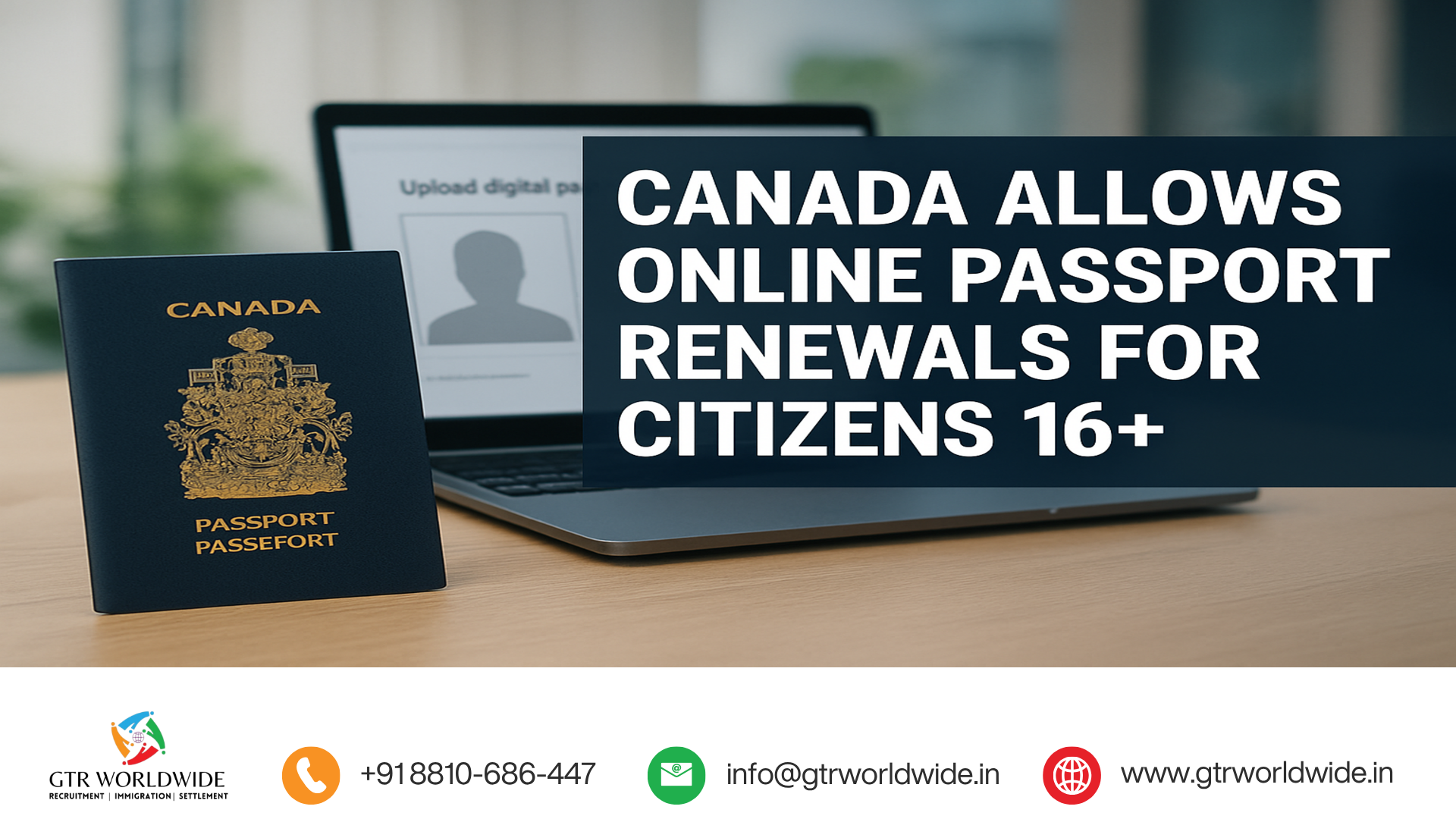
    As of July 28, 2026, Canadian citizens aged 16 and older whose passports were issued within the past 15 years can renew their passports online. Immigration Minister Lena Metlege Diab announced the option at a Vancouver press conference at 10 a.m. PT. The new channel offers real-time status updates and lets applicants upload digital copies of required documents.

    This online option complements existing in-person and mail services rather than replacing them. The government says it aims to reduce in-person wait times, cut down on common submission errors, and give eligible Canadians another convenient option.

    Who is eligible
    – Canadian citizens aged 16 or older.
    – Passport was issued within the past 15 years.
    – Applicants must apply while physically in Canada.

    Key features
    – Real-time updates on application progress.
    – Upload electronic copies of supporting documents so originals don’t need to be mailed.
    – A digital passport photo taken by a commercial photographer is expected for online submissions.
    – Applications must be submitted from inside Canada.

    What to prepare
    – Check your passport issue date and age eligibility.
    – Be in Canada when you apply.
    – Arrange for a commercial photographer who can provide a compliant digital photo.
    – Have clear digital copies of required documents ready, but wait for official technical specifications before uploading.

    Limitations and considerations
    – The service is limited to a subset of applicants and does not replace existing channels.
    – The commercial photo requirement may add a step and cost for some applicants.
    – The announcement did not include file format, size limits, processing timelines, or details on identity verification.
    – Canadians abroad and those with passports older than 15 years must continue using in-person or mail renewals.

    What to watch for next
    Look for official follow-up on upload specifications, the exact list of acceptable supporting documents, processing timelines, identity-verification procedures, and any rollout details. CIC News has said it will provide more information as it becomes available.

    For personalized support with your Canadian immigration pathway, contact GTR Immigration. Call us: +91-8810-686-447

    #CanadianPassport #PassportRenewal #ImmigrationCanada #DigitalServices #TravelDocuments #PublicPolicy #LenaMetlegeDiab

  • Yukon Eases Licensing for Internationally Trained Family Physicians

    Yukon Eases Licensing for Internationally Trained Family Physicians

    Yukon opens “Limited A” medical license for doctors from Australia, Ireland, the UK and the US — what it means for internationally trained family physicians

    Clear summary: what changed and why it matters
    Yukon introduced a new “Limited A” licensing pathway allowing family physicians trained in Australia, Ireland, the United States and the United Kingdom to be authorized to practise in the territory without an additional practice assessment or a supervised practice period. Announced in a Yukon government news release on July 22, the change responds to a declared shortage of family physicians.

    Eligible physicians must still have an opportunity to practise in Yukon and meet the Yukon Medical Council’s registration requirements, but the new route removes a substantial regulatory hurdle for doctors from the four named jurisdictions.

    Why the territory acted: context and legal basis
    The change follows a General Declaration of Need issued by Minister of Health and Social Services Brad Cathers under the Medical Profession Act and related regulation. The declaration was informed by a report commissioned by the Yukon Medical Council and is framed as a targeted response to the territory’s shortage of family physicians.

    Before Limited A, registration under the Limited Family Practice Register required practice assessments and a supervised clinical practice period. Yukon says it selected the four jurisdictions because they have medical standards similar to Canada’s.

    How the Limited A pathway works — what the announcement tells us
    – Eligible countries: Australia, Ireland, the United States and the United Kingdom.
    – Waived requirements: the extra practice assessment and the supervised practice period previously required under the Limited Family Practice Register.
    – Remaining requirements: applicants must have a practicable opportunity in Yukon (an actual position or practice opportunity) and meet the Yukon Medical Council’s registration standards.
    – Legal and evidentiary basis: the change follows a General Declaration of Need and was informed by a Yukon Medical Council–commissioned report.
    – Future scope: Yukon may expand the initiative to other countries pending approval by the College of Family Physicians of Canada.
    – Details pending: the government has not yet published further regulatory guidance, application procedures, processing times, or operational details.

    How this fits into the broader Canadian trend
    Yukon’s move aligns with recent provincial and territorial actions in 2025–2026 to reduce licensing barriers for internationally trained physicians. Examples cited in the announcement include new B.C. and Manitoba pathways that eased licensing for certain U.S.-trained or American Board–certified physicians. Federal briefing notes to CIMM in November 2025 also note a commitment to work with provinces and territories on reducing licensing barriers for internationally trained medical professionals.

    Who is most directly affected
    – Internationally trained family physicians with training and certification from Australia, Ireland, the U.S. or the U.K. who want to practise in Yukon.
    – Yukon clinics and employers recruiting family physicians, since the pathway could shorten onboarding.
    – Yukoners seeking better access to primary care if recruitment and retention improve.

    Practical consequences for applicants, employers and local health systems
    For eligible physicians, the main change is procedural: one pathway now waives the additional practice assessment and supervised-practice requirement, which can reduce delays and logistical burdens. Employers may find it easier to turn offers into practising physicians in Yukon. Yukon highlighted recruitment gains in follow-up communications, noting nine doctors relocated since November 2025 and three more expected by the end of September 2026.

    Limitations and unknowns applicants should note
    – The Yukon Medical Council’s full list of registration requirements and required documentation was not released with the announcement.
    – The announcement did not define what evidence constitutes an acceptable “opportunity to practise in Yukon” (job offer, letter of intent, clinic sponsorship, etc.).
    – There is no published guidance yet on application steps, fees, processing times, or effective dates for Limited A.
    – Expansion to other countries is possible but unspecified.
    – Licensing does not replace the need for federal work authorization; applicants must still secure the appropriate immigration/work permit.

    What applicants and employers should track next
    – Watch Yukon government and Yukon Medical Council updates for application instructions and required documents.
    – Secure a verifiable practice opportunity in Yukon and confirm what evidence the council will accept.
    – Prepare credential documentation and licensure history that demonstrate training equivalency.
    – Clarify federal immigration and work-permit requirements in parallel with licensing steps.

    Numbers and dates to remember from Yukon’s announcement
    – Announcement date: July 22 (Yukon government news release).
    – Follow-up mention: July 23 news release noted recent recruitment gains.
    – Recruitment snapshot: nine doctors relocated since November 2025; three more expected by end of September 2026.
    – Named eligible countries: Australia, Ireland, United States, United Kingdom.
    – Legal basis: General Declaration of Need issued by Minister Brad Cathers under the Medical Profession Act; informed by a Yukon Medical Council–commissioned report.

    Final observations for internationally trained family physicians
    Yukon’s Limited A pathway is a targeted reform intended to accelerate recruitment from jurisdictions deemed to have comparable medical training. For physicians from Australia, Ireland, the United States and the United Kingdom, it removes a formal assessment and supervised-practice requirement but does not eliminate Yukon Medical Council registration standards or the need for a real practice opportunity in the territory. Prospective applicants should prepare credentials, secure a Yukon practice opportunity, and monitor official Yukon Medical Council and government releases for detailed guidance.

    For personalized support with your Canadian immigration pathway, contact GTR Immigration. Call us: +91-8810-686-447

    #YukonImmigration #CanadianHealthcare #InternationalMedicalGraduates #FamilyPhysicians #MedicalLicensing #PhysicianRecruitment #WorkPermitCanada

  • Canada opens new Windsor–Detroit border crossing

    Canada opens new Windsor–Detroit border crossing

    Gordie Howe International Bridge opening: what the new Windsor–Detroit crossing means for travellers and cross‑border movement

    Quick summary and why it matters
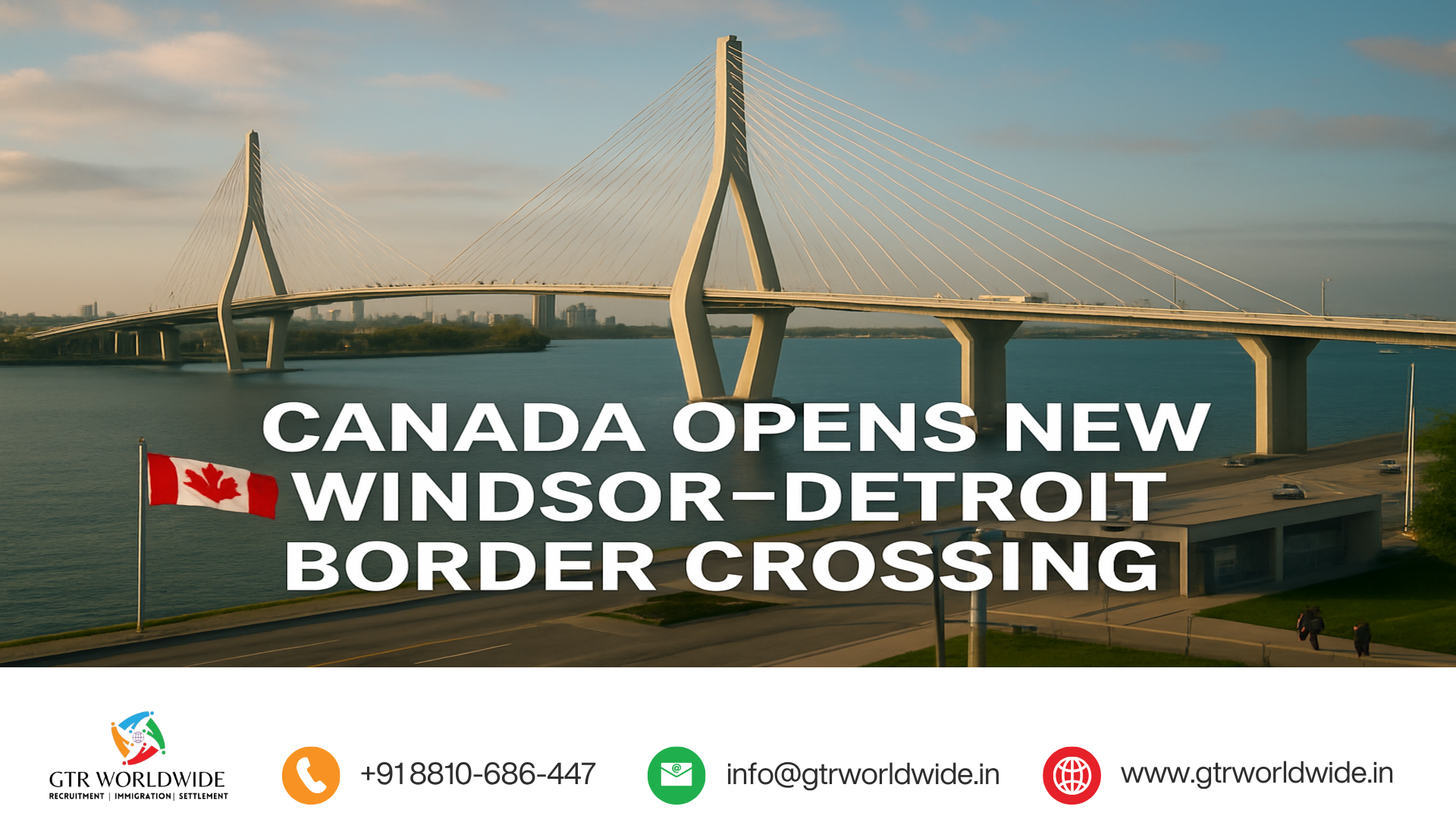
    The Gordie Howe International Bridge opened to traffic on July 27, 2026, the Windsor‑Detroit Bridge Authority said on July 24, 2026. Spanning the Detroit River, it adds a third fixed link between Windsor, Ontario and Detroit, Michigan, joining the Ambassador Bridge and the Windsor‑Detroit Tunnel. The port of entry will operate 24/7 and includes express lanes for Trusted Traveller members (NEXUS) and qualifying commercial carriers (FAST). A separated, toll‑free multi‑use path for pedestrians and cyclists opens August 5, 2026. This new crossing changes local routing options, processing patterns and practical planning for visitors, commuters, carriers and people with immigration business in Canada.

    Background and context
    The bridge has been in development for more than two decades as a joint initiative between the Canadian federal government and the State of Michigan. Its planned June 12, 2026 opening was delayed by disputes over toll revenue. A ceremonial event on July 24 took place without U.S. officials in attendance; full traffic began July 27. Canadian authorities describe the port as Canada’s largest and most technologically advanced land border crossing. The new crossing sits beside two already busy links in one of North America’s busiest land corridors.

    What the crossing provides
    – 24/7 operation: open day and night, every day of the week.
    – Vehicle types: automobiles, motorcycles, recreational vehicles and semi‑trucks may use the crossing.
    – Express lanes: dedicated lanes for NEXUS and FAST users.
    – Multi‑use path: separated, toll‑free route for pedestrians and cyclists starting August 5, 2026 — the first Windsor‑Detroit crossing to permit non‑motorized traffic.
    – Tolls: $8 CAD ($5.75 USD) for standard passenger vehicles; $12 CAD ($8.75 USD) for large commercial trucks, oversized vehicles and larger passenger vehicles.
    – Real‑time info: travellers can check CBSA’s port of entry webpage for current border wait times.
    – Documentation: everyone entering Canada at this port must have appropriate travel documents as required by CBSA.

    Why this matters beyond another bridge
    – Congestion management: the new crossing aims to redistribute traffic and reduce multi‑hour waits that can occur at the Ambassador Bridge during peak periods.
    – Distinct user channels: NEXUS and FAST lanes should speed processing for pre‑cleared travellers and eligible carriers.
    – Multimodal access: the toll‑free pedestrian and cycling path creates new commuting and recreational options.
    – Technology and scale: CBSA’s description indicates significant investment in infrastructure to streamline processing and logistics.

    Who will be affected
    – Cross‑border commuters and visitors: an alternate route that may reduce wait times at certain times.
    – NEXUS and FAST members: potential time savings using express lanes.
    – Commercial carriers and logistics operators: option to route trucks through the new crossing with known tolls.
    – Pedestrians and cyclists: a new, toll‑free crossing option from August 5, 2026.
    – People with immigration business in Canada: the bridge is an additional port of entry where eligible travellers may present themselves, provided they have required travel documentation.
    – Local communities and businesses: new routing and reliability may affect shopping, labour mobility and logistics.

    Practical planning points
    – Check documentation: have valid passports, visas or electronic authorizations as required by CBSA.
    – Use official wait‑time tools: consult the CBSA port of entry webpage before travelling.
    – Account for tolls: $8 CAD for passenger vehicles; $12 CAD for large commercial/oversized vehicles. The multi‑use path is toll‑free.
    – NEXUS and FAST users: express lanes offer an advantage; enrolment remains a separate process for those not enrolled.
    – Travel timing: the bridge is open 24/7, but wait times will vary by time of day and traffic conditions.
    – For immigration applicants: the crossing is an additional logistical option but does not change documentary or program requirements.

    Operational caveats and things to watch
    – Revenue dispute history: the opening was delayed by disagreements over toll revenue treatment, showing that financial or jurisdictional issues can affect operations.
    – Ceremonial absence of U.S. officials: the July 24 ceremony lacked U.S. officials, an example of diplomatic tensions that could affect coordination.
    – Early operational adjustments: large projects can experience initial teething issues; travellers should monitor CBSA updates and posted signage.

    Key dates, numbers and fees
    – Official opening to traffic: July 27, 2026.
    – Multi‑use path opens: August 5, 2026.
    – Passenger vehicle toll: $8 CAD ($5.75 USD).
    – Toll for large commercial/oversized vehicles: $12 CAD ($8.75 USD).
    – Hours: 24 hours a day, seven days a week.
    – Canada’s total land border ports of entry after this opening: 118.

    What to watch next (especially for those with immigration interests)
    – Verify documentation well before travel.
    – Check CBSA wait times prior to departure.
    – Factor tolls into travel and shipping budgets.
    – NEXUS and FAST members should plan to use express lanes.
    – Pedestrians and cyclists: note the August 5, 2026 start date for the toll‑free path.
    – Monitor official communications from CBSA, the Windsor‑Detroit Bridge Authority and other officials for any operational updates.

    For personalized support with your Canadian immigration pathway, contact GTR Immigration. Call us: +91-8810-686-447

    #GordieHoweBridge #CanadaUSBorder #CBSA #NEXUS #FAST #CrossBorderTravel #Immigration #WindsorDetroit

  • Canadian Citizenship by Descent: Common Application Questions

    Canadian Citizenship by Descent: Common Application Questions

    Applying for proof of Canadian citizenship by descent: documents, delays and practical steps

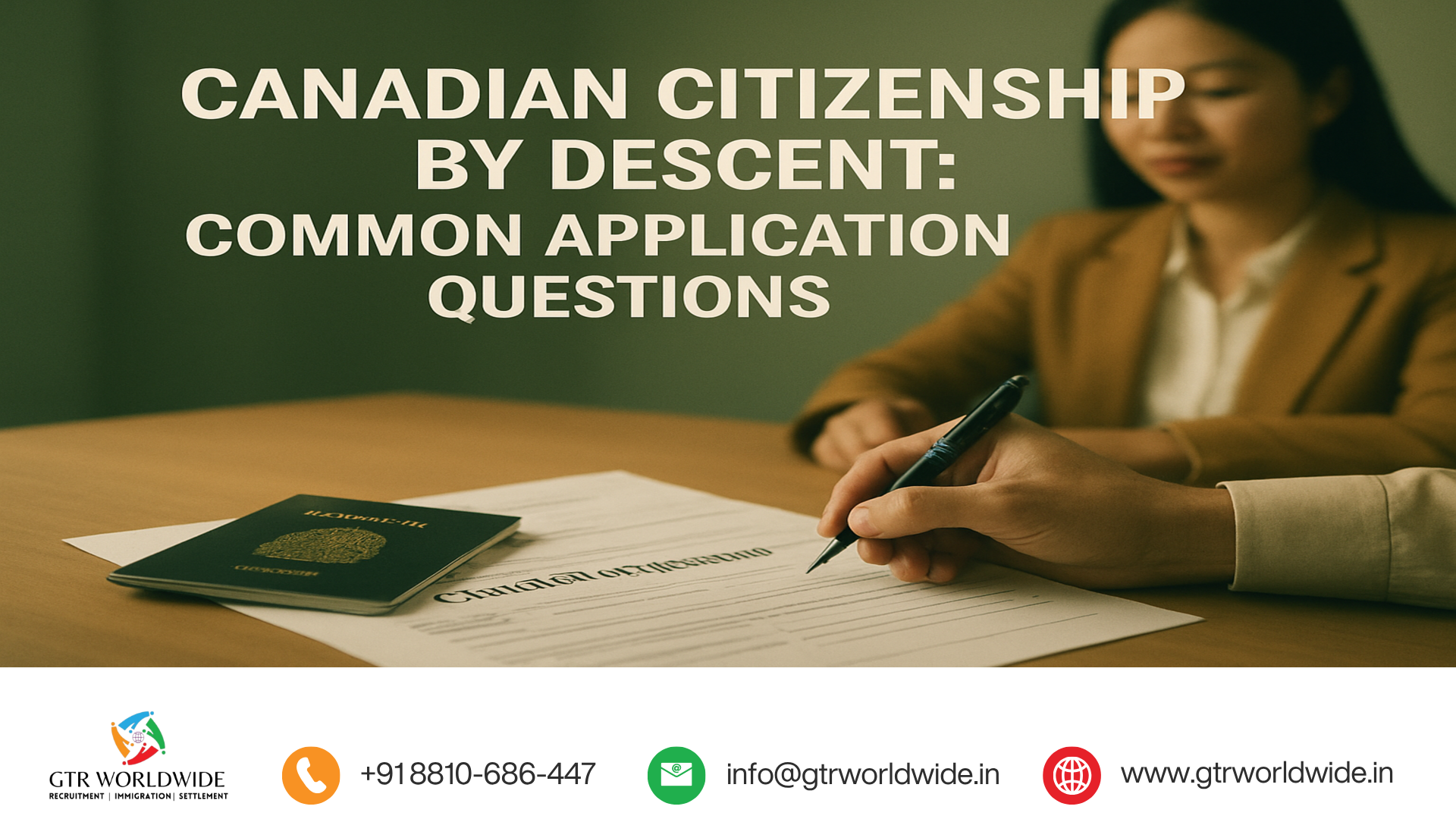
    The road to a citizenship certificate for people claiming citizenship by descent often depends on historical paperwork that can be incomplete or missing. Lawyers at Cohen Immigration Law report common hurdles — missing birth records, provincial registry gaps (Prince Edward Island had no civil registry before 1906; Nova Scotia did not record births between 1877 and October 1908), name variations across generations, and lengthy IRCC processing times (about 19 months for proof of citizenship as of July 2026). New rules such as Bill C-3 (for children born on or after December 15, 2025) also affect eligibility. These realities mean careful preparation, clear documentation of search efforts, and realistic timelines are essential.

    Historic record gaps and what to do
    Missing primary records (birth, baptismal or civil registration) are common for older generations. IRCC expects evidence that you tried to obtain the record — for example, an official “no-record” letter from the issuing authority. When a direct record can’t be found, applicants often rely on multiple supporting government-issued documents (for siblings or descendants) plus a clear explanation of the searches performed. Supplementary evidence strengthens a file but usually does not replace the required chain of primary documents.

    Acceptable supplementary evidence
    If a primary record is unavailable, useful items include:
    – No-record letters or official search confirmations from vital statistics offices.
    – Birth, marriage or death registrations for siblings or descendants that establish family links.
    – Baptismal records, census entries or other contemporaneous documents.
    – A concise cover letter explaining the steps taken to locate the primary record and why the alternatives are relied upon.

    Name variants and errors across generations
    Name discrepancies are common. Provide documents that tie variants to the same person (marriage/death certificates, court name-change records, etc.) and include a factual explanation letter. Immigration lawyers can help draft clear cover letters that point the reviewing officer to the connecting documents.

    Realistic timelines
    Timelines depend on file complexity. Typical staging estimates:
    – Confirmation of eligibility (standard cases): ~1 week.
    – Collecting documents: 1–6 months, depending on record availability.
    – Filing the application: ~1 week.
    – IRCC processing: about 19 months (as of July 2026). Processing times change.

    Taken together, a standard case might take roughly 12–24 months from start to finish; complex cases can take longer. If you have time-sensitive needs, plan early and document deadlines.

    When urgent processing may be granted
    IRCC can expedite some applications in limited circumstances, such as urgent job or education deadlines, family medical emergencies, or a fixed deadline to renounce another citizenship. Urgent requests are discretionary; a lawyer can assess the strength of the request and advise on next steps.

    Applying for minors and Bill C-3
    You can apply for a minor deriving citizenship through the same descent line. Note:
    – Adopted children born outside Canada follow a different process and should not apply under the standard route.
    – For children born on or after December 15, 2025, Bill C-3 requires the Canadian parent to have lived in Canada for at least three years (1,095 days) before the child’s birth or adoption to pass on citizenship.
    – Giving birth in Canada remains a clear way to avoid that residency requirement where feasible.

    Bundling family applications: pros and cons
    IRCC allows multiple family applications to be mailed together. Benefits include coordinated processing when the same documents support several applicants. Risks include that if any single application is incomplete, IRCC may return the entire package. If you bundle, ensure every individual application is complete with required copies.

    What lawyers do — and what you still need to do
    Immigration lawyers can advise which documents to submit, what alternatives IRCC accepts, draft explanation letters, and help with urgent processing requests. In most jurisdictions, clients are responsible for obtaining original records. In some Quebec cases, a lawyer may be able to request certain certificates on a client’s behalf.

    Checklist — where to start
    – Map the chain of descent and list the primary records needed for each generation.
    – Contact relevant vital statistics offices early; obtain no-record letters when applicable and keep proof of communications.
    – Collect government-issued records for relatives if direct records are missing.
    – Gather documents to resolve name variants and prepare an explanation letter.
    – If applying for a minor, confirm whether Bill C-3 applies and whether the parent meets the 1,095-day requirement.
    – Decide whether to bundle family files and, if so, double-check completeness to avoid returns.
    – Document any urgent deadlines and consult a lawyer promptly about expedited processing.

    Monitor changing factors
    – Check IRCC processing times regularly — the 19-month figure for July 2026 is a snapshot.
    – Start provincial and church archive searches early, especially for provinces with known gaps.
    – Keep meticulous records of every search and communication.

    For personalized support with your Canadian immigration pathway, contact GTR Immigration. Call us: +91-8810-686-447

    #CanadianCitizenship #CitizenshipByDescent #IRCC #BillC3 #ImmigrationLaw #DocumentChecklist #ProofOfCitizenship