Blog

  • Latest Express Entry Draw: Canada Invites 324 PNP Candidates

    Latest Express Entry Draw: Canada Invites 324 PNP Candidates

    Canada has conducted a new round of invitations under its Express Entry system, issuing 324 Invitations to Apply (ITAs) to candidates in the Provincial Nominee Program (PNP)—continuing its targeted immigration strategy for 2026.

    Key Highlights of the Latest Express Entry Draw

    • Program: Provincial Nominee Program (PNP)
    • Invitations Issued: 324 ITAs
    • Selection Type: PNP-specific draw
    • CRS Score: 786
    • Created an Express Entry candidate profile before 6:53 p.m., Universal Coordinated Time (UTC) on November 19, 2025.

    This draw reinforces Canada’s ongoing focus on selecting candidates who have already been nominated by provinces to meet specific labor market needs.

    Strong Focus on Provincial Nominees in 2026

    Throughout 2026, Immigration, Refugees and Citizenship Canada (IRCC) has consistently prioritized PNP candidates in Express Entry draws.

    Recent patterns show:

    • March 16, 2026: 362 ITAs issued (PNP) with CRS 742
    • March 2, 2026: 264 ITAs issued (PNP) with CRS 710 
    • February 16, 2026: 279 ITAs issued (PNP) with CRS 789

    This trend highlights a clear policy direction: favoring candidates aligned with regional economic priorities.

    Why CRS Scores Are High in PNP Draws

    Candidates invited under PNP streams receive an additional 600 CRS points, significantly increasing their ranking in the Express Entry pool.

    As a result:

    • CRS cut-offs in PNP draws often exceed 700 points
    • Selection is highly competitive but predictable for nominated candidates

    What This Means for Immigration Applicants

    This latest draw sends a strong signal to prospective immigrants:

    1. Provincial Nomination Is Key

    Securing a provincial nomination has become one of the most reliable pathways to receive an ITA.

    2. Targeted Immigration Is Increasing

    Canada is shifting toward need-based selection, prioritizing:

    • In-demand occupations
    • Regional labor shortages
    • Candidates already contributing to local economies

    3. Fewer General Draws

    Compared to previous years, there are fewer all-program draws, with more emphasis on:

    • PNP
    • Canadian Experience Class (CEC)
    • Category-based selections

    Strategic Advice for Candidates

    To improve your chances:

    • Apply to Provincial Nominee Programs (PNPs) aligned with your occupation
    • Optimize your CRS score (language, education, experience)
    • Monitor province-specific streams and eligibility criteria
    • Keep your Express Entry profile updated

    Outlook for Upcoming Draws

    Based on 2026 trends, Canada is expected to:

    • Continue frequent PNP-specific draws
    • Maintain high CRS thresholds for nominated candidates
    • Align immigration intake with economic and regional demands

    Conclusion

    The issuance of 324 invitations in the latest Express Entry draw underscores Canada’s evolving immigration strategy—one that prioritizes provincial needs and targeted talent selection.

    For candidates, this means that obtaining a provincial nomination is now more critical than ever to secure permanent residence in Canada.
  • Prince Edward Island PNP Draw 2026: 127 Invitations Sent in Fourth Draw of the Year

    Prince Edward Island PNP Draw 2026: 127 Invitations Sent in Fourth Draw of the Year

    Prince Edward Island (PEI) has conducted its fourth Provincial Nominee Program (PEI PNP) draw of 2026, issuing the largest number of invitations so far this year. On April 16, 2026, the province invited 127 candidates through its Labour Impact and PEI Express Entry pathways, reinforcing its focus on attracting skilled workers and international graduates who can support the island’s labour market needs.

    This latest round highlights PEI’s continued strategy of prioritizing applicants already working in the province or those with strong employer connections in sectors facing significant labour shortages.

    PEI PNP April 16, 2026 Draw Results

    The April 16 draw marked the fourth PEI PNP invitation round of the year and the largest draw to date in 2026.

    Draw Summary:

    • Draw Date: April 16, 2026
    • Total Invitations Issued: 127
    • Streams Invited: Labour Impact and PEI Express Entry
    • Business Work Permit Entrepreneur Stream: No invitations issued

    Compared to earlier draws this year, the April round showed a clear increase in invitation numbers:

    • January 15, 2026: 26 invitations
    • February 19, 2026: 109 invitations
    • March 20, 2026: 101 invitations
    • April 16, 2026: 127 invitations

    This brings PEI’s total invitations issued in 2026 to 363 ITAs so far.

    Who Is Being Prioritized in PEI?

    Prince Edward Island continues to target candidates who can make an immediate economic contribution to the province. Priority is being given to applicants working in critical industries experiencing ongoing workforce shortages.

    Priority Sectors Include:

    • Healthcare
    • Skilled Trades
    • Manufacturing
    • Childcare
    • Construction
    • Transportation
    • Agriculture
    • Hospitality and food processing

    International graduates from recognized PEI institutions such as the University of Prince Edward Island (UPEI), Holland College, and Collège de l’Île are also receiving strong consideration—especially those already employed by PEI employers.

    However, candidates working in sales and service occupations may currently face fewer opportunities for selection.

    Why PEI Is Increasing Invitations

    PEI’s immigration strategy is closely tied to labour market demands. The province is using the Provincial Nominee Program to address urgent staffing shortages while supporting long-term economic development.

    Applicants with the following factors tend to have stronger chances of receiving invitations:

    • Valid job offers from PEI employers
    • Current employment in PEI
    • Work experience in high-demand occupations
    • Canadian education credentials
    • Strong adaptability and settlement potential

    The province’s focus remains on retaining talent already contributing to PEI’s economy and helping employers fill critical vacancies faster.

    No Invitations for Entrepreneur Stream

    Notably, PEI has not issued any invitations under the Business Work Permit Entrepreneur stream in 2026 so far.

    This reflects a broader trend where many provinces are placing greater emphasis on skilled workers and labour market needs rather than business immigration pathways.

    Applicants interested in business immigration may need to monitor future rounds closely for updates.

    When Is the Next PEI PNP Draw?

    According to PEI’s 2026 draw schedule, the next Provincial Nominee Program draw is expected on May 21, 2026.

    Candidates in the Labour Impact and PEI Express Entry streams should ensure their profiles remain updated and competitive before the next invitation round.

    Conclusion

    The April 16 PEI PNP draw sends a strong signal that Prince Edward Island is actively seeking skilled workers and international graduates who can help meet the province’s growing labour demands.

    With 127 invitations issued—the highest number this year—qualified candidates in priority sectors should pay close attention to upcoming draws and prepare their applications strategically.

    As immigration pathways continue to evolve across Canada in 2026, PEI remains one of the most attractive provinces for candidates seeking permanent residence through provincial nomination.

  • Alberta PNP 2026: New Draws Target Tech, Healthcare and Rural Workers.

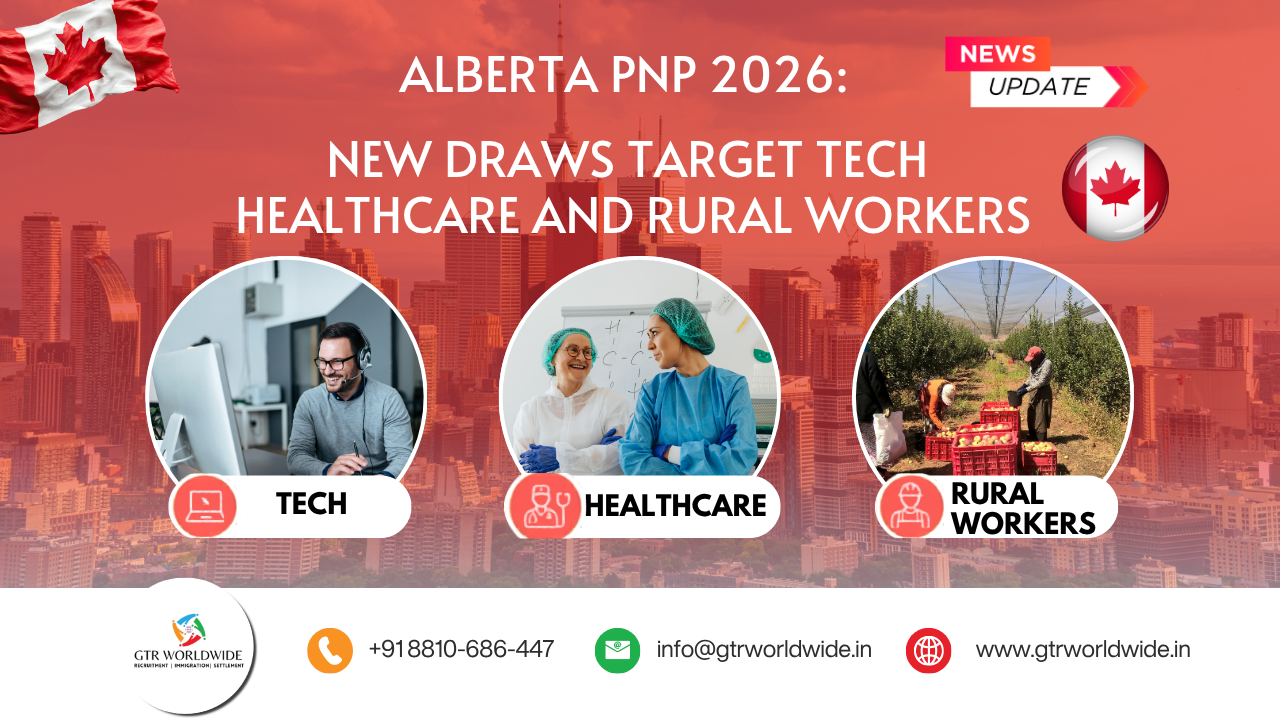
    Alberta PNP 2026: New Draws Target Tech, Healthcare and Rural Workers.

    Alberta continues to strengthen its position as one of Canada’s top immigration destinations by targeting skilled professionals in high-demand sectors. Through the latest Alberta Advantage Immigration Program (AAIP) draws held between April 8 and April 14, 2026, the province invited candidates working in technology, rural communities, health care, and skilled trades to apply for provincial nomination.

    These latest rounds demonstrate Alberta’s ongoing focus on labor shortages and economic growth while offering more pathways to permanent residence for qualified foreign workers.

    Alberta Conducted Four New AAIP Draws

    According to the latest update from the Alberta Advantage Immigration Program, four separate draws were conducted between April 8 and April 14, 2026, resulting in a total of 332 Invitations to Apply (ITAs). These invitations were issued under multiple pathways, including:

    • Accelerated Tech Pathway
    • Rural Renewal Stream
    • Dedicated Health Care Pathway
    • Priority Sectors for Construction and Skilled Trades

    This strategic selection reflects Alberta’s targeted immigration approach to address workforce shortages across key industries. 

    Full Breakdown of Alberta’s Latest Draws

    April 8, 2026 – Accelerated Tech Pathway

    The largest draw during this round took place under the Alberta Express Entry Stream’s Accelerated Tech Pathway.

    • Invitations issued: 146
    • Minimum score required: 59

    This stream supports Alberta’s growing tech sector by attracting qualified professionals in occupations related to information technology, engineering, and innovation. 

    April 9, 2026 – Rural Renewal Stream

    Alberta continued prioritizing regional workforce development through the Rural Renewal Stream.

    • Invitations issued: 74
    • Minimum score required: 50

    This stream helps designated rural communities attract workers who already have job offers from local employers and are ready to settle outside major urban centers. 

    April 13, 2026 – Dedicated Health Care Pathway

    Healthcare remains one of Alberta’s strongest immigration priorities.

    • Invitations issued: 62
    • Minimum score required: 59

    Candidates selected under this stream are typically professionals working in occupations such as nursing, medicine, allied health services, and long-term care support. 

    April 14, 2026 – Priority Sectors (Construction and Skilled Trades)

    To support infrastructure growth and construction demands, Alberta also invited skilled trades workers.

    • Invitations issued: 50
    • Minimum score required: 60

    This draw targeted candidates in construction-related occupations and skilled trades essential to Alberta’s economic expansion. 

    Alberta’s 2026 Nomination Allocation

    For 2026, Immigration, Refugees and Citizenship Canada (IRCC) allocated 6,403 nomination spaces to Alberta under the provincial nominee program.

    As of mid-April:

    • 1,634 nominations had already been issued
    • 4,769 nomination spaces remain available

    This means strong opportunities still exist for eligible candidates planning to apply through Alberta immigration streams in the coming months. 

    Why These Draws Matter for Immigration Candidates

    The latest AAIP draws highlight several important trends:

    Tech Professionals Continue to Receive Strong Support

    The Accelerated Tech Pathway remains one of Alberta’s fastest and most attractive PR routes for Express Entry candidates in tech occupations.

    Rural Immigration Is Expanding

    The Rural Renewal Stream continues to grow as Alberta supports smaller communities facing labor shortages.

    Health Care Workers Stay in High Demand

    Healthcare professionals remain among the strongest candidates for provincial nomination due to persistent staffing shortages across Canada.

    Skilled Trades Are Becoming More Important

    Construction, manufacturing, and skilled trades are receiving increased attention as Alberta invests heavily in economic development projects.

    Conclusion

    Alberta’s April 2026 immigration draws confirm that the province is actively prioritizing workers who can fill urgent labor gaps in technology, rural communities, healthcare, and construction.

    For foreign workers planning to immigrate to Canada, Alberta remains one of the most promising provinces for provincial nomination opportunities—especially for candidates with strong job offers, sector-specific experience, and competitive profiles.

    With thousands of nomination spaces still available in 2026, upcoming AAIP draws could present even more opportunities for skilled workers worldwide.

  • Canada May Reward High Salaries in Express Entry – What It Means for You

    Canada May Reward High Salaries in Express Entry – What It Means for You

    Canada is preparing one of the most significant overhauls of the Express Entry system in years, with proposed changes that could fundamentally reshape who gets invited for permanent residence—and why.

    Based on Immigration, Refugees and Citizenship Canada (IRCC)’s 2026–2027 Departmental Plan and recent announcements, the system is shifting away from broad human capital scoring toward a targeted, labour-market-driven model.

    Why Express Entry Is Changing

    In 2025, Canada made a dramatic move by removing CRS points for job offers, which previously gave candidates 50 to 200 extra points. 

    The reason:

    • Widespread LMIA fraud and score manipulation
    • Artificial inflation of candidate rankings

    Now, in 2026, IRCC is pivoting again—but with a more controlled and strategic approach.

    Key Proposed Changes to CRS Scoring

    1. Return of Job Offer Points — But With Strict Limits

    IRCC plans to reintroduce CRS points for job offers, but not under the old system.

    What’s different this time:

    • Points likely restricted to high-wage jobs
    • Focus on TEER 0–2 skilled occupations
    • Preference for genuine labour shortages

    This marks a shift from “any job offer counts” → to “only economically valuable job offers count.” 

    2. More CRS Weight for High-Wage Canadian Experience

    A major new direction:

    • Candidates with high-paying Canadian jobs may receive additional CRS points
    • Wage level could become a core ranking factor, not just experience

    This signals a move toward selecting immigrants who are already:

    • Economically integrated
    • High contributors to GDP

    3. Priority for Regulated & Licensed Professionals

    The proposal includes extra recognition for candidates certified in regulated occupations, such as:

    • Healthcare professionals
    • Engineers
    • Skilled trades

    This aligns immigration with credential recognition goals and labour shortages. 

    4. Expansion of Category-Based Selection

    Category-based draws (introduced earlier) will become even more central.

    Expected 2026 priorities:

    • Healthcare
    • Skilled trades
    • STEM
    • French-speaking candidates
    • Possibly new “high-impact talent” streams

    IRCC explicitly confirms it will continue using categories to:

    “address labour shortages and economic priorities” 

    5. Increased Advantage for French Speakers

    Canada is targeting:

    • 9% Francophone immigration outside Quebec by 2026

    This means:

    • French-speaking candidates will likely receive more invitations via targeted draws

    How Eligibility Could Be Rewritten

    The proposed system moves away from traditional criteria like:

    • Age
    • Education
    • General language ability

    Toward real-world economic value signals, such as:

    Old System FocusNew Proposed Focus
    Education & ageEarnings & job quality
    Generic work experienceCanadian high-wage experience
    Job offer (broad)Job offer (targeted & high-value)
    CRS score aloneCategory-based selection

    Who Will Benefit Most

    Under the new proposal, the strongest candidates will likely be:

    High-income workers in Canada

    Candidates with valid job offers in priority sectors

    Skilled trades & healthcare professionals

    Applicants with Canadian work experience

    French-speaking or bilingual candidates

    Who May Be Disadvantaged

    These changes could make it harder for:

    Overseas applicants without Canadian experience

    Candidates in lower-wage occupations

    Profiles relying only on education + IELTS

    Applicants without employer support

    Big Picture: A More Selective, Employer-Driven System

    The overall direction is clear:

    Express Entry is evolving into a labour-market selection tool, not just a points-based ranking system.

    IRCC aims to:

    • Reduce immigration volume but increase quality
    • Align PR selection with real-time economic needs
    • Prioritize candidates who can immediately contribute

    When Will These Changes Take Effect?

    Important:

    • These are policy proposals, not fully implemented rules yet
    • No exact CRS breakdown or timeline has been confirmed

    However, the direction is already influencing draws and strategy in 2026

    Strategic Takeaways (For Applicants)

    If you’re planning for Express Entry:

    • Focus on securing a high-quality job offer
    • Build Canadian work experience
    • Target high-demand sectors
    • Consider French language skills
    • Align your profile with category-based draws

    Conclusion

    Canada’s new Express Entry proposal represents a fundamental shift in immigration philosophy:

    From “Who scores highest?”

    To “Who best fits Canada’s economic needs right now?”

    For candidates, success will increasingly depend not just on CRS points—but on real labour market relevance.

  • Study and Work in Canada 2026: New Rules That Benefit International Students

    Study and Work in Canada 2026: New Rules That Benefit International Students

    Canada has introduced a major overhaul of work authorization rules for international students and recent graduates, aiming to simplify processes, reduce administrative barriers, and improve access to Canadian work experience.

    These changes—announced by Immigration, Refugees and Citizenship Canada (IRCC) and effective from April 1, 2026—represent a significant shift in how students can study and work simultaneously in Canada.

    Key Change: No More Co-op Work Permit Requirement

    The most immediate and impactful update is:

    • International post-secondary students no longer need a separate co-op work permit
    • A valid study permit is now sufficient for:
      • Co-op programs
      • Internships
      • Practicums
      • Work-integrated learning

    This applies only if the work placement is required by the academic program and does not exceed 50% of the program length. 

    Previously, students had to apply for two separate permits, creating delays and extra costs. This reform effectively merges study and work authorization into one streamlined process. 

    Why Canada Made This Move

    The policy change is part of a broader strategy to:

    • Reduce administrative complexity
    • Improve student experience
    • Align education with labour market needs
    • Support employers hiring student talent

    IRCC has explicitly stated that the old system created “unnecessary duplication and inefficiency”, especially for co-op programs. 

    Proposed Expansions (Still Under Consultation)

    In addition to the changes already in force, Canada is planning further expansions:

    1. Work Authorization While Waiting for Decisions

    International students and graduates may soon be allowed to work without interruption while waiting for:

    • Study permit extensions
    • Post-Graduation Work Permit (PGWP) decisions

    This would eliminate current “work gaps” that negatively impact income and employment continuity. 

    2. Expanded Flexibility for PGWP Applicants

    Proposals include:

    • Allowing graduates to continue working legally while their PGWP is processed
    • Improving transitions from student status to full-time employment

    3. Changes for Foreign Apprentices

    Canada is considering:

    • Removing the study permit requirement for certain apprentices
    • Especially in skilled trades sectors (e.g., construction)

    This aims to address labour shortages more efficiently.

    4. Standardized Work Rules During Academic Breaks

    Future reforms may introduce clearer, unified rules for:

    • Working hours during scheduled breaks
    • Eligibility consistency across institutions

    What This Means for International Students

    Immediate Benefits

    • Faster access to work opportunities
    • Less paperwork and fewer applications
    • Reduced processing delays

    Long-Term Advantages

    • Easier transition to:
      • Canadian work experience
      • Permanent residency pathways (e.g., Express Entry, CEC)
    • Stronger integration into the labour market

    Policy Context: Expansion vs. Control

    Interestingly, this expansion comes alongside stricter controls on international student intake, including:

    • Study permit caps
    • Increased scrutiny of programs and institutions

    This indicates a dual strategy:

    • Limit volume
    • Improve quality and outcomes for those already in Canada

    Strategic Impact on Canada’s Immigration System

    These reforms reinforce Canada’s long-term immigration model:

    • International students remain a key talent pipeline
    • Work authorization flexibility helps:
      • Fill labour shortages
      • Retain skilled graduates
      • Boost economic integration

    At the same time, simplifying rules makes Canada more competitive compared to countries like Australia and the UK.

    Conclusion

    Canada’s 2026 reforms signal a clear direction:

    Fewer barriers, more flexibility, and stronger pathways from study to work to permanent residence.

    For international students and graduates, this means:

    • Easier access to real-world experience
    • Better employment continuity
    • Stronger chances of staying in Canada long-term
  • Canada Plans to Replace Express Entry – What It Means for PR Applicants

    Canada Plans to Replace Express Entry – What It Means for PR Applicants

    Canada is preparing for one of the most significant immigration reforms in its history. The government has announced plans to retire the current Express Entry programs and introduce a new, unified immigration pathway designed to better meet labour market demands and streamline the application process.

    This potential overhaul could reshape how skilled workers immigrate to Canada starting as early as 2026.

    What Is Changing in Canada’s Express Entry System?

    Currently, Canada’s Express Entry system manages applications under three major programs:

    • Federal Skilled Worker Program (FSWP)
    • Canadian Experience Class (CEC)
    • Federal Skilled Trades Program (FSTP)

    Under the proposed reform, these programs may be eliminated and replaced by a single, consolidated immigration program.

    The goal is to simplify the system and create a more flexible, demand-driven model for selecting immigrants.

    What Will Replace the Current Programs?

    Canada plans to introduce a new economic immigration class that will:

    • Combine multiple pathways into one unified system
    • Focus on real-time labour market needs
    • Offer more adaptable selection criteria
    • Reduce complexity for applicants and employers

    Although full details have not yet been released, the new system is expected to build on recent trends such as:

    • Category-based selection draws
    • Occupation-targeted invitations
    • Increased emphasis on economic contribution

    Why Is Canada Making This Change?

    The reform is part of a broader effort by Immigration, Refugees and Citizenship Canada (IRCC) to modernize the immigration system.

    Key reasons include:

    1. Addressing Labour Shortages

    Canada continues to face critical shortages in sectors like healthcare, construction, and skilled trades.

    2. Improving System Efficiency

    A unified system could reduce processing times and eliminate confusion between multiple programs.

    3. Enhancing Economic Alignment

    The new model aims to better match immigrants with Canada’s evolving workforce needs.

    4. Increasing Flexibility

    The government wants a system that can quickly adapt to economic changes and labour demand.

    Is This Change Official Yet?

    Not yet.

    • The proposal is currently under consultation (2026)
    • Final regulations have not been announced
    • Implementation is expected between 2026 and 2028

    This means current Express Entry programs are still active for now.

    What This Means for Immigration Applicants

    If implemented, this reform could significantly impact how candidates apply for permanent residence:

    Potential impacts:

    • Removal of traditional pathways (FSWP, CEC, FSTP)
    • New eligibility criteria and selection process
    • Greater focus on in-demand occupations
    • Possibly faster and more targeted invitations

    Applicants may need to adapt their immigration strategies as the system evolves.

    Expert Insight: How to Prepare Now

    While waiting for official updates, candidates should:

    • Strengthen their work experience in high-demand occupations
    • Improve language test scores (IELTS/CELPIP)
    • Gain Canadian work or study experience if possible
    • Stay updated on category-based draws and policy changes

    Being proactive now can help you stay competitive under both the current and future systems.

    Conclusion

    Canada’s plan to retire its current Express Entry programs and introduce a new unified system marks a major shift in immigration policy. While details are still emerging, one thing is clear:

    The future of Canadian immigration will be more targeted, flexible, and aligned with economic needs.

    For applicants, staying informed and prepared will be critical to success in this new era.

    Start Planning Your Canada Immigration Strategy Today

    Canada’s immigration system is evolving rapidly — and early preparation is key to success.

    Book a consultation with our immigration experts today to:

    • Assess your eligibility under current Express Entry programs
    • Develop a strategy for upcoming policy changes
    • Maximize your chances of receiving an Invitation to Apply (ITA)
  • Immigration Alert: Alberta Adds EOI Fee – What It Means for You

    Immigration Alert: Alberta Adds EOI Fee – What It Means for You

    Starting April 7, 2026, the province of Alberta has officially introduced a new fee for foreign workers submitting a Worker Expression of Interest (WEOI) under the Alberta Advantage Immigration Program (AAIP).

    Applicants must now pay CAD $135 to submit their EOI profile—marking a significant shift from the previous system, where EOI submissions were completely free. 

    Key Change: New $135 EOI Submission Fee

    • Effective date: April 7, 2026
    • Fee amount: CAD $135
    • Applies to: Worker Expression of Interest (WEOI) submissions
    • Previous cost: Free

    This fee is separate from the main application fee, which remains CAD $1,500 for AAIP worker streams. 

    Why Alberta Introduced This Fee

    The Alberta government implemented the new fee to:

    • Manage increasing demand from immigration candidates
    • Improve application system efficiency
    • Allocate resources more effectively for processing

    With tens of thousands of EOIs already in the pool, the province is under pressure to better control intake and selection volumes. 

    What Is a Worker Expression of Interest (WEOI)?

    A Worker Expression of Interest (EOI) is the first step for many AAIP streams. Candidates submit a profile outlining:

    • Work experience
    • Education
    • Language ability
    • Connection to Alberta

    Based on this information, applicants receive a score and may be invited to apply for provincial nomination. 

    Impact on Immigration Applicants

    Higher upfront cost

    Candidates must now pay before even being considered for selection.

    More competitive pool

    The fee may discourage low-quality or speculative applications, leading to:

    • Stronger candidate pool
    • Potentially higher EOI cut-off scores

    Additional financial planning

    Applicants should now budget for:

    • $135 EOI fee
    • $1,500 application fee
    • Federal PR processing fees

    What Remains Unchanged

    • AAIP application fees for worker streams remain $1,500
    • Selection process and scoring system are unchanged
    • Provincial nomination allocations continue to be limited

    Strategic Insight

    This move aligns Alberta with broader immigration trends across Canada, where provinces are increasingly:

    • Introducing cost-recovery measures
    • Tightening control over candidate intake
    • Prioritizing high-demand occupations

    Conclusion

    The introduction of a $135 EOI submission fee represents a notable policy shift in Alberta’s immigration system. While modest in size, it signals a move toward a more controlled and competitive AAIP selection process.

    Planning to immigrate to Alberta? Make sure your profile is competitive before submitting your EOI. Contact our experts today for a personalized eligibility assessment and maximize your chances of receiving an invitation

  • Planning to Move to Canada? 8 Immigration Changes in 2026 You Must Know

    Planning to Move to Canada? 8 Immigration Changes in 2026 You Must Know

    Canada has officially rolled out eight significant immigration changes effective April 1, 2026, impacting permanent residents, foreign workers, international families, and citizens.

    These updates reflect the government’s strategy to modernize immigration processing, address labor shortages, and improve newcomer integration.

    If you’re planning to move to Canada or already in the system, here’s everything you need to know.

    Overview of Canada’s April 2026 Immigration Updates

    The new changes span across:

    • Passport processing and fees
    • Citizenship costs
    • Super Visa eligibility
    • Provincial immigration authority
    • Work permits and rural hiring
    • Settlement services access

    1. Canadian Passport Fees Increased

    For the first time in over a decade, Canada has increased passport fees:

    • 10-year adult passport: CAD $163.50 (previously $160)
    • 5-year passport: CAD $122.50 (previously $120)

    This adjustment reflects rising administrative and production costs.

    2. New 30-Day Passport Processing Guarantee

    Canada now guarantees passport processing within 30 business days.

    • If the government fails to meet this timeline → applicants will receive a full refund

    This policy introduces stronger accountability and faster service delivery.

    3. Citizenship Application Fee Increase

    The Right of Citizenship fee has increased:

    • New fee: CAD $123 (up from $119.75)

    Additional fee increases for permanent residence applications are also expected later in April.

    4. Easier Financial Requirements for Super Visa

    Families sponsoring parents or grandparents under the Super Visa program now benefit from:

    • More flexible income calculation
    • Ability to combine multiple income sources
    • Broader financial assessment criteria

    This makes family reunification more accessible for immigrants.

    5. Provinces Gain More Control Over Immigration (PNP)

    Canada is strengthening the role of Provincial Nominee Programs (PNPs):

    • Provinces and territories now have greater authority in selecting candidates
    • Immigration decisions are increasingly aligned with regional labor market needs

    Expect more targeted invitations based on occupation and location.

    6. Extended Access to Settlement Services

    Newcomers can now access government-funded settlement services for up to:

    • 6 years after becoming a permanent resident

    Services include:

    • Language training
    • Employment support
    • Integration programs

    This helps immigrants succeed long-term in Canada.

    7. Expanded Work Permits for Rural Areas

    Canada is addressing labor shortages outside major cities by:

    • Expanding access to foreign workers in rural regions
    • Increasing flexibility under the Temporary Foreign Worker Program (TFWP)

    This opens more job opportunities for international workers.

    8. Saskatchewan Expands Immigration Application Fees (SINP)

    The Saskatchewan Immigrant Nominee Program (SINP) has updated its fee structure:

    • Application fee: CAD $500
    • Additional review fee: CAD $250
    • Now applies to all worker streams

    Applies to applications submitted on or after April 1, 2026.

    What These Changes Mean for You

    These updates signal several key trends in Canada’s immigration strategy:

    Higher Costs but Better Services: Applicants may pay more, but benefit from faster processing and improved systems.

    Stronger Regional Immigration Pathways: Provinces now play a bigger role, increasing opportunities through PNP streams.

    More Opportunities for Workers: Rural and in-demand occupations will see increased hiring flexibility.

    Improved Family Reunification: Super Visa changes make it easier to bring parents and grandparents to Canada.

    Conclusion

    Canada continues to position itself as one of the most immigrant-friendly countries in the world—while refining its system to be more efficient, targeted, and sustainable.

    Understanding these April 2026 changes is essential for:

    • PR applicants
    • Work permit holders
    • International families
    • Future immigrants

    Start Your Canada Immigration Journey Today

    Planning to move to Canada or upgrade your current status?

    Don’t navigate these changes alone.

    Our immigration experts can help you:

    • Assess your eligibility for PR, PNP, or work permits
    • Maximize your CRS score and application success
    • Prepare strong, error-free applications
    • Stay updated with the latest policy changes
  • Canada Immigration 2026 Faster Foreign Credential Recognition for Skilled Newcomers

    Canada Immigration 2026 Faster Foreign Credential Recognition for Skilled Newcomers

    Canada has officially rolled out eight significant immigration changes effective April 1, 2026, impacting permanent residents, foreign workers, international families, and citizens.

    These updates reflect the government’s strategy to modernize immigration processing, address labor shortages, and improve newcomer integration.

    If you’re planning to move to Canada or already in the system, here’s everything you need to know.

    Overview of Canada’s April 2026 Immigration Updates

    The new changes span across:

    • Passport processing and fees
    • Citizenship costs
    • Super Visa eligibility
    • Provincial immigration authority
    • Work permits and rural hiring
    • Settlement services access

    1. Canadian Passport Fees Increased

    For the first time in over a decade, Canada has increased passport fees:

    • 10-year adult passport: CAD $163.50 (previously $160)
    • 5-year passport: CAD $122.50 (previously $120)

    This adjustment reflects rising administrative and production costs.

    2. New 30-Day Passport Processing Guarantee

    Canada now guarantees passport processing within 30 business days.

    • If the government fails to meet this timeline → applicants will receive a full refund

    This policy introduces stronger accountability and faster service delivery.

    3. Citizenship Application Fee Increase

    The Right of Citizenship fee has increased:

    • New fee: CAD $123 (up from $119.75)

    Additional fee increases for permanent residence applications are also expected later in April.

    4. Easier Financial Requirements for Super Visa

    Families sponsoring parents or grandparents under the Super Visa program now benefit from:

    • More flexible income calculation
    • Ability to combine multiple income sources
    • Broader financial assessment criteria

    This makes family reunification more accessible for immigrants.

    5. Provinces Gain More Control Over Immigration (PNP)

    Canada is strengthening the role of Provincial Nominee Programs (PNPs):

    • Provinces and territories now have greater authority in selecting candidates
    • Immigration decisions are increasingly aligned with regional labor market needs

    Expect more targeted invitations based on occupation and location.

    6. Extended Access to Settlement Services

    Newcomers can now access government-funded settlement services for up to:

    • 6 years after becoming a permanent resident

    Services include:

    • Language training
    • Employment support
    • Integration programs

    This helps immigrants succeed long-term in Canada.

    7. Expanded Work Permits for Rural Areas

    Canada is addressing labor shortages outside major cities by:

    • Expanding access to foreign workers in rural regions
    • Increasing flexibility under the Temporary Foreign Worker Program (TFWP)

    This opens more job opportunities for international workers.

    8. Saskatchewan Expands Immigration Application Fees (SINP)

    The Saskatchewan Immigrant Nominee Program (SINP) has updated its fee structure:

    • Application fee: CAD $500
    • Additional review fee: CAD $250
    • Now applies to all worker streams

    Applies to applications submitted on or after April 1, 2026.

    What These Changes Mean for You

    These updates signal several key trends in Canada’s immigration strategy:

    Higher Costs but Better Services: Applicants may pay more, but benefit from faster processing and improved systems.

    Stronger Regional Immigration Pathways: Provinces now play a bigger role, increasing opportunities through PNP streams.

    More Opportunities for Workers: Rural and in-demand occupations will see increased hiring flexibility.

    Improved Family Reunification: Super Visa changes make it easier to bring parents and grandparents to Canada.

    Conclusion

    Canada continues to position itself as one of the most immigrant-friendly countries in the world—while refining its system to be more efficient, targeted, and sustainable.

    Understanding these April 2026 changes is essential for:

    • PR applicants
    • Work permit holders
    • International families
    • Future immigrants

    Start Your Canada Immigration Journey Today

    Planning to move to Canada or upgrade your current status?

    Don’t navigate these changes alone.

    Our immigration experts can help you:

    • Assess your eligibility for PR, PNP, or work permits
    • Maximize your CRS score and application success
    • Prepare strong, error-free applications
    • Stay updated with the latest policy changes
  • OINP 2026 Update: New Draw Targets High-Demand Occupations

    OINP 2026 Update: New Draw Targets High-Demand Occupations

    Ontario has kicked off April 2026 with a major immigration draw, issuing 759 Invitations to Apply (ITAs) through the Ontario Immigrant Nominee Program (OINP), targeting workers in high-demand sectors like construction and mining. 

    This marks the first OINP draw of the month and highlights Ontario’s continued focus on addressing labour shortages in critical industries.

    Key Highlights of the OINP Draw (April 1, 2026)

    • Total Invitations Issued: 759
    • Targeted Sectors: Construction & Mining
    • Streams Included:
      • Employer Job Offer: Foreign Worker
      • Employer Job Offer: International Student
      • Employer Job Offer: In-Demand Skills
    • Eligibility Requirement: Candidates must be residing in Canada with a valid work or study permit 

    This is also Ontario’s fifth round of invitations in 2026, showing a steady pace of provincial immigration selection. 

    Breakdown by Stream

    StreamInvitationsMinimum ScoreNotes
    Foreign Worker37256Largest share (~49%)
    International Student35585Higher score threshold
    In-Demand Skills3234Limited occupations

    Each stream had different eligibility criteria and targeted occupation lists based on labour market needs. 

    Targeted Occupations

    The draw focused heavily on mining and construction-related roles, including:

    • Mining engineers
    • Geological engineers
    • Electrical & electronics engineers
    • Welders
    • Heavy-duty equipment mechanics
    • Industrial mechanics

    Notably, this is the first time Ontario has conducted a draw specifically targeting mining occupations, signaling growing demand in this sector. 

    Eligibility Window

    To qualify for this draw, candidates must have:

    • Created an eligible profile between July 2, 2025 – March 30, 2026
    • A valid job offer from an Ontario employer in a targeted occupation 

    What Happens Next?

    If invited, candidates must:

    1. Employer submits job offer approval within 14 days
    2. Candidate submits OINP application within 17 days
    3. Receive provincial nomination
    4. Apply for Canadian permanent residence (PR) through the federal system 

    Important: Major Changes Coming to OINP

    Ontario has announced a significant overhaul of its immigration system, expected to take effect on May 30, 2026.

    • Existing streams (Foreign Worker, International Student, In-Demand Skills) may be eliminated or replaced
    • New immigration pathways are expected but not yet announced 

    This means current applicants should act quickly before changes take effect.

    Why This Draw Matters

    • Strong demand in skilled trades & mining sectors
    • Increased opportunities for candidates with job offers in Ontario
    • Signals shift toward targeted, occupation-specific immigration draws

    Additionally, federal investments in mining development—especially in Northern Ontario—are driving demand for specialized workers. 

    Final Takeaway

    Ontario’s latest draw reinforces a clear trend:

    Canada is prioritizing skilled workers in essential industries with real job offers.

    For immigration candidates, this means:

    • Aligning your profile with in-demand occupations
    • Securing a valid job offer
    • Applying quickly before upcoming policy changes

    Ready to take advantage of Ontario’s latest immigration draw?

    Don’t miss your chance before upcoming OINP changes. Get a free eligibility assessment and personalized immigration roadmap today.

    • Check your eligibility
    • Explore in-demand occupations
    • Start your Canada PR journey with expert guidance