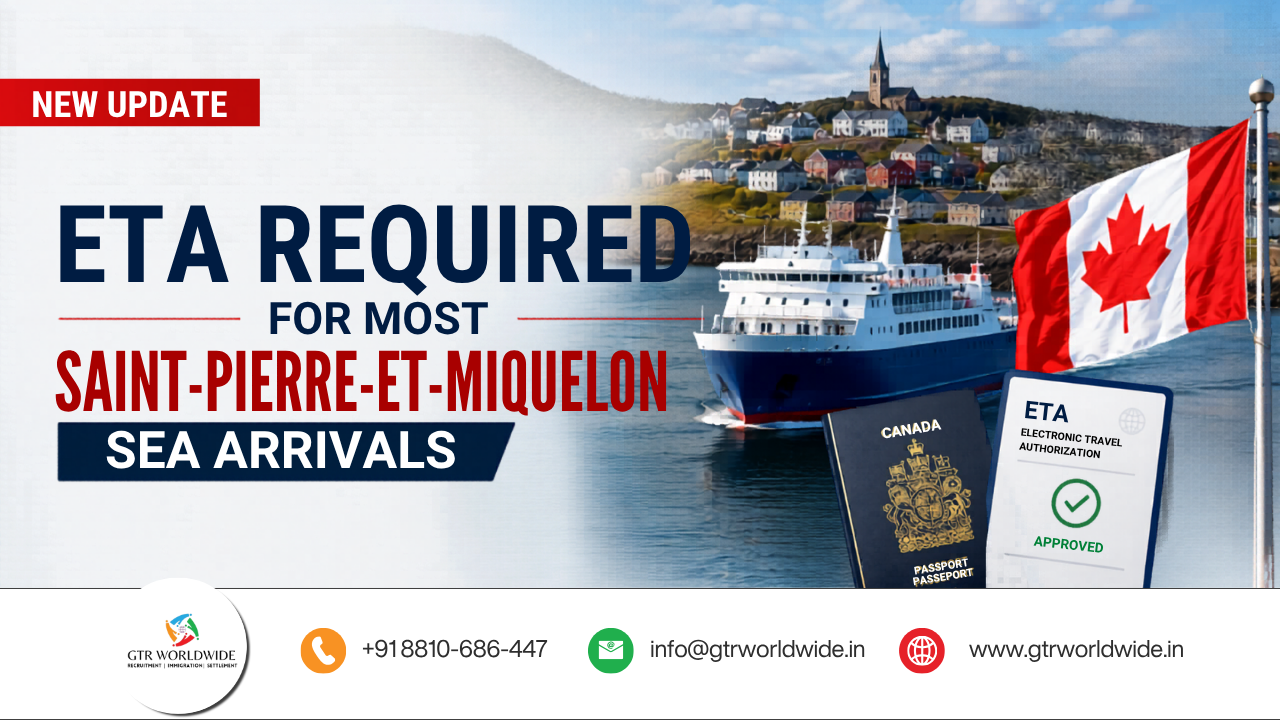
Canada has introduced a significant travel policy update affecting individuals arriving by sea from the French overseas territory of Saint-Pierre-et-Miquelon. Under the new rules, most foreign nationals traveling to Canada by sea from Saint-Pierre-et-Miquelon must now obtain an Electronic Travel Authorization (eTA) before entering the country.
The measure is part of Canada’s ongoing efforts to strengthen border management, improve traveler screening processes, and maintain the integrity of its immigration system while facilitating legitimate travel.
What Is Changing?
Previously, certain travelers arriving from Saint-Pierre-et-Miquelon by sea could enter Canada without obtaining an Electronic Travel Authorization. Under the updated regulations, most visa-exempt foreign nationals traveling by sea from the French archipelago will now be required to secure an approved eTA before departure.
The new requirement aligns sea arrivals more closely with existing air travel regulations, where many visa-exempt travelers are already required to obtain an eTA before entering Canada.
About Saint-Pierre-et-Miquelon
Saint-Pierre-et-Miquelon is a self-governing French overseas collectivity located off the coast of Newfoundland and Labrador.
The islands serve as an important regional transportation hub and attract tourists, seasonal workers, and travelers who often move between the French territory and Atlantic Canada.
Due to its proximity to Canada, travel between the islands and Canadian ports has historically been common, particularly during tourism and fishing seasons.
Who Needs an eTA?
Under the revised policy, most visa-exempt foreign nationals arriving in Canada by sea from Saint-Pierre-et-Miquelon will require:
- A valid passport
- An approved Electronic Travel Authorization (eTA)
- Compliance with Canadian admissibility requirements
The eTA is electronically linked to a traveler’s passport and is generally valid for multiple entries over several years or until the passport expires.
Who May Be Exempt?
Certain categories of travelers may remain exempt from the eTA requirement, depending on their citizenship, immigration status, or travel circumstances.
Potential exemptions may include:
- Canadian citizens
- Canadian permanent residents
- U.S. citizens
- Travelers holding valid Canadian visas
- Individuals covered under specific immigration exemptions
Travelers are encouraged to verify their eligibility before departure to avoid delays or entry issues.
Why Canada Introduced the Change
The federal government has indicated that the policy aims to:
Strengthen Border Security
Advance traveler screening helps Canadian authorities identify potential inadmissibility concerns before arrival.
Improve Immigration Integrity
The eTA system enables more efficient processing and risk assessment of incoming travelers.
Create Consistent Entry Requirements
The change helps standardize entry procedures across different transportation methods, including air and sea travel.
Enhance Traveler Information Collection
Authorities can verify traveler details electronically before arrival, improving border operations.
Impact on Travelers
Travelers planning sea voyages from Saint-Pierre-et-Miquelon to Canada should ensure they obtain the necessary travel authorization well before departure.
Failure to obtain a required eTA could result in:
- Denied boarding
- Delayed travel plans
- Refusal of entry at the border
- Additional administrative processing
Most eTA applications are processed online and are typically approved within a short period, although travelers are advised to apply early in case additional review is required.
Canada’s Growing Use of Digital Travel Screening
The eTA program has become a key component of Canada’s border management strategy.
The system allows immigration and border officials to:
- Conduct pre-arrival screening
- Verify traveler information
- Identify security concerns
- Improve processing efficiency at ports of entry
Over recent years, Canada has expanded digital travel authorization requirements as part of broader modernization efforts across its immigration and border systems.
What Travelers Should Do
Individuals planning travel from Saint-Pierre-et-Miquelon to Canada should:
- Confirm whether they require an eTA.
- Ensure their passport remains valid for the duration of travel.
- Submit an eTA application before departure.
- Review all entry requirements and travel documentation.
- Monitor official government updates for any additional changes.
Proper preparation can help avoid disruptions and ensure a smooth entry process.
Conclusion
Canada’s decision to require Electronic Travel Authorizations for most visa-exempt travelers arriving by sea from Saint-Pierre-et-Miquelon represents another step toward modernizing border security and travel screening procedures. By extending eTA requirements to additional travel routes, Canada aims to enhance immigration integrity while maintaining efficient and secure entry processes.
Travelers planning to visit Canada from Saint-Pierre-et-Miquelon should carefully review the new requirements and obtain the necessary authorization before departure. As Canada continues updating its border and immigration policies, advance preparation will remain essential for a smooth and hassle-free travel experience.
Leave a Reply