Author: gtrIndia

  • 77 Skilled Workers Invited in Manitoba PNP August 2025 Draw

    77 Skilled Workers Invited in Manitoba PNP August 2025 Draw

    The Manitoba Provincial Nominee Program (MPNP) has issued new invitations for skilled workers to apply for Canadian permanent residency in its most recent draw. The selection targeted candidates with qualifications and experience aligned with Manitoba’s labor market needs, reinforcing the province’s economic growth and workforce development.

    Manitoba PNP Draw Results – August 21, 2025

    On August 21, 2025, Manitoba held its 17th provincial immigration draw of the year, issuing a total of 77 Letters of Advice to Apply (LAAs) under the Skilled Worker Stream.

    Among these, 18 invitations were extended to candidates who submitted a valid Express Entry profile number and job seeker validation code, making them eligible for both federal and provincial immigration opportunities.

    Key Draw Highlights

    • Total invitations issued: 77
    • Lowest-ranked score: 612
    • Stream: Skilled Worker Stream
    • Draw date: August 21, 2025

    Invitations Issued Through Strategic Recruitment Initiatives

    The draw placed strong emphasis on Manitoba’s Strategic Recruitment Initiatives, designed to attract skilled workers for sectors facing labor shortages. Invitations were distributed as follows:

    Recruitment InitiativeNumber of LAAs
    Employer Services6
    Francophone Community29
    Regional Communities31
    Ethnocultural Communities11

    Candidates who met the minimum score but did not receive an invitation may have been excluded due to incomplete or outdated information in their Expression of Interest (EOI), such as expired language results or missing details.

    Why Strategic Recruitment Is Important

    Manitoba’s targeted recruitment initiatives allow the province to directly address labor shortages while offering skilled workers a pathway to permanent residency.

    • For employers: These initiatives help fill critical vacancies in high-demand industries.
    • For candidates: They provide a faster immigration process and opportunities to settle in Manitoba communities.

    To qualify, employers must follow the ABC Recruitment Process, while applicants are assessed on criteria including age, work experience, education, and language proficiency.

    Manitoba PNP: A Reliable Path to Canada PR in 2025

    Through its consistent draws, Manitoba continues to open doors for skilled workers seeking permanent residency in Canada. The province’s immigration strategy not only fuels economic development but also strengthens local communities by welcoming diverse and talented newcomers.

    For skilled workers aiming to immigrate, the Manitoba PNP remains one of the most dependable pathways to Canada PR in 2025.

  • Saskatchewan Immigration Quota Increased for 2025

    Saskatchewan Immigration Quota Increased for 2025

    The Saskatchewan Immigrant Nominee Program (SINP) has received a major boost in 2025. The federal government has approved an additional 1,136 nomination slots, raising the province’s total immigration quota to 4,761 nominations for the year.

    This increase is welcome news for skilled workers, employers, and international applicants who were affected by the earlier cutbacks in Saskatchewan’s immigration allocation.

    Saskatchewan Immigration Quota 2025 – Updated Breakdown

    • Original Allocation (2025): 3,625 nominations (50% fewer than 2024)
    • Additional Nominations Approved: +1,136
    • New Total Quota: 4,761 nominations

    With this revised quota, Saskatchewan is now in a stronger position to attract skilled immigrants and meet labor market needs across the province.

    Impact on Key Sectors

    The newly added slots will immediately benefit industries that had previously reached their SINP cap, including:

    • Trucking
    • Accommodation & Hospitality
    • Food Services
    • Retail Trade

    These industries had hit the 25% sectoral cap earlier this year, forcing application processing to stop. With the expanded quota, applications in these areas can resume, creating more opportunities for both employers and skilled workers.

    Why Saskatchewan Required a Higher Quota

    At the start of 2025, Saskatchewan’s immigration intake was cut in half, which placed significant strain on employers already struggling with labor shortages. Additionally, federal rules required that 75% of nominees be individuals already living in Canada, leaving limited space for international applicants.

    Priority was initially given to sectors such as healthcare, agriculture, and skilled trades, while industries like food services and retail faced mass rejections once their quotas were filled. The new increase balances this distribution, offering fairer access across industries.

    What This Means for Immigration Candidates

    For skilled workers and international graduates, the expanded Saskatchewan PNP quota brings:

    • A higher chance of receiving an SINP nomination in 2025
    • More opportunities in high-demand industries
    • A clearer pathway to Canadian permanent residency (PR) through provincial nomination

    Employers will also gain from this update by filling critical workforce gaps with qualified foreign talent, supporting long-term business growth.

    Conclusion

    The federal government’s approval of additional SINP nominations brings Saskatchewan’s 2025 quota to 4,761. This development is a significant win for both employers and applicants, particularly in industries such as trucking, food services, accommodation, and retail.

    It reinforces Saskatchewan’s commitment to welcoming skilled immigrants and ensuring the province’s economic growth continues on a steady path.

  • Designated Employers Announced in Peace Liard, North Okanagan–Shuswap, and Pictou County for Rural PR

    Designated Employers Announced in Peace Liard, North Okanagan–Shuswap, and Pictou County for Rural PR

    Three Canadian regions — Peace Liard and North Okanagan–Shuswap in British Columbia, along with Pictou County in Nova Scotia — have officially released their lists of designated employers under the Rural Community Immigration Pilot (RCIP). This update expands opportunities for skilled foreign workers to secure job offers and pursue permanent residency (PR) through the rural immigration pathway.

    What is the Rural Community Immigration Pilot (RCIP)?

    The RCIP is an employer-driven immigration initiative designed to attract and retain skilled foreign workers in smaller Canadian communities. To qualify, candidates must:

    • Obtain a job offer from a designated employer in a participating community.
    • Demonstrate at least one year (1,560 hours) of relevant work experience within the last three years (with some exemptions for international graduates).
    • Meet minimum language requirements (usually CLB 4–6, depending on the role).
    • Hold a Canadian secondary school credential or an equivalent foreign qualification.
    • Show proof of sufficient settlement funds to support themselves and their family.

    Once a candidate receives a job offer, the local economic development organization must endorse it before the worker can apply to the federal government for permanent residency.

    Peace Liard’s Designated Employers

    Located in northeastern BC, Peace Liard has introduced a broad list of approved employers across various sectors, such as:

    • Healthcare & social services – Northern Health Authority, Northern Lights College, Campus Kids Daycare Society.
    • Hospitality & food services – Chubby FSJ Ltd., Dawson Creek Golf & Country Club, Sushi Heaven Japanese Restaurant Ltd.
    • Construction & trades – Surerus Construction and Development Ltd., Troyer Ventures Ltd., Pavlis Trucking Ltd.
    • Retail & services – City Furniture Ltd., Sobeys Capital Inc., Williston Drugs Limited.

    North Okanagan–Shuswap’s Designated Employers

    In BC’s interior, North Okanagan–Shuswap’s RCIP employer list highlights opportunities in:

    • Healthcare & community services – Interior Health Authority, Kindale Developmental Association, Vernon & District Immigrant & Services Society.
    • Childcare & education – Harwood Montessori School, Kids Kingdom Childcare, North Okanagan Child Care Society.
    • Manufacturing & trades – Tolko Industries Ltd., KingFisher Boats Inc., Interfor Corporation.
    • Hospitality & retail – Best Western Premier Vernon, Predator Ridge Limited Partnership, Sobeys Capital Inc.

    Pictou County’s Designated Employers

    In Nova Scotia, Pictou County has published its employer list, featuring:

    • Hospitality & food services – Tim Hortons (Kyle Shaw Enterprises Ltd.), Sam’s Pizza – Stellarton, Subway (Highland Subshop Ltd.).
    • Construction & trades – Dustin’s Concrete, Scotsburn Lumber Ltd., Twin Rivers Home Builders.
    • Retail & services – Sobeys Capital Inc., Needs Convenience, Bowen’s Autobody Repair & Sales Inc.

    Why Designated Employers Are Key

    Since RCIP is an employer-led program, securing a job offer from a designated employer is the first step toward PR. For skilled workers abroad, this provides a direct route to settle in Canadian communities actively seeking talent.

    Currently, 14 communities across Canada are participating in RCIP, with most having launched their local programs. The initiative continues to see strong demand, offering both employers and foreign workers a mutually beneficial pathway — addressing labor shortages while opening doors to Canadian permanent residency.

  • Canadian Immigration – Yukon Expands Permanent Residency Nomination Spaces

    Canadian Immigration – Yukon Expands Permanent Residency Nomination Spaces

    The Government of Yukon has confirmed it will receive 67 additional nomination spaces under the Yukon Nominee Program (YNP) for 2025. This brings the territory’s total allocation to 282 nominations, expanding opportunities for skilled workers and employers.

    What is the Yukon Nominee Program (YNP)?

    The YNP enables Yukon to nominate foreign workers and international graduates for Canadian permanent residence, with a focus on sectors facing labour shortages — including healthcare, skilled trades, and essential services. Through this program, employers can address workforce gaps while candidates gain a pathway to settle permanently in Yukon.

    Key Highlights for 2025

    1. Increased Nomination Capacity

    • Original allocation: 215 nominations
    • Additional allocation: +67 nominations
    • New total: 282 nominations
      This expansion strengthens Yukon’s ability to respond to high-demand occupations.

    2. Expression of Interest (EOI) System

    In 2025, Yukon introduced an EOI system to streamline applications. Between March 31 and April 22, over 500 EOIs were submitted. Nearly 400 qualified under priority categories such as:

    • Candidates with at least one year of Yukon work experience
    • Yukon University graduates
    • Francophone workers
    • Applicants with a Temporary Measure Letter of Support

    3. Invitations to Apply (ITAs)

    So far, Yukon has issued 153 ITAs (May 23–27, 2025), including:

    • 19 to 2024 Letter of Support holders
    • 54 to 2025 Letter of Support holders
    • 78 to other priority applicants
    • 2 to healthcare professionals

    Following 13 withdrawals, 80 ITAs remain available for August 2025.

    4. Reserved Healthcare Spaces

    Yukon has reserved 10 nomination slots for regulated healthcare professionals, held until September 30, 2025. Any unused spaces will be reassigned to other applicants.

    Why This Matters

    • Employers can access a wider pool of skilled talent to address labour shortages.
    • Skilled workers and graduates have greater chances of nomination.
    • Healthcare professionals enjoy priority consideration.

    A Yukon nomination allows applicants to pursue permanent residence with Immigration, Refugees and Citizenship Canada (IRCC), opening the door to long-term settlement in the territory.

    With 282 nomination spaces in 2025 and ITAs still available, now is the time for employers and applicants to act. This expansion demonstrates Yukon’s commitment to supporting its labour market while providing more skilled workers a path to Canadian permanent residence.

  • Canada’s Student Cap Raises Concerns, Policy Shift on the Horizon

    Canada’s Student Cap Raises Concerns, Policy Shift on the Horizon

    Canada’s international student cap has emerged as one of the most debated immigration measures of 2024–2025. While the federal government defends the cap as a tool to ease housing shortages and reduce strain on public services, universities, students, and industry stakeholders warn of serious long-term consequences. With the cap set to expire at the end of 2025, many are anticipating a potential policy adjustment that could bring a more balanced approach to international education.

    What the Cap Means for International Students

    In 2024, Canada introduced a temporary cap on study permits, slashing approvals by 35%—from nearly 560,000 in 2023 to about 360,000. In 2025, the measure was extended and further tightened. The new annual limit of 437,000 permits represented an additional 10% reduction and, for the first time, included master’s and doctoral applicants who had previously been exempt.

    All applicants must now provide a Provincial or Territorial Attestation Letter (PAL/TAL), a requirement designed to ensure fair distribution of study permits across Canada.

    Why the Cap Sparks Concern

    1. Financial Pressure on Universities
      Canadian post-secondary institutions, especially in Ontario, British Columbia, and Alberta, rely heavily on international tuition revenue. Reduced intake has led to budget shortfalls, potential program cuts, and threats to research funding.
    2. Uneven Regional Impact
      While larger provinces may absorb the reductions, smaller regions such as Nova Scotia and Prince Edward Island are hit harder, as their local economies depend heavily on international graduates to fill workforce gaps.
    3. Administrative Bottlenecks
      The new PAL/TAL requirement has created significant backlogs, pushing processing delays up by 45%—nearly double the government’s target—and leaving thousands of students uncertain about their status.
    4. Global Competitiveness at Risk
      With rivals like Australia, the UK, and the U.S. competing aggressively for international talent, a restrictive cap could tarnish Canada’s reputation as a leading study destination.

    Could Canada Rethink the Policy?

    The cap is due to expire in December 2025, giving policymakers a window to reshape Canada’s long-term international education framework. Experts are calling on the government to:

    • Allocate study permits based on institutional quality and local labor market needs.
    • Crack down on non-compliant private colleges rather than penalizing the broader system.
    • Create stable, predictable policies that safeguard Canada’s $31 billion international education sector.

    Broader Immigration and Housing Links

    The student cap is part of Canada’s broader strategy to manage immigration flows and stabilize housing markets. In 2025, Ottawa also reduced both permanent and temporary resident intake targets. Early signs suggest rental prices are beginning to level off after years of steep increases.

    One of the most contentious moves was a 31% cut in study permits issued to Indian students, Canada’s largest source of international enrollment, raising concerns about long-term bilateral and educational ties.

    The Road Ahead

    While the cap has provided some short-term relief for housing, it risks undermining Canada’s higher education competitiveness. Unless the government shifts toward a more targeted and sustainable strategy, universities, communities, and students could face lasting repercussions.

    As the 2025 deadline approaches, Canada has an opportunity to strike a careful balance—managing immigration and housing pressures while maintaining its position as a global leader in international education.

  • Canada Immigration Update: TOEFL Essentials Now Approved for PR Applications

    Canada Immigration Update: TOEFL Essentials Now Approved for PR Applications

    Immigration, Refugees and Citizenship Canada (IRCC) has officially added the TOEFL Essentials test as a recognized English language proficiency option for applicants to Canada’s permanent economic immigration programs. This new policy gives skilled workers and international candidates greater flexibility when proving their language skills.

    What Is TOEFL Essentials?

    Administered by Educational Testing Service (ETS), TOEFL Essentials is a modern, streamlined alternative to the traditional TOEFL iBT exam. The test evaluates all four core skills—reading, writing, listening, and speaking—within a shorter time frame of about 1.5 hours and at a lower cost. While designed to reflect real-world communication, it still maintains strong academic standards.

    Why This Change Matters

    Previously, approved English tests for immigration included IELTS General Training, CELPIP-General, and TOEFL iBT. With the addition of TOEFL Essentials, applicants now have another pathway to meet language requirements. This is particularly beneficial for those who:

    • Prefer a flexible, online test format.
    • Want a more affordable testing option.
    • Need to showcase both practical and academic English skills in one exam.

    Programs Accepting TOEFL Essentials

    TOEFL Essentials results will be accepted for:

    • Express Entry (Federal Skilled Worker, Canadian Experience Class, Federal Skilled Trades)
    • Provincial Nominee Programs (PNPs) linked to Express Entry
    • Atlantic Immigration Program (AIP), for skilled workers and graduates in Atlantic Canada

    Score Requirements and CLB Conversion

    As with other recognized tests, TOEFL Essentials scores will be mapped to the Canadian Language Benchmarks (CLB). Applicants must still meet the CLB levels required for their specific immigration program. IRCC will release an official score conversion chart to guide candidates.

    What This Means for PR Candidates

    This update reflects Canada’s ongoing commitment to making immigration more accessible and inclusive. By expanding the list of approved English tests, IRCC reduces barriers for applicants worldwide and provides a smoother, more flexible pathway to permanent residency.

  • New Express Entry Draw for  Healthcare Workers- Invites 2,500 Candidates

    New Express Entry Draw for Healthcare Workers- Invites 2,500 Candidates

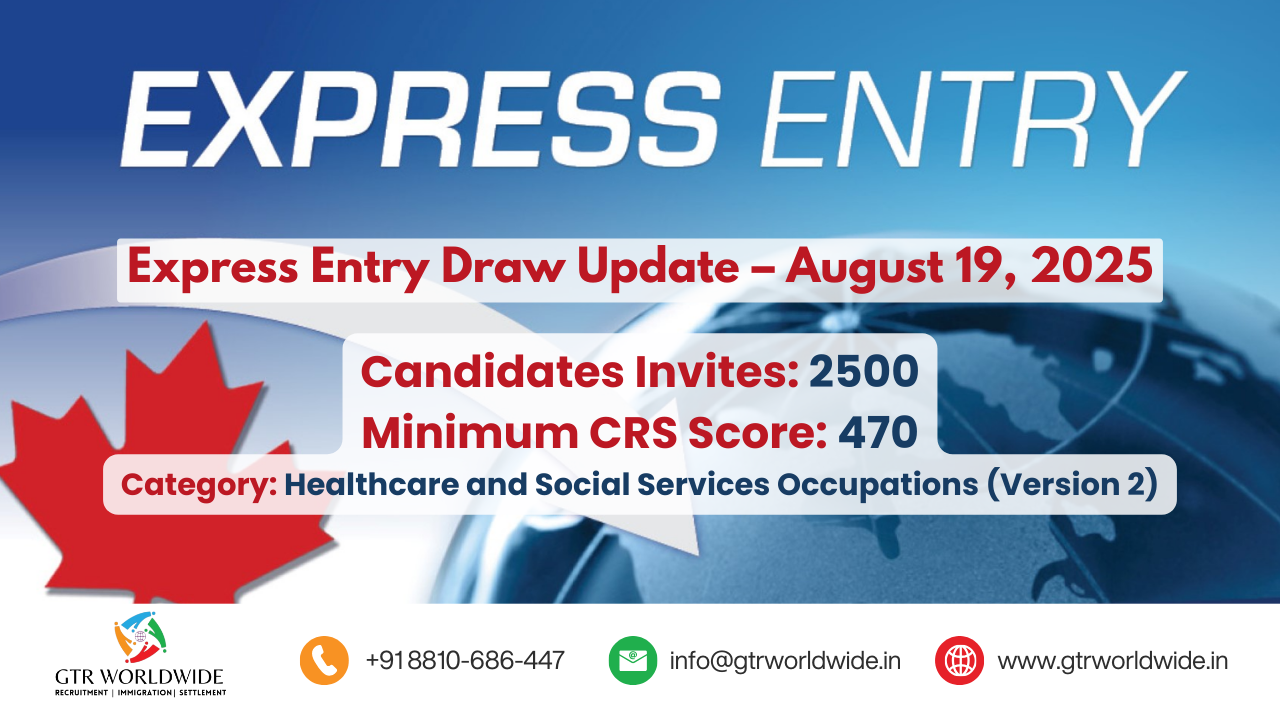
    In a significant and encouraging development for Canada PR aspirants, Immigration, Refugees and Citizenship Canada (IRCC) has once again demonstrated its commitment to attracting skilled healthcare workers. In the latest Express Entry draw occurred on August 19, 2025, department has just issued 2,500 Invitations to Apply (ITAs) for permanent residence to candidates in the Express Entry pool with experience in the healthcare and social services sector.

    This latest draw, the second-largest of its kind this year, highlights a clear and consistent trend in Canada’s immigration strategy. With a minimum Comprehensive Ranking System (CRS) score of just 470, the draw’s cut-off score is a welcome relief for many hopefuls. This targeted approach offers a distinct advantage to those with in-demand skills, providing a more direct and accessible pathway to permanent residency compared to the high-scoring general draws.

    Overview of the latest Express Entry Draw

    The draw marks the fifth of the month and the second in a single week, underscoring the rapid pace of selections. It also confirms a pattern that began in May, where IRCC has held a dedicated healthcare and social services draw every month, a notable increase in frequency compared to the earlier part of the year. This shift signals a heightened priority for these professions, which are crucial to meeting Canada’s growing labor market demands. Find below the summary of the new EE draw:

    • Express Entry Draw number: 362
    • Date: Aug 19, 2025
    • Number of invitations: 2,500
    • Category: Healthcare and social services occupations (Version 2)
    • Cut-off score: 470

    Express Entry Draw Result – 19 August 2025

    DateEE Draw CategoryNo. of ITAsMinimum CRS Score RequirementTie-breaking rule
    Aug 19, 2025Healthcare and social services occupations (Version 2)2,500470April 23, 2025 at 20:08:53 UTC

    While Provincial Nominee Program (PNP) draws and French language proficiency draws have been frequent in 2025, this latest announcement reinforces that Express Entry’s category-based selection is a powerful tool for skilled workers in specific fields. So far this year, IRCC has issued a total of 55,820 ITAs, with a clear focus on specific categories.

    For a Canada PR aspirant, this news is more than just a statistic; it’s a beacon of hope. It confirms that the right professional background can be the key to unlocking the door to a new life in Canada, even in a competitive Express Entry landscape.

    Draw TypeNumber of Draws
    Provincial Nominee Program (PNP)15
    Canadian Experience Class (CEC)8
    French-language proficiency4
    Healthcare and social services4
    Education1

    Tips to Improve Your CRS Score

    If your CRS score is close to the cut-off, here are strategies to boost your profile:

    1. Retake a language test (IELTS/CELPIP or TEF) to score higher in English or French.
    2. Claim spousal points — if your partner can complete a language test or add educational/work credentials.
    3. Pursue a Canadian job offer in a healthcare or social service role (adds 50–200 CRS points).
    4. Apply for Provincial Nominee Programs (PNPs) — a nomination adds 600 CRS points, guaranteeing an ITA.
    5. Update work experience — ensure your NOC codes match the eligible occupations listed by IRCC.

    The August 19, 2025 Express Entry draw highlights how Canada is making immigration pathways more accessible for healthcare and social service professionals. With a cut-off score of just 470, many skilled candidates who were previously on the margin now have an excellent chance of securing permanent residency.

    For applicants in these sectors, staying proactive by updating your Express Entry profile and exploring CRS-boosting strategies can be the key to success in upcoming draws.

  • Canada Express Entry Draw – August 19, 2025: 192 ITAs Issued with CRS of 800

    Canada Express Entry Draw – August 19, 2025: 192 ITAs Issued with CRS of 800

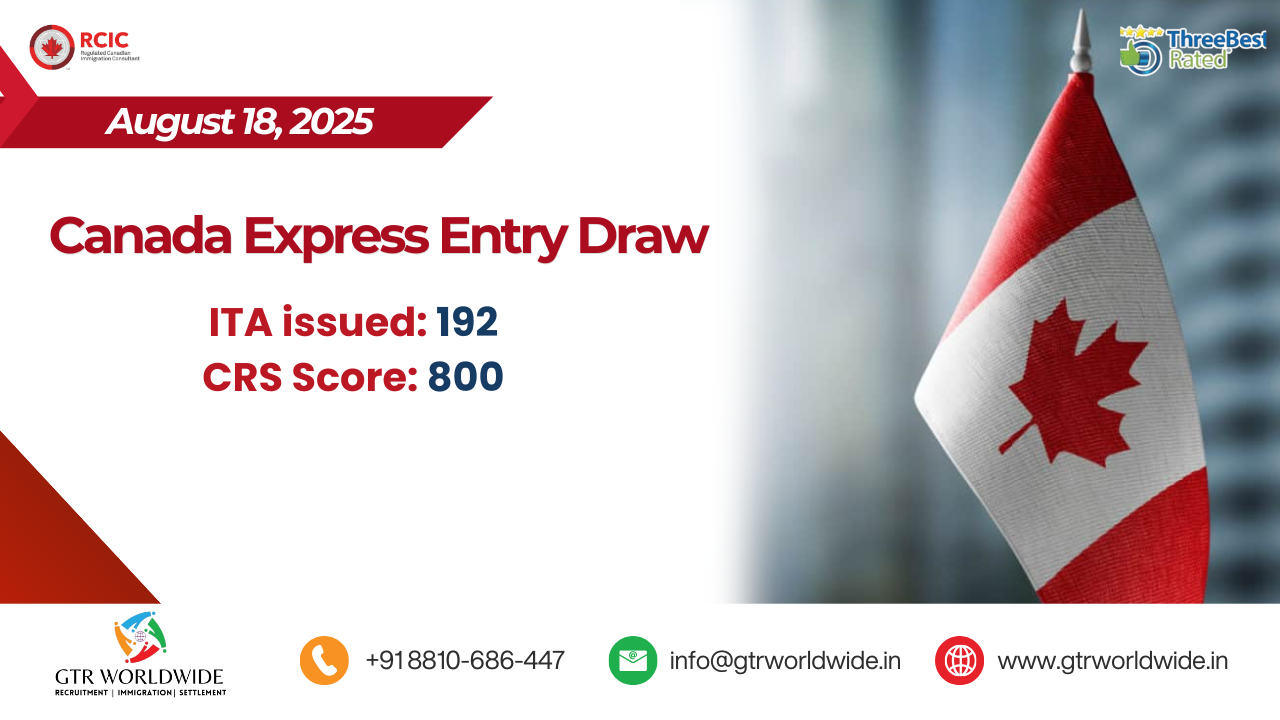
    On August 19, 2025, Immigration, Refugees and Citizenship Canada (IRCC) conducted its latest Express Entry draw, issuing 192 Invitations to Apply (ITAs) for permanent residency. This was a Provincial Nominee Program (PNP)-specific draw, with the minimum Comprehensive Ranking System (CRS) score set at 800, making it one of the most competitive rounds of the year.

    For skilled workers aspiring to build a future in Canada, this draw underscores both the opportunities and challenges present within the Express Entry system.

    Overview of the August 19, 2025 Draw

    Here are the key details of the latest draw:

    • Date of Draw: August 19, 2025
    • Program Targeted: Provincial Nominee Program (PNP)
    • Number of ITAs Issued: 192
    • Minimum CRS Score: 800
    • Tie-breaking Rule: February 11, 2025, at 19:17:09 UTC

    The high CRS cut-off highlights the competitive nature of PNP-specific draws. Since candidates with a provincial nomination automatically receive an additional 600 CRS points, only those with already strong profiles were able to secure an invitation.

    Express Entry Draw Trends in 2025

    This draw was the fourth Express Entry round in August 2025, and the second PNP-focused draw of the month. Here’s a snapshot of recent rounds:

    • August 6, 2025: 225 PNP candidates invited, minimum CRS 739
    • August 7, 2025: 1,000 Canadian Experience Class (CEC) candidates invited, CRS 534
    • August 8, 2025: 2,500 French-language proficiency candidates invited, CRS 481
    • August 18, 2025: 192 PNP candidates invited, CRS 800

    So far in 2025, IRCC has issued more than 53,000 ITAs, covering PNP, CEC, and category-based draws targeting French speakers, healthcare workers, and educators.

    PNP-specific draws in 2025 have seen some of the highest CRS cut-offs, with the August 19 draw ranking second only to the February 4 draw, which required a CRS of 802.

    The Importance of This Draw

    The August 19 draw carries significant implications for immigration hopefuls:

    • High Competition: With a CRS of 800, securing a provincial nomination is key to standing out in the competitive field.
    • PNP as a Strong Pathway: Candidates who secure a provincial nomination from provinces like Ontario, British Columbia, or Alberta can greatly enhance their chances of receiving an ITA.
    • IRCC’s Balanced Approach: By holding various types of draws (PNP, CEC, French, occupation-specific), Canada is ensuring that a wide array of talented individuals can contribute to its workforce.

    Strategies to Improve Your CRS Score

    If your CRS score is currently not competitive, here are some ways to boost it:

    • Pursue a Provincial Nomination: Provinces have different streams aligned with local job market needs.
    • Improve Your Language Proficiency: Higher scores in language tests like IELTS, CELPIP, or TEF can significantly increase your CRS points.
    • Enhance Your Education Credentials: Additional education or getting foreign education recognized can help increase your CRS score.
    • Leverage Spousal Points: If applicable, your partner’s education, work experience, or language test results can add valuable points.
    • Stay Informed: With regular draws happening every few weeks, staying prepared and up-to-date is crucial.

    About the Express Entry System

    The Express Entry system is Canada’s primary pathway for skilled workers to immigrate. It manages applications for three key programs:

    1. Federal Skilled Worker Program (FSWP)
    2. Federal Skilled Trades Program (FSTP)
    3. Canadian Experience Class (CEC)

    Candidates enter the Express Entry pool and are ranked using the CRS based on factors such as age, education, language ability, and work experience. ITAs are issued to the highest-ranking candidates in each draw, and those with a provincial nomination receive an additional 600 CRS points, making them virtually guaranteed an invitation.

    The August 19, 2025, Express Entry draw further emphasizes the significance of the Provincial Nominee Program in Canada’s immigration strategy. With just 192 ITAs issued and a CRS cut-off of 800, competition remains fierce, but skilled workers who align with Canada’s labour needs still have strong opportunities.

    If you are considering immigrating to Canada, now is the time to explore provincial streams, improve your CRS score, and prepare for upcoming draws. With careful planning, your path to permanent residency may be closer than you think.

  • Canada to Introduce Mandatory Biometrics for Citizenship Applications by 2026–2027

    Canada to Introduce Mandatory Biometrics for Citizenship Applications by 2026–2027

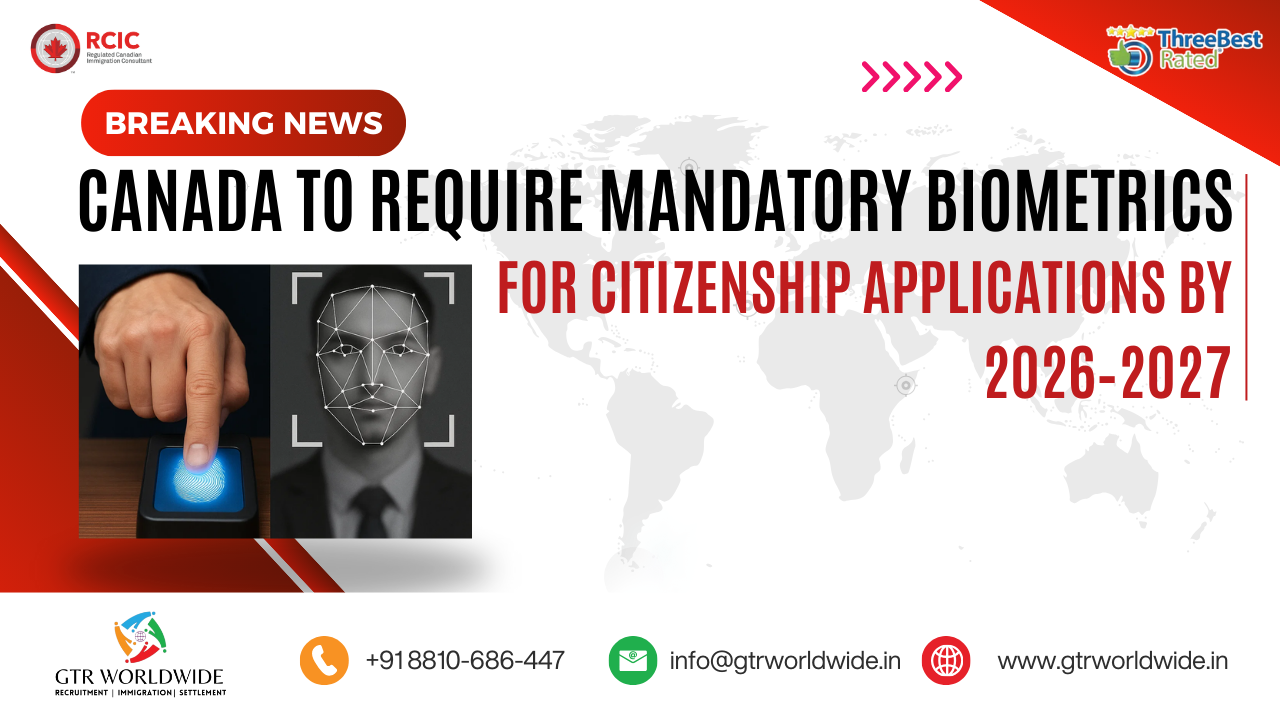
    Canada is moving forward with plans to modernize its citizenship process. Beginning in 2026–2027, Immigration, Refugees and Citizenship Canada (IRCC) intends to make biometric submission a mandatory step for citizenship grant applications.

    What’s Changing: Biometric Requirement for Citizenship

    • IRCC is preparing regulatory amendments to the Citizenship Regulations that will require the systematic collection of biometric data (fingerprints, facial recognition, etc.) for all citizenship applications.
    • This authority was established under the Budget Implementation Act, No. 1 passed in June 2023.
    • The change is part of a broader effort to modernize procedures and strengthen program integrity.

    Why Biometrics Are Being Implemented

    • Enhanced identity verification: Reduces fraud by ensuring applicants are who they claim to be.
    • Program integrity: Improves reliability of background and criminality checks.
    • Greater efficiency: Automation supported by biometrics will accelerate processing, with up to 93% of applications benefiting from faster intake decisions.
    • Overall objective: To deliver stronger security, better client service, and more efficient processing.

    Timeline: From Consultation to Final Regulation

    • This initiative is included in IRCC’s Forward Regulatory Plan for 2025–2027, announced on July 16, 2025.
    • Draft amendments will be published in the Canada Gazette, Part I in 2026 for public consultation.
    • Final regulations are expected in 2027 following stakeholder input and review.

    What Applicants Should Expect

    • Starting in 2027, all citizenship applicants will likely need to provide biometrics as part of their application.
    • The change is designed to impact clients, not businesses or trade.
    • Preparation tip: Applicants should plan ahead for fingerprinting or facial recognition submission requirements.

    Privacy, Security, and Data Protection

    • IRCC emphasizes strict adherence to privacy laws, including the Privacy Act and Charter protections.
    • Fingerprints will be permanently removed from RCMP records once citizenship is granted.
    • Investments are being made in upgraded biometric technology to ensure secure collection and processing.

    Key Takeaway

    By 2027, biometric enrollment will become a standard part of Canadian citizenship applications. This shift, focused on modernization, efficiency, and security, means that applicants, lawyers, and consultants should monitor IRCC updates, prepare for consultations, and adjust application practices accordingly.

  • IRCC Reintroduces Mandatory Upfront Medical Exams for Express Entry Applicants

    IRCC Reintroduces Mandatory Upfront Medical Exams for Express Entry Applicants

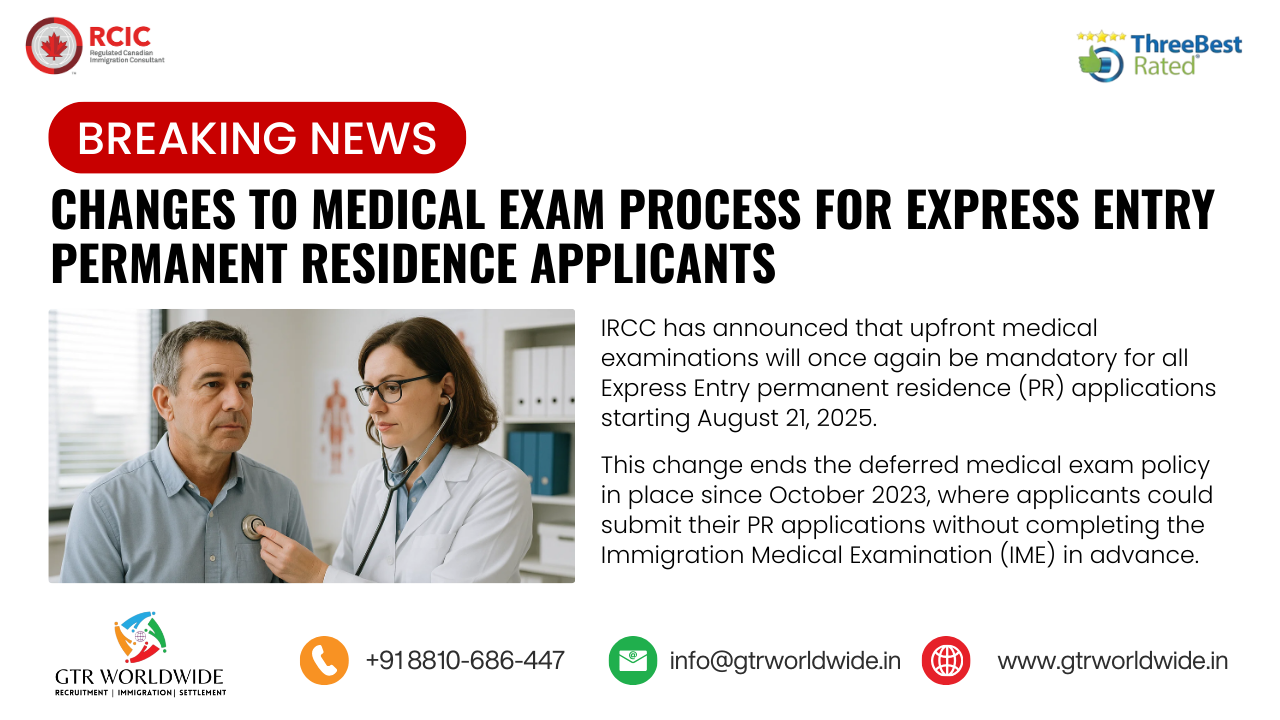
    Starting August 21, 2025, Immigration, Refugees and Citizenship Canada (IRCC) will once again require applicants under the Express Entry permanent residence (PR) system to complete their Immigration Medical Examination (IME) before submitting an application.

    This marks the end of the deferred medical exam policy introduced in October 2023, which allowed applicants to submit PR applications first and provide medical results later.

    Key Updates on the New Medical Exam Rules

    • Effective Date: August 21, 2025
    • Who Is Affected: All Express Entry applicants, including both accompanying and non-accompanying dependents
    • Major Change: Medical exams must be completed prior to PR application submission
    • Purpose: To speed up application processing and ensure earlier health admissibility checks

    Who Must Complete an IME?

    The following individuals are required to undergo an upfront IME:

    1. Principal Applicants under the Federal Skilled Worker Program (FSWP), Federal Skilled Trades Program (FSTP), and Canadian Experience Class (CEC).
    2. All accompanying family members – spouse, common-law partner, and dependent children.
    3. Non-accompanying dependents, who must also undergo the exam for admissibility purposes.

    Exemptions – When a New IME May Not Be Required

    You may not need to redo your medical exam if:

    • You are already in Canada and completed an IME within the past 5 years for a work permit, study permit, or PR application.
    • Your previous IME is still valid and accessible to IRCC.

    In such cases, you can provide your IME number (UMI). However, if IRCC determines your past IME is expired or unusable, a new exam will still be required.

    What Does the Medical Exam Involve?

    Exams must be conducted by an IRCC-approved panel physician. A typical IME includes:

    • Physical check-up (weight, height, blood pressure, vision, etc.)
    • Blood and urine tests
    • Chest X-ray (commonly for TB screening)
    • Review of medical history and current conditions

    Validity: Results are valid for 12 months. If your PR case is not finalized within that period, you may need another exam.

    Documents You’ll Need for Your IME

    Prepare the following before your appointment:

    • Valid passport or government-issued ID
    • Glasses/contact lenses (if applicable)
    • Previous medical reports or prescriptions
    • List of current medications
    • Four recent photos (if the clinic does not use eMedical)
    • IMM 1017E Medical Report Form (if provided by IRCC)

    Cost of the Immigration Medical Exam

    Fees vary depending on country and clinic but generally range from USD $100–500, covering:

    • Physician consultation
    • Laboratory testing
    • Radiology (X-rays)
    • Specialist referrals if required

    If No Panel Physician Is Available

    If there are no IRCC-approved doctors near you:

    1. Write a Letter of Explanation describing your situation.
    2. Submit it with your PR application through IRCC’s online web form.
      IRCC will then review your case and advise next steps.

    Why the Change?

    • 2023–2025 policy: Applicants could defer IMEs to prevent premature expiry of results.
    • 2025 policy shift: IRCC confirms that upfront IMEs will reduce processing backlogs, speed up decisions, and allow earlier health admissibility screening.

    Tips for a Smooth Medical Exam Process

    1. Book early – appointments fill quickly in high-demand areas.
    2. Bring all required documents to avoid delays.
    3. Check validity – ensure your exam won’t expire before your PR is finalized.
    4. Use only IRCC-approved panel physicians – other doctors’ exams will not be accepted.

    From August 21, 2025, anyone applying for permanent residence under Express Entry must complete and submit an Immigration Medical Examination upfront. By preparing early and using an IRCC-approved panel physician, applicants can avoid delays and improve their chances of a smooth application process.