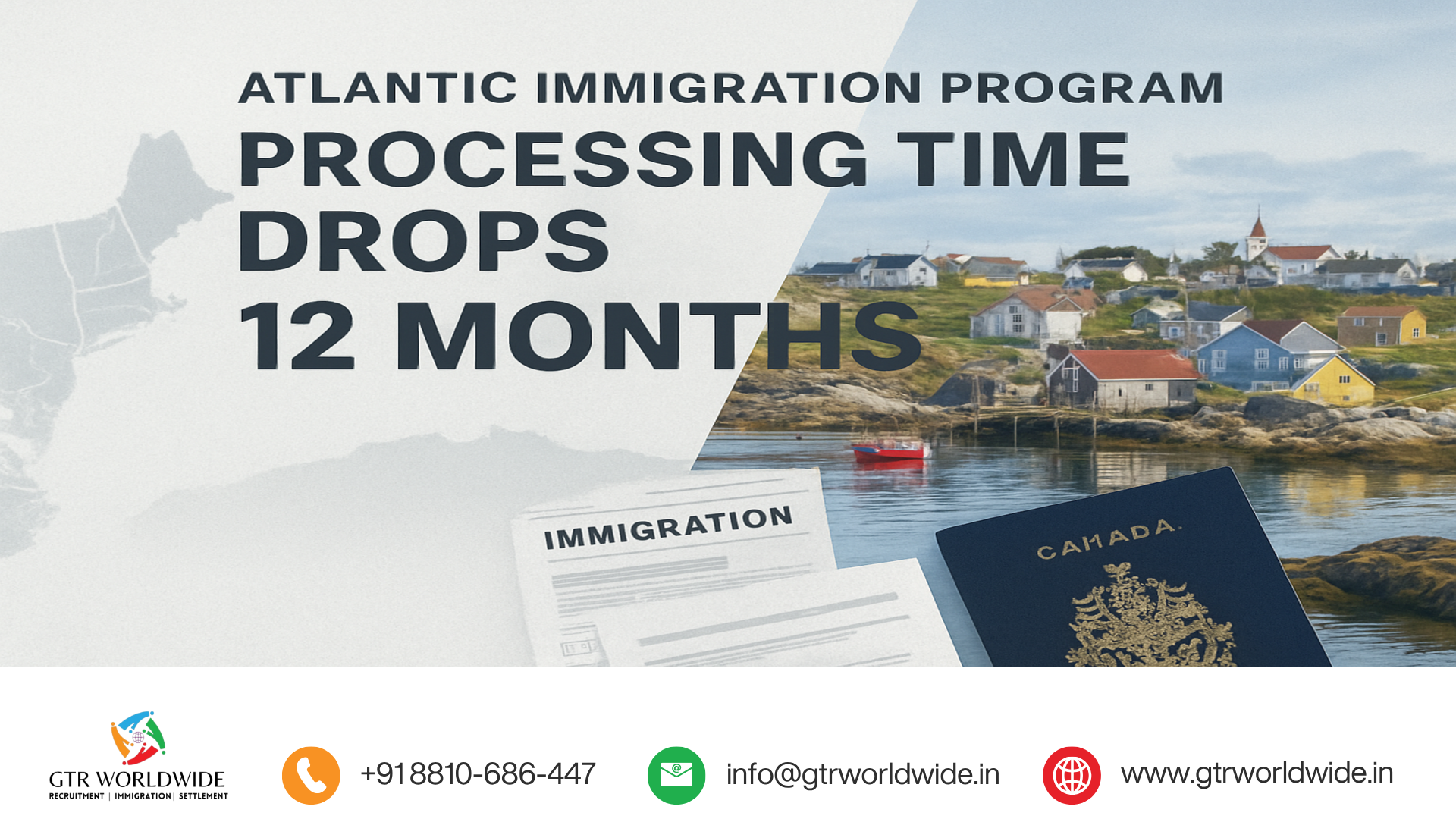
AIP processing time drops to 26 months — what Atlantic Immigration Program applicants need to know
Immediate update: processing time falls to 26 months (June 8, 2026)
The expected processing time for newly submitted permanent residence applications under the Atlantic Immigration Program (AIP) has fallen to 26 months as of June 8, 2026. This is an important development for applicants and employers in Atlantic Canada because it marks a one-year reduction from the 38-month estimate published on May 12, 2026. Despite the improvement, the published wait remains well above Immigration, Refugees and Citizenship Canada’s (IRCC) 11-month service standard — and still longer than the two-year work permits typically issued to AIP candidates.
How processing times moved over the last nine months
Processing times for the AIP have been volatile since fall 2025. The department’s published monthly figures tell the story:
- September, 2025 — 13 months
- October, 2025 — 37 months
- November, 2025 — 37 months
- December, 2025 — 37 months
- January, 2026 — 33 months
- February, 2026 — 33 months
- March, 2026 — 33 months
- April, 2026 — 40 months
- May, 2026 — 38 months
- June, 2026 — 26 months
The most notable change was the sharp jump in October 2025, when processing time increased from 13 months to 37 months in one month — a 184.6% month-over-month increase. The June 8, 2026 estimate is the lowest IRCC has published since that volatile period.
Why this matters beyond the headline number
A single processing-time figure can be misleading unless placed in context. Two program features make the current estimate especially consequential:
- AIP work permits are employer-specific, exempt from Labour Market Impact Assessment (LMIA) requirements, but are issued for up to two years only and are non-renewable.
- AIP applicants are not eligible for bridging open work permits that many other permanent residency applicants can use to maintain open work status while waiting for a decision.
Because AIP processing time has exceeded the two-year duration of AIP work permits for months at a time, many in-Canada AIP applicants faced loss of work authorization while their permanent residence applications remained in IRCC’s inventory. The very large inventory — 12,900 AIP applications awaiting processing as of June 8, 2026 — helps explain why wait times have been measured in years.
What actions provinces took when processing delays threatened work status
When processing times exploded in fall 2025, some Atlantic provinces stepped in to reduce immediate labour disruptions. The provinces issued letters of support to AIP endorsees whose AIP-issued work permits were set to expire. Those support letters enabled affected endorsees to apply for C18 closed work permits, allowing them to continue to work for the specific employer while they awaited a PR decision.
These provincial interventions did not change federal processing standards or the AIP work permit rules, but they provided a practical bridge for people facing imminent permit expiry during the period of extended IRCC processing times.
Who is most directly affected by the current processing estimate
The following groups are most impacted by the published 26-month processing time:
- AIP applicants currently in Canada holding AIP-specific work permits that expire within two years of issuance. Because those permits are non-renewable, applicants with less than 26 months remaining will need to consider alternate authorization options.
- Employer-designated businesses in New Brunswick, Newfoundland and Labrador, Nova Scotia, and Prince Edward Island that rely on AIP hires. Prolonged uncertainty about workers’ authorization can affect staffing and retention.
- Provincial authorities and endorsement bodies that manage AIP employer designation and provincial endorsement processes and that may be asked to provide support letters when federal processing outlasts work permit validity.
- Prospective applicants planning to pursue AIP as a pathway to permanent residency — understanding current timelines matters for personal planning and employment arrangements.
The update is less directly relevant to applicants outside the AIP stream or to applicants who are eligible for bridging open work permits under other federal programs.
Practical implications for AIP candidates and employers
Given the combination of a 26-month median processing time and two-year, non-renewable AIP work permits, practical consequences include:
- Continuity risk: Applicants whose AIP work permit will expire before the 26‑month decision estimate could face interruptions in authorized work unless they secure an alternative permit or receive provincial support.
- Reliance on provincial interventions: The past issuance of support letters to allow C18 closed work permit applications shows provinces can provide targeted relief. Applicants at risk should determine whether their province has similar measures available and whether they would qualify.
- Employer planning: Designated employers should anticipate longer-than-ideal timelines for securing permanent staff and may need to plan for transitions, temporary replacements, or administrative steps to support affected employees.
- Application pipeline size: With 12,900 active AIP applications in IRCC’s inventory as of June 8, 2026, candidates should expect processing capacity constraints to remain a factor when interpreting future monthly updates.
Numbers and dates to keep on your radar
Key published figures from IRCC and provincial actions that applicants should monitor:
- June 8, 2026 — AIP processing time published at 26 months.
- May 12, 2026 — Previous published processing time at 38 months.
- September–October, 2025 — Processing time jumped from 13 months to 37 months in one month.
- IRCC service standard for permanent residence applications — 11 months (published comparison figure).
- Inventory volume as of June 8, 2026 — 12,900 AIP applications awaiting processing.
- AIP work permit duration — up to two years and non-renewable (program-specific detail noted by IRCC).
These are the concrete, IRCC-published points available now. Applicants should track successive IRCC monthly updates to see whether the downward trend continues.
What applicants should watch and prepare for next
Based on the current published facts, applicants and employers should consider the following practical steps:
- Monitor IRCC processing-time publications carefully. AIP wait times have changed rapidly in recent months; monthly updates can materially affect planning.
- Check your AIP work permit expiry date against the currently published processing estimate (26 months). If your permit will expire sooner, investigate whether your province is offering a support letter for endorsement-holders whose permits are expiring.
- Confirm whether you have been endorsed by one of the four Atlantic provinces (New Brunswick, Newfoundland and Labrador, Nova Scotia, Prince Edward Island), since provincial endorsement is a core eligibility requirement for AIP and may also be the entry point for provincial support letters.
- Employers should document staffing timelines and be prepared to support endorsement-holders seeking provincial letters or alternate work permits if needed.
- Keep records up to date and accessible: applications under program pressure can require prompt submission of follow-up documents; being organized helps you respond quickly to requests that might shorten processing delays for an individual file.
Note: The actions above are practical considerations drawn from the published processing times, the size of the AIP inventory, the non-renewable two-year nature of AIP work permits, and the provinces’ prior issuance of support letters. They do not rely on additional policy details beyond IRCC’s published figures.
How to interpret the 26-month figure going forward
The 26-month processing-time publication signals an improvement from May 2026, but it remains substantially longer than IRCC’s 11-month service standard and longer than AIP work permits. For many applicants, the new estimate reduces some near-term risk but does not eliminate the structural timing mismatch between permit length and processing time.
Practically, this means:
- Some applicants who would have lost authorization under the 38-month estimate may now have a clearer timeline for planning their next steps.
- Others will still face a gap between permit expiry and expected decision dates; for them, provincial letters or alternate forms of work authorization will remain important short-term tools.
- IRCC’s inventory size (12,900 files) suggests that while monthly estimates can shift, the underlying backlog is significant and will likely continue to influence processing times until inventory is substantially reduced.
Final considerations
The AIP remains an employer-driven route to permanent residence for workers who have a job offer from a provincially designated employer and a provincial endorsement. The June 8, 2026 update reducing the AIP processing estimate to 26 months is a welcome sign for many applicants, but it does not fully resolve the mismatch between federal processing timelines and the two-year limit on AIP work permits. Applicants, employers, and provincial offices will need to keep coordinating to manage work authorization gaps where they arise.
For personalized support with your Canadian immigration pathway, contact GTR Immigration. Call us: +91-8810-686-447
#AtlanticImmigrationProgram #AIP #CanadaImmigration #IRCC #WorkPermit #PermanentResidence #AtlanticProvinces