Canadian citizenship by descent: 15-month wait for proof of Canadian citizenship certificates (June 2026)
Immediate update and why it matters
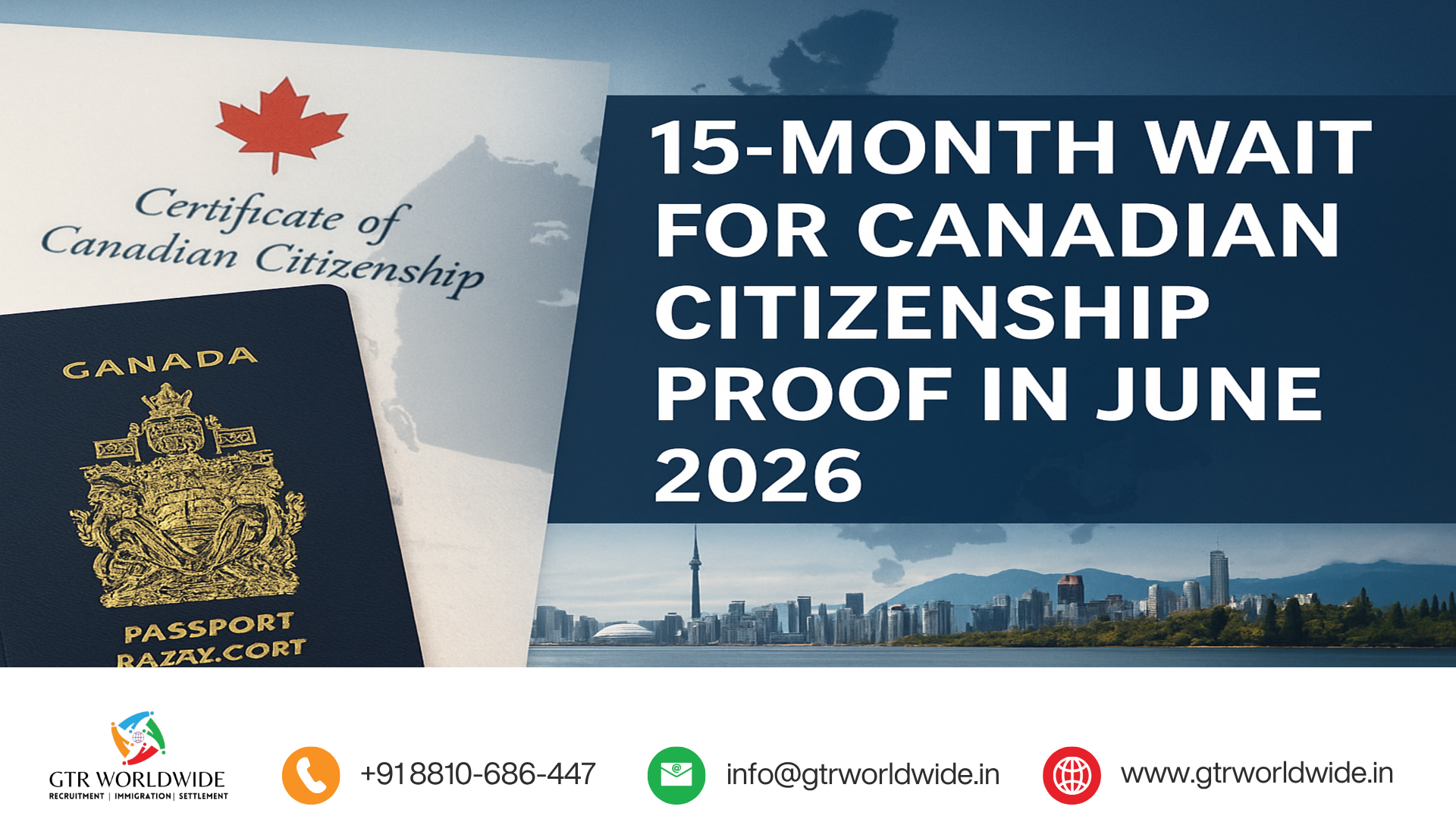
As of June 2026, Immigration, Refugees and Citizenship Canada (IRCC) is estimating a 15-month processing time for proof of Canadian citizenship certificates for applicants claiming citizenship by descent. The department reports roughly 82,000 applications currently in the queue — up from about 70,400 on May 12, 2026 — an increase of 11,600 in under a month. Because the processing-time estimate is tied to the current queue size and IRCC’s staffing and intake projections, the wait is likely to remain long and may grow as more people apply. For anyone who needs a certificate to get a Canadian passport or to confirm citizenship rights, this is a practical delay with real timelines: IRCC’s 15-month estimate for a June application points to a decision roughly around September 2027.
Why so many people are applying now
On December 15, 2025, Canada amended the Citizenship Act by removing the first-generation limit to citizenship by descent. That change, implemented through Bill C-3, means many people born before that date who can trace an unbroken lineage to a Canadian ancestor are already Canadian citizens — they simply need a certificate to prove it.
This legal change has reached far beyond traditional migration planning. Many applicants do not intend to move immediately to Canada; they apply to secure a second passport and the legal protections and mobility a Canadian passport provides. The certificate unlocks the ability to apply for a Canadian passport (which gives broad visa-free or visa-on-arrival access), and confirms rights such as living and working anywhere in Canada, buying residential property, and accessing publicly funded healthcare once resident. The source content also underscores a financial consideration for many U.S.-based applicants: acquiring proof of Canadian citizenship does not create Canadian worldwide income tax obligations in the way U.S. citizenship does for U.S. taxpayers.
How IRCC arrives at the 15-month estimate
IRCC uses a forward-looking calculation to set processing-time estimates. That calculation factors in:
- the number of applications already in the queue;
- how many staff are available to process those files;
- and IRCC’s expectation of how many new applications will arrive.
Processing time starts when IRCC receives a complete application — for online submissions, that is the moment of submission; for mailed applications, it is when the package reaches IRCC’s mailroom. IRCC updates its public estimate monthly, and those estimates can move up or down if the queue size or staffing changes. Importantly, IRCC’s projections do not model sharp, unforeseen spikes in new applications, so sudden surges can quickly lengthen waits beyond current estimates.
The arithmetic behind the timeline: what “15 months” means in practice
Because IRCC’s published estimate is tied to queue volume, the reported 15-month wait should be read as a snapshot tied to current conditions. With 82,000 applications in front of a newly submitted file, a June 2026 submission faces processing that IRCC estimates will conclude about 15 months later — about September 2027 by the source’s calculation.
The change from a 9-month estimate to 15 months occurred after the December 2025 eligibility expansion. The queue more than doubled over that period, and processing times rose in parallel. The month-to-month climb in the queue size shows a dynamic system: more eligible people are learning about the law change and applying, and each new intake adds to the backlog that determines future timelines.
Who qualifies under the new rules and is therefore likely to be affected
Under the December 15, 2025 amendment (Bill C-3), anyone born before that date who can establish a continuous line of descent from a Canadian ancestor qualifies as a Canadian citizen by descent, regardless of how many generations have passed. It does not matter where the person was born, nor whether the intervening relatives lived in Canada or held Canadian passports. The pool of potentially eligible people therefore includes:
- Individuals who have lived outside Canada for generations but can document descent;
- People who may have no current plan to reside in Canada but want a Canadian passport for travel and contingency;
- Those who need formal proof of citizenship to exercise rights in Canada (passport, residency formalities, property purchases, healthcare access upon residence).
The source highlights specific interest from U.S.-based families who have been in the United States for multiple generations. For these applicants, the process is about documentation of lineage and obtaining the certificate that confirms status rather than a change in legal status.
When processing can take longer than the routine estimate
The 15-month timeline applies to routine, straightforward applications. IRCC may take longer in complex or non-routine cases. The source lists several causes of extended processing:
- IRCC requests additional documents (for example, residence evidence) beyond the initial submission;
- applicants miss a required test, interview, or hearing;
- there are criminal, security, or other admissibility concerns that require further review.
The single most effective precaution noted in the source is submitting a complete, well-prepared application at the outset. That reduces the chance IRCC will pause processing to seek supplemental material, which is a common source of delay.
Concrete steps applicants should focus on now
Based on the detail in the source, applicants can improve their odds of routine processing by focusing on documentation and submission details:
- Confirm eligibility by tracing a continuous line of descent from a Canadian ancestor. Start with a family tree and conversations with relatives;
- collect the specific documents IRCC accepts as proof of descent: birth certificates, baptismal records, marriage records, death certificates — any family records that establish lineage as listed in the source;
- choose your submission method carefully. If applying online, the processing clock begins on submission; if by mail, it begins when the application reaches IRCC’s mailroom;
- assemble a complete application package before submission. A complete, well-prepared file is the best way to avoid requests for additional documents and related delays;
- be aware of potential non-routine triggers: missed interviews or any factors that could introduce criminal, security, or admissibility questions.
The source does not provide an application checklist beyond naming common document types; applicants should therefore rely on IRCC’s official document lists when preparing their files, and prioritize completeness based on that guidance.
Strategic considerations: apply now or wait?
The source does not prescribe a single correct strategy, but it presents clear factors to weigh. Because IRCC’s processing-time estimate depends on queue size and projected future intake, waiting to apply can mean entering a longer queue later. The source explicitly notes that “waiting to apply may likely mean a longer wait, not a shorter one.” If your need for a certificate is time-sensitive (passport issuance, proof for residency or other immediate plans), applying sooner rather than later may be preferable.
On the other hand, applicants who are certain they qualify but have no immediate need for a passport or certificate can consider the queue dynamics: the current 82,000 figure is already large, and the department’s monthly updates can shift depending on new application surges and staffing changes. Because the source does not provide IRCC staffing forecasts or guarantees about future processing improvements, the decision whether to apply now should rest on your personal timing needs and risk tolerance about waiting for a longer processing window.
What to watch in the coming months
IRCC updates its processing-time estimates monthly. Because the estimate will shift as queue size and staffing capacity change, applicants should monitor IRCC’s published processing times for citizenship certificates. Key indicators to follow:
- month-to-month changes in the published processing time estimate (is it stable, increasing, or decreasing?);
- any public statements from IRCC about staffing increases or special measures to clear the backlog (the source does not include such measures, so monitor official updates);
- the number of applications reported in the queue if IRCC releases that figure again, as queue volume directly affects future estimates.
Remember that projections do not account for sudden spikes in new applications. A large, unexpected increase in filings could quickly lengthen the wait beyond current estimates.
Numbers and dates to remember from this update
- 15 months — IRCC’s estimated processing time for proof of Canadian citizenship certificates as of June 2026;
- 82,000 — approximate number of citizenship-certificate applications in the queue in June 2026 (IRCC figure);
- 70,400 — IRCC’s reported queue size on May 12, 2026;
- 11,600 — increase in the queue size between May 12 and June 2026 (in under a month);
- December 15, 2025 — date when Canada removed the first-generation limit to citizenship by descent (Bill C-3 implementation);
- 9 months to 15 months — the rise in estimated processing time for certificates since the December 2025 eligibility change;
- September 2027 — approximate decision month for an application received in June 2026, based on the 15-month estimate.
Final guidance based on the available information
The law change that broadened eligibility for citizenship by descent has created a large and growing demand for proof-of-citizenship certificates. IRCC’s current framework ties processing times directly to the queue it faces and to its staffing and intake projections. That linkage means the simple act of more people applying can extend the waits for everyone.
If you believe you qualify, start by documenting your lineage carefully: assemble birth, baptismal, marriage, and death records or other documents that can demonstrate continuous descent. Aim to submit a complete, well-organized application so IRCC does not need to pause processing for missing documents. Keep in mind that the clock starts on receipt of a complete file (online at submission time; mailed when received by IRCC’s mailroom). Finally, monitor IRCC’s monthly processing-time updates so you can set realistic expectations about when a decision and a passport (if desired) may arrive.
For personalized support with your Canadian immigration pathway, contact GTR Immigration. Call us: +91-8810-686-447
#CanadianCitizenship #CitizenshipByDescent #IRCC #ProofOfCitizenship #BillC3 #CanadianPassport #ImmigrationUpdate