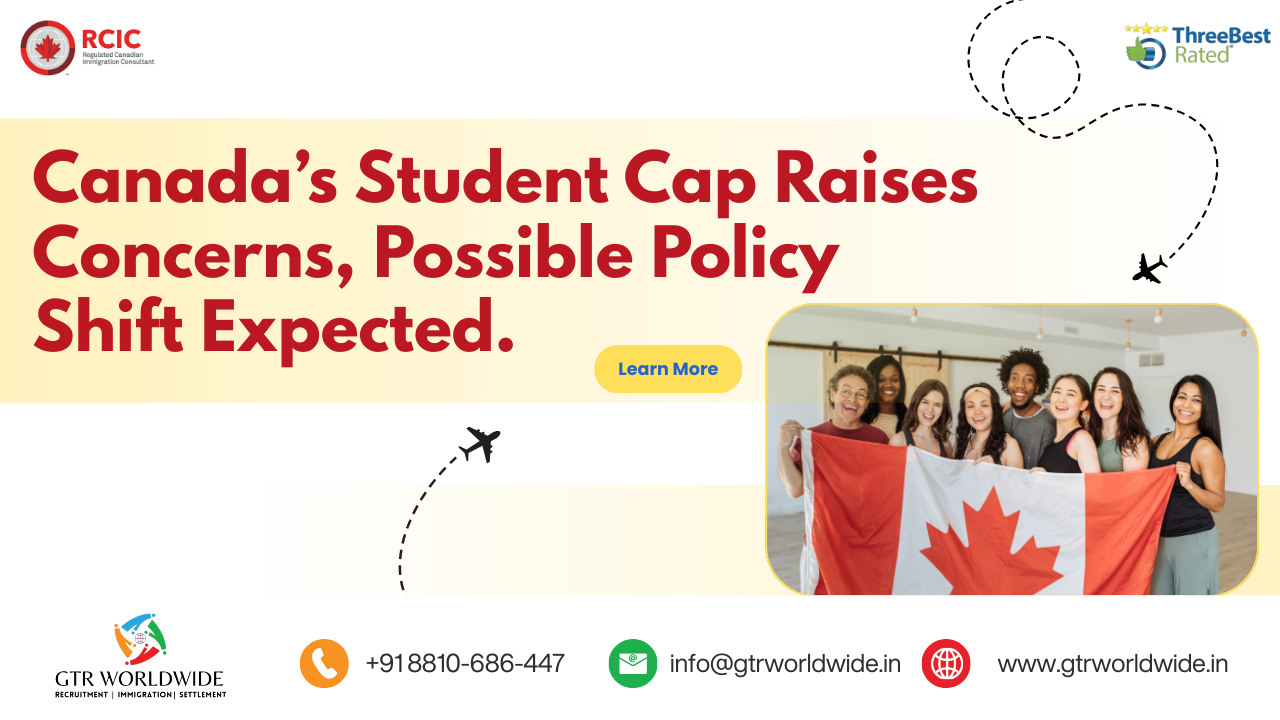
Canada’s international student cap has emerged as one of the most debated immigration measures of 2024–2025. While the federal government defends the cap as a tool to ease housing shortages and reduce strain on public services, universities, students, and industry stakeholders warn of serious long-term consequences. With the cap set to expire at the end of 2025, many are anticipating a potential policy adjustment that could bring a more balanced approach to international education.
What the Cap Means for International Students
In 2024, Canada introduced a temporary cap on study permits, slashing approvals by 35%—from nearly 560,000 in 2023 to about 360,000. In 2025, the measure was extended and further tightened. The new annual limit of 437,000 permits represented an additional 10% reduction and, for the first time, included master’s and doctoral applicants who had previously been exempt.
All applicants must now provide a Provincial or Territorial Attestation Letter (PAL/TAL), a requirement designed to ensure fair distribution of study permits across Canada.
Why the Cap Sparks Concern
- Financial Pressure on Universities
Canadian post-secondary institutions, especially in Ontario, British Columbia, and Alberta, rely heavily on international tuition revenue. Reduced intake has led to budget shortfalls, potential program cuts, and threats to research funding. - Uneven Regional Impact
While larger provinces may absorb the reductions, smaller regions such as Nova Scotia and Prince Edward Island are hit harder, as their local economies depend heavily on international graduates to fill workforce gaps. - Administrative Bottlenecks
The new PAL/TAL requirement has created significant backlogs, pushing processing delays up by 45%—nearly double the government’s target—and leaving thousands of students uncertain about their status. - Global Competitiveness at Risk
With rivals like Australia, the UK, and the U.S. competing aggressively for international talent, a restrictive cap could tarnish Canada’s reputation as a leading study destination.
Could Canada Rethink the Policy?
The cap is due to expire in December 2025, giving policymakers a window to reshape Canada’s long-term international education framework. Experts are calling on the government to:
- Allocate study permits based on institutional quality and local labor market needs.
- Crack down on non-compliant private colleges rather than penalizing the broader system.
- Create stable, predictable policies that safeguard Canada’s $31 billion international education sector.
Broader Immigration and Housing Links
The student cap is part of Canada’s broader strategy to manage immigration flows and stabilize housing markets. In 2025, Ottawa also reduced both permanent and temporary resident intake targets. Early signs suggest rental prices are beginning to level off after years of steep increases.
One of the most contentious moves was a 31% cut in study permits issued to Indian students, Canada’s largest source of international enrollment, raising concerns about long-term bilateral and educational ties.
The Road Ahead
While the cap has provided some short-term relief for housing, it risks undermining Canada’s higher education competitiveness. Unless the government shifts toward a more targeted and sustainable strategy, universities, communities, and students could face lasting repercussions.
As the 2025 deadline approaches, Canada has an opportunity to strike a careful balance—managing immigration and housing pressures while maintaining its position as a global leader in international education.